Panic doesn't need a formal invitation to sweep through a residential neighborhood at midnight. When a massive explosion rocked the eastern outskirts of Tehran, the windows didn't just rattle. They shattered. Thousands of people woke up to a sound that felt far too close for comfort, and within minutes, the digital world was flooded with grainy cell phone footage of a bright orange glow illuminating the skyline.
If you've been following the tension in the Middle East, you know this isn't just another local news story. It's a flashpoint. People are looking for answers because, in this part of the world, a "gas leak" isn't always just a gas leak. The incident occurred near the Parchin military complex, a site that has been under the international microscope for years. That geographical proximity is exactly why the official narrative and the public's gut feeling are currently at war.
What we actually know about the Tehran explosion
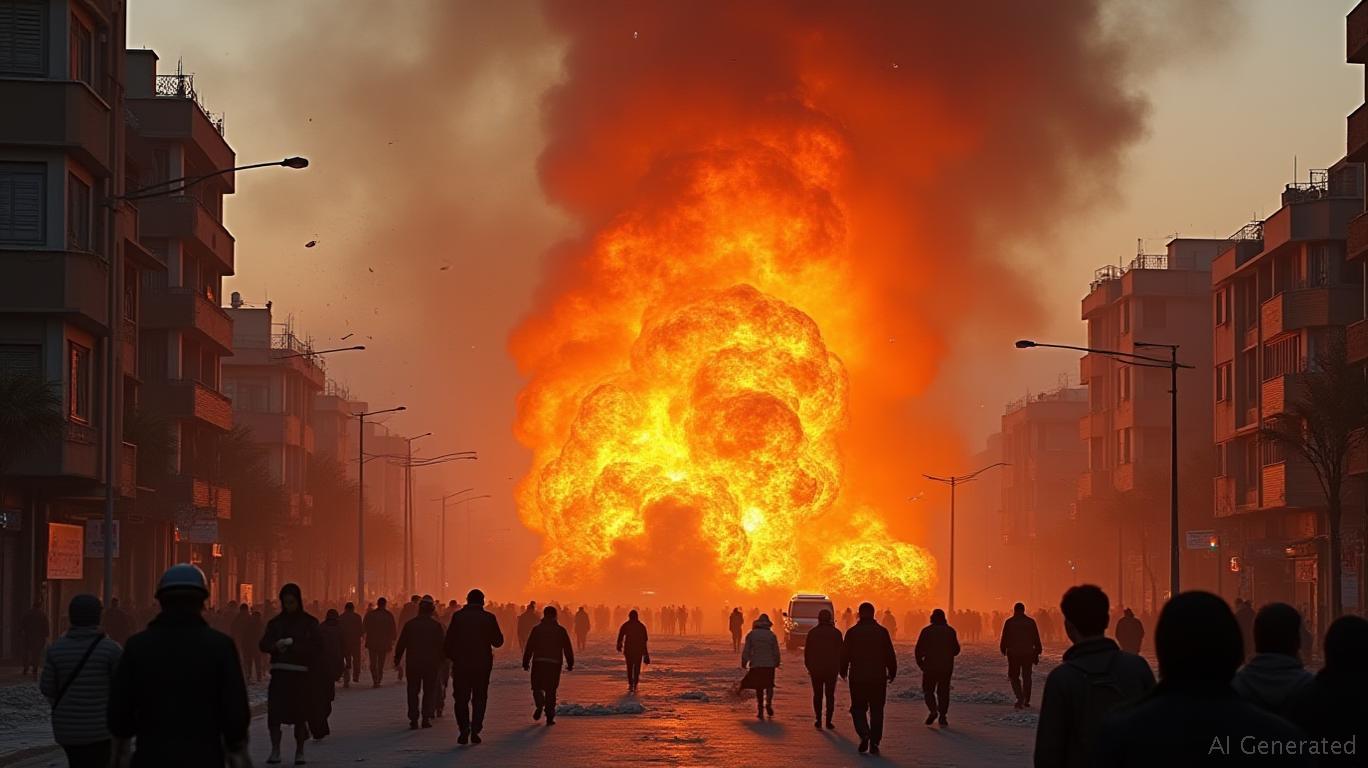
Reports started filtering out late at night. Residents in the Pars and Hakimieh neighborhoods described a flash so bright it turned night into day for a few seconds. Then came the shockwave. Initial social media reports were chaotic. People feared a drone strike or a targeted sabotage mission.
The Iranian state media, IRNA, eventually released a statement. They chalked it up to an explosion at a gas storage facility in a "public area" of Parchin. No casualties. No military involvement. Just a technical mishap.
But here is the problem. Parchin is a sprawling area. It houses both civilian infrastructure and some of Iran’s most sensitive military research labs. When something goes bang there, the world assumes the worst. I’ve seen this pattern before. An incident happens, the official line is "industrial accident," and weeks later, satellite imagery suggests something much more specific happened to a high-value building.
The Parchin factor and why it matters
You can't talk about a huge blast reported in residential area of eastern Tehran without talking about the elephant in the room. Parchin isn't just a suburb. The International Atomic Energy Agency (IAEA) has spent decades trying to get full access to this site. Why? Because it’s long been suspected of hosting experiments related to nuclear triggers.
When a blast occurs in this vicinity, it triggers a geopolitical domino effect.
- Internal security concerns: If it was an accident, it shows a crumbling infrastructure under the weight of sanctions.
- External sabotage: If it wasn't an accident, it suggests a massive breach in Iranian security by foreign intelligence services.
- Public trust: People living in eastern Tehran are tired. They want to know if they're living next to a ticking time bomb or just a poorly maintained gas plant.
Honestly, the "gas storage" explanation is the oldest play in the book. It’s the easiest way to de-escalate a situation that could otherwise lead to a military mobilization. But for the people who felt their floors shake, "easy" isn't good enough. They want transparency that they rarely get.
Comparing the official story with social media evidence
I spent hours looking at the clips uploaded by locals. The color of the fireball tells a story. A standard gas explosion usually produces a specific orange-red plume. The Tehran blast had a distinct intensity. It looked like a high-velocity detonation.
Some analysts pointed out that the light was visible from nearly 30 kilometers away. That’s not a kitchen stove or a small warehouse going up. That’s a massive energy release. If you look at past incidents in Iran—like the 2020 explosion in the same general area—the government used the exact same language. "Gas tanks." It’s a template.
The discrepancy between what people see on their balconies and what they read on the news creates a vacuum. In that vacuum, conspiracy theories grow. Was it a cyberattack? Was it a localized tremor caused by underground testing? Without independent journalists on the ground in Parchin, we're left piecing together the truth from shadows and low-res videos.
Living in the shadow of eastern Tehran industrial zones
Imagine being a parent in Hakimieh. You’re tucking your kids in, and suddenly the wall cracks. You don't know if you should run to the basement or pack the car and head for the mountains. This is the reality for thousands of families.
The urban sprawl of Tehran has moved closer and closer to these sensitive zones. What used to be isolated military outposts are now practically across the street from high-rise apartments. This proximity is a recipe for disaster. Whether it's a genuine accident or a deliberate act of war, the civilian cost is rising.
The Iranian government faces a tough choice. They can admit to security lapses, which makes them look weak, or they can stick to the "industrial accident" story, which makes them look dishonest. They almost always choose the latter. It keeps the international community at arm's length, at least for a few days.
The ripple effect on regional stability
This blast didn't happen in a vacuum. It happened during a period of extreme friction between Iran and its neighbors. Every time a light flashes in the Tehran sky, oil prices flinch. Defense ministries in DC and Tel Aviv stay up late analyzing the heat signatures.
If this was a sabotage act, it marks a significant escalation. It means the "gray zone" war—the one fought with code and shadows instead of soldiers—is heating up. If it was truly an accident, it’s a sign that the Iranian energy sector is struggling to maintain basic safety standards under the pressure of global isolation.
Neither option is particularly comforting.
What you should watch for next
The story doesn't end when the fire goes out. The real information usually comes out 48 to 72 hours later via commercial satellite companies like Maxar or Planet Labs. They’ll zoom in on the Parchin hills. They’ll look for scorched earth, destroyed roofs, or new security cordons.
Keep an eye on the official statements from the IAEA. If they start asking for a visit to the "gas facility," you’ll know the explosion hit something they’ve been watching. Also, watch the local Persian-language Telegram channels. That’s where the real raw footage usually leaks before the state censors can get a grip on it.
If you're looking for the truth, don't just read the headlines. Look at the maps. Look at the history of the site. And most importantly, listen to the people who felt the blast. They're the ones who can't afford to believe a convenient lie.
Check the latest satellite updates on independent monitor sites to see if the "gas storage" site matches the coordinates of known military facilities. Verify any claims of "no casualties" against local hospital reports that often leak through social media circles.