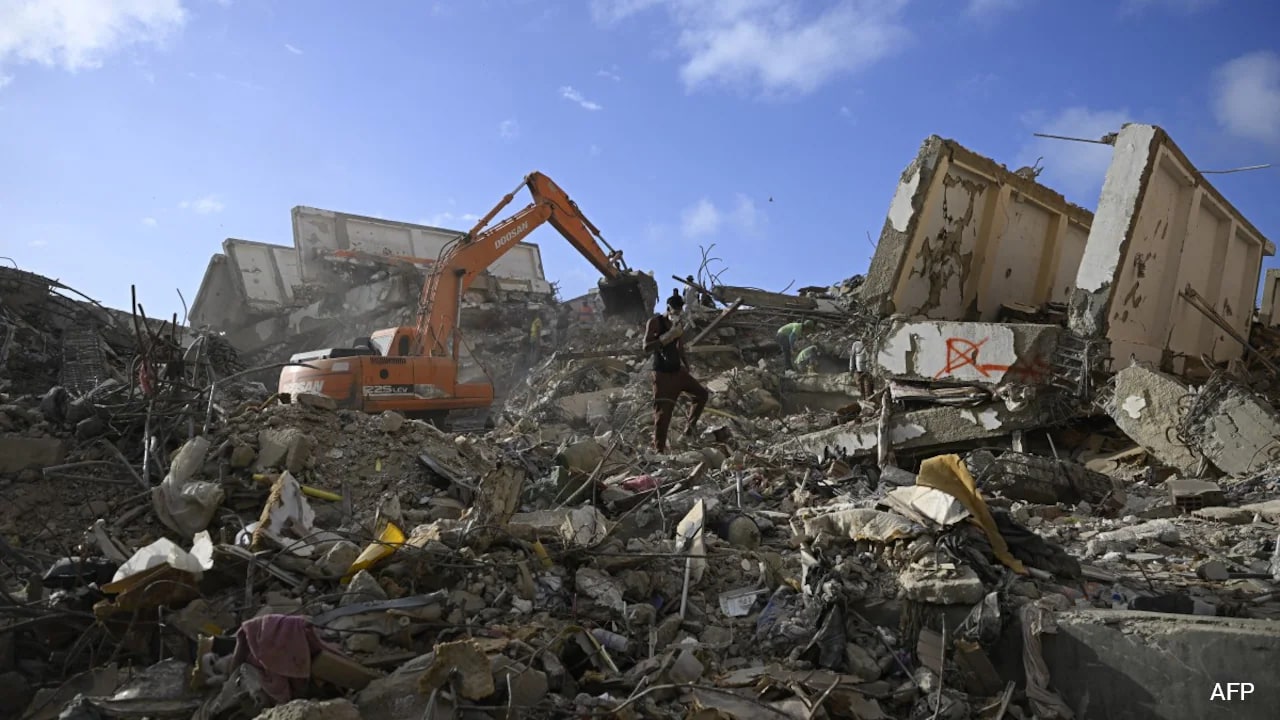
The afternoon sun always hits the corrugated tin roofs of the Petare barrio at a sharp, blinding angle. On an ordinary Tuesday, that light reflects a chaotic symphony of life. You hear the syncopated rhythm of reggaeton blasting from a makeshift barber shop, the aggressive sputter of motorbike taxis navigating impossible inclines, and the high-pitched bartering of vendors selling plantains by the kilo.
Then, the earth forgot how to be solid.
It did not start with a roar. It began with a deep, subterranean shudder, a frequency felt in the soles of the feet before it reached the ears. Within three seconds, the vibration became a violent, vertical heave. Concrete, which we treat as the literal foundation of our modern existence, behaved like liquid.
When a city tears apart, the sound is entirely unique. It is the screech of twisting structural steel mixed with the thunderous, grinding groan of thousands of tons of brick fracturing simultaneously. And then, almost immediately, comes the dust. A thick, chalky, suffocating cloud of pulverized mortar that turns the bright Caribbean sky into an artificial, apocalyptic twilight.
The wires carried the cold data across the world within an hour. Initial reports spoke of a severe tremor. By midnight, the official tickers read two hundred dead. By Thursday morning, the figure crossed twelve hundred. Now, the official count has climbed past five thousand soul-shattering losses.
But five thousand is an abstract concept. It is a sterile statistic printed on a news broadcast ticker, a dry digit for international aid agencies to log into spreadsheets. It fails to capture the true reality of what happened when the ground split open.
To understand the magnitude of this tragedy, you have to look at a single doorstep.
The Weight of Two Cubes of Sugar
Consider a hypothetical resident named Elena. She is not a statistic. She is a fifty-two-year-old grandmother who spent thirty years teaching primary school geography, explaining the tectonic plates of the Earth to children using cracked plastic globes.
When the tremor hit, Elena was standing in her kitchen, holding a porcelain cup. She was dropping exactly two cubes of sugar into her black coffee. She never got to stir it.
The wall behind her stove did not just crack; it exploded outward. In a fraction of a heartbeat, her entire universe shrank to the dark, claustrophobic space beneath her heavy oak dining table. Her world became a sensory assault of choking gray powder, the smell of ruptured gas lines, and the agonizingly distant screams of her neighbors echoing through the rubble.
When we read about natural disasters from the comfort of a screen thousands of miles away, we tend to think of the aftermath as a collective, organized effort. We envision bright yellow excavators, fleets of ambulances with synchronized sirens, and highly trained search-and-rescue teams operating under bright floodlights.
The reality on the ground in a vulnerable infrastructure is vastly different.
The heavy machinery cannot traverse roads blocked by collapsed apartment blocks. The emergency lines fail because the cellular towers are twisted heaps of metal. The true first responders are not paramedics in sterile uniforms. They are teenagers in sandals using their bare, bleeding fingernails to claw through mountain loads of sharp concrete chunks because they hear a child crying underneath.
Imagine the psychological calculus of that moment. You are standing on a heap of debris that used to be a five-story residential building. You know your brother, your daughter, or your lifelong friend is somewhere beneath your feet. Every piece of debris you move by hand risks shifting the delicate equilibrium of the collapse, potentially crushing the very person you are desperate to save.
The silence is the worst part.
Between the frantic digging, someone will shout for quiet. A whistle blows. Hundreds of people instantly freeze, holding their breath in the baking heat. Everyone listens. They look for a faint tap on a pipe, a muffled groan, or a whisper from the dark. If nothing comes, the digging resumes with a desperate, frantic energy fueled by pure adrenaline and terror. If a sound does come, the collective gasp of hope is palpable, only to be tempered by the grueling knowledge that it might take ten hours of agonizingly precise work to move a single slab of reinforced concrete blocking the path.
The Geography of Vulnerability
Earthquakes are entirely democratic in their seismic physics, but they are brutally discriminatory in their human toll. The fault line does not select its victims based on socioeconomic status, yet the architecture of a society determines exactly who survives when the fault slips.
Venezuela sits atop a complex tectonic boundary where the Caribbean and South American plates grind past one another. Geologists have warned for decades that the capital city and its surrounding regions are a ticking clock. The science behind this is straightforward, even if the human response to it has been painfully slow.
When stress builds along these subterranean fractures, it must eventually be released. The energy travels outward in seismic waves, shaking everything built above.
In the more affluent pockets of the valley, buildings constructed under modern engineering codes sway violently. They crack. They suffer terrifying internal damage. But their pillars hold. The steel rebar inside the concrete absorbs the kinetic energy, flexing rather than snapping. The residents inside are terrified, bruised, and displaced, but they walk out alive.
A few hundred meters away, the steep hillsides tell a completely different story.
For generations, rural migration transformed the hills surrounding the valley into dense networks of self-built housing. These homes were constructed out of necessity, one brick at a time, often without engineering blueprints, proper foundation anchoring, or the correct ratio of cement to sand. They are stacked on top of each other like fragile house of cards, climbing up slopes that are naturally prone to mudslides even during normal heavy rains.
When a massive earthquake strikes, a domino effect occurs on these hillsides. The collapse of a single home at the top of a ridge triggers the destruction of twenty homes below it, sending a devastating avalanche of brick, metal, and human lives cascading into the ravines.
This is where the bulk of the five thousand casualties reside. The tragedy is not merely a geological event. It is the tragic intersection of planetary forces and human vulnerability.
The Invisible Stakes of the Aftermath
The immediate danger of the shaking ground is only the first act of a prolonged crisis. As the dust begins to settle and the initial shock transitions into grief, a secondary, far more insidious threat emerges.
Consider what happens next: a city of millions suddenly loses its vital lifelines.
- The water mains are shattered beneath the asphalt, cutting off clean drinking water and forcing people to rely on contaminated streams or stagnant pools.
- The electrical grid is dark, meaning hospitals must rely on failing backup generators to keep ventilators and surgical suites operating.
- The supply chains that bring food from the agricultural plains into the urban center are broken, leading to immediate shortages at local markets.
Medical professionals are forced to make decisions that no human being should ever have to make. With thousands of severely injured patients flooding into hospitals that were already facing resource constraints before the disaster, triage becomes a brutal exercise in survival math. Doctors must choose who receives the remaining units of blood, who gets access to the operating rooms, and who must be comforted with nothing more than a hand to hold as they slip away.
The risk of disease looms large over the ruins. Without running water or proper sanitation, conditions become ideal for the rapid spread of waterborne illnesses. A secondary wave of health crises can easily claim as many lives as the initial collapse if the international response is not swift, coordinated, and free of political theater.
Yet, despite the immense scale of the devastation, the human spirit displays a stubborn, beautiful resilience in the darkest hours.
You see it in the strangers who form human chains to pass plastic bottles of water up the steep, ruined hills of Petare. You see it in the local bakers who use the last of their firewood to bake bread for families who have lost everything, refusing to take a single bolívar in return. You see it in the volunteers who organize makeshift daycare centers in open plazas to keep traumatized children distracted while their parents search for missing relatives or try to salvage remnants of their lives from the debris.
The Long Road Through the Ruins
The news cycle will eventually move on. The international headlines that currently scream about the rising death toll will gradually shift their focus to other events, other crises, other political debates. The cameras will pack up, and the world's attention will drift elsewhere.
But for the people walking through the dust of Caracas, the earthquake will never truly end.
The process of rebuilding a fractured society cannot be measured in weeks or months. It is measured in generations. It means finding a way to house hundreds of thousands of newly homeless individuals. It means confronting the psychological trauma of children who jump in terror every time a heavy truck rumbles down a nearby street, fearing that the earth is about to betray them once again.
It means looking at the empty spaces in the skyline and remembering the names, the laughter, and the unfulfilled dreams of the five thousand individuals who were there just days ago.
The true cost of this disaster is found in the quiet moments of the evening, when the rescue horns finally fall silent and the tropical breeze carries the scent of dust and jasmine through the broken streets. It is found in the solitary figure of a grandmother standing near a pile of rubble, looking down at a cracked porcelain cup resting on top of a broken piece of oak wood, wondering how a world can keep spinning when everything underneath it has completely changed.