Some places refuse to die easily. They cling to existence through the stubborn grain of sandstone, through the weathered limestone carved by hands that turned to dust generations ago, and through the quiet prayers whispered by people who learned early that their history is rented, never owned.
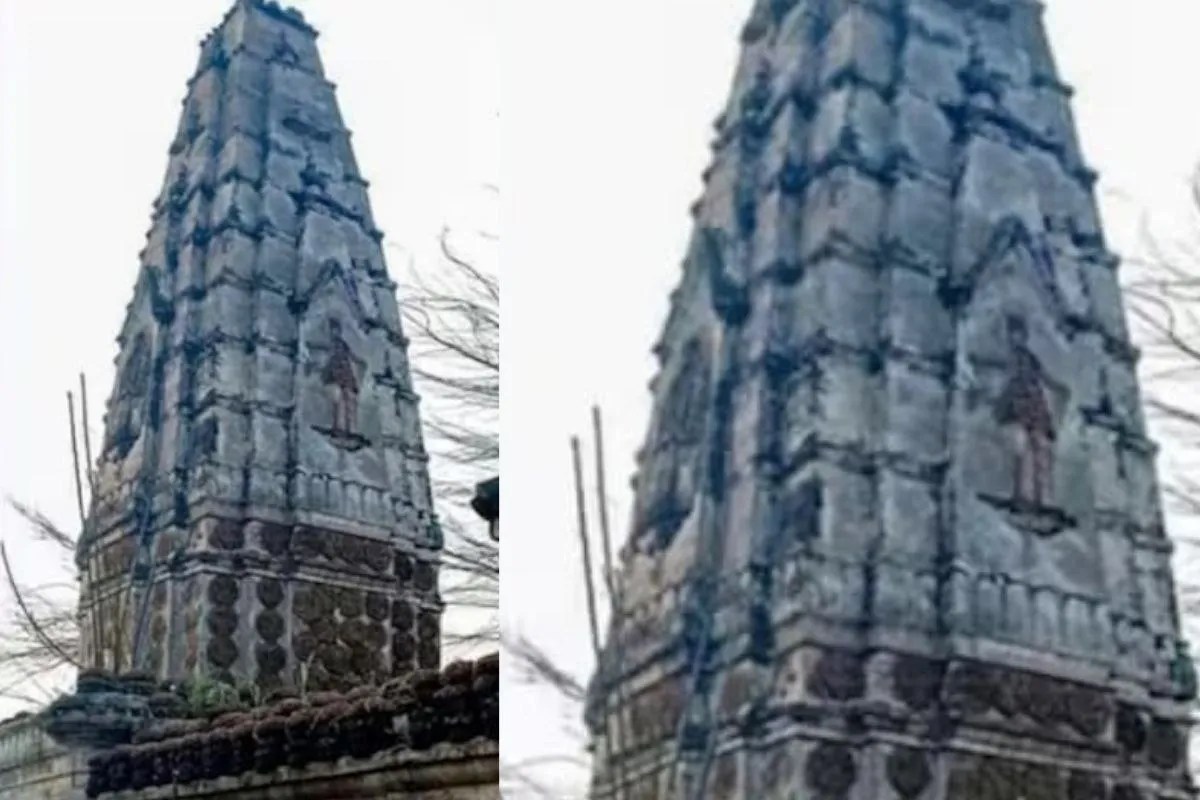
Imagine standing on a narrow street in Rahim Yar Khan, in the searing heat of Pakistan's Punjab province. The air tastes of dry earth and exhaust fumes. For one hundred and twenty-five years, a Hindu temple stood here. It wasn't a marble monument meant for kings. It was a modest, enduring anchor for a community whose roots in this soil run deeper than modern borders. Every brick held a story of survival, of morning bells ringing against the backdrop of an evolving, often unforgiving world. Read more on a connected subject: this related article.
Then, the walls came down.
Silence followed. Not the peaceful quiet of a sanctuary, but the heavy, suffocating silence of a space suddenly erased. Additional analysis by NBC News highlights similar views on this issue.
When a structure collapses, the physics are usually simple. Gravity wins. Moisture compromises foundations. Timbers rot. But when a century-old temple dedicated to ancient traditions crumbles into a pile of gray rubble under the watch of a local madarsa, the physics of the event become complicated by human design.
The official statement arrived with bureaucratic predictability. Heavy rains, the local administration declared. A seasonal tragedy. An act of nature.
The local residents, watching the dust settle over what used to be a sacred courtyard, laughed. It was a bitter, tired sound. They had seen rain before. Monsoons had washed over these walls for over a century without reducing them to powder. But monsoons do not typically clear the path for adjacent religious schools to expand their dormitories. Monsoons do not conveniently carve out parking spaces or playgrounds for growing institutions at the precise expense of a minority's heritage.
History has a way of repeating itself, not as farce, but as a recurring blueprint.
Consider what happens next in stories like this. The incident sparks outrage on social media. Grainy smartphone footage circulates across borders. Politicians issue defensive rebuttals, framing the event as either an unfortunate accident or an isolated local dispute. Investigations are promised. Committees are formed. Files are opened, pushed to the bottom of cluttered desks, and left to yellow under the relentless sun.
And the rubble? The rubble is cleared.
What remains is an invisible architecture of loss. You cannot measure this loss simply by counting the lost bricks or calculating the square footage of the ruined courtyard. The real erosion happens inside the minds of those who look at the empty space and realize how fragile their place in the world truly is. Belonging is not a legal document. Belonging is the certainty that your past is safe, that the stones of your grandfathers will not be swept away overnight under the convenient alibi of bad weather.
Let us be honest about the mechanics of erasure. It rarely happens through dramatic, sweeping decrees. It happens incrementally, quietly, in the spaces between administrative oversight and deliberate indifference. A wall weakens. A roof leaks. The community looking after it is small, politically disenfranchised, and perpetually cautious. They hesitate to complain too loudly, knowing that the cost of raising an objection is often higher than the cost of swallowing the grief.
In this environment, a heavy downpour becomes the perfect accomplice.
The police arrive, not to protect the structure, but to manage the crowd. The local madarsa administration expresses polite surprise, denying any aggressive land grab while quietly measuring the newly cleared perimeter. The authorities nod knowingly at each other, sharing the silent consensus that some problems are best solved by letting them disappear into the earth.
Centuries of heritage reduced to landfill.
To understand why this matters beyond the borders of Pakistan, beyond the immediate geopolitics of South Asia, we have to look at what happens when we allow history to be rewritten by tractors and rain excuses. When a civilization loses its physical memory, it loses its capacity for empathy. The spaces we preserve—whether they belong to the majority or the most vulnerable minority—are the mirrors in which we check our humanity. If we can look at a pile of ancient rubble and accept a clumsy lie about the weather, we are practicing for the day we look at other injustices and shrug our shoulders.
The temple in Bhong, or the ruins scattered across Rahim Yar Khan, are not isolated anomalies. They are chapters in an ongoing ledger of cultural attrition. Every time a minority place of worship is flattened—whether by a mob, a bulldozer, or the convenient negligence of local governance—a thread snaps.
Listen closely to the wind moving through the empty lot today. There are no bells. There are no chants. There is only the low hum of traffic and the distant murmur of students reciting lessons inside the expanding walls of the madarsa.
The dust has settled. The official report is filed away. The world moves on to the next crisis, the next outrage, the next fleeting headline. But down on that dusty street, a piece of the past has been permanently unwritten, proving once again that the most effective way to erase a people is to quietly take away the ground they stand on.

