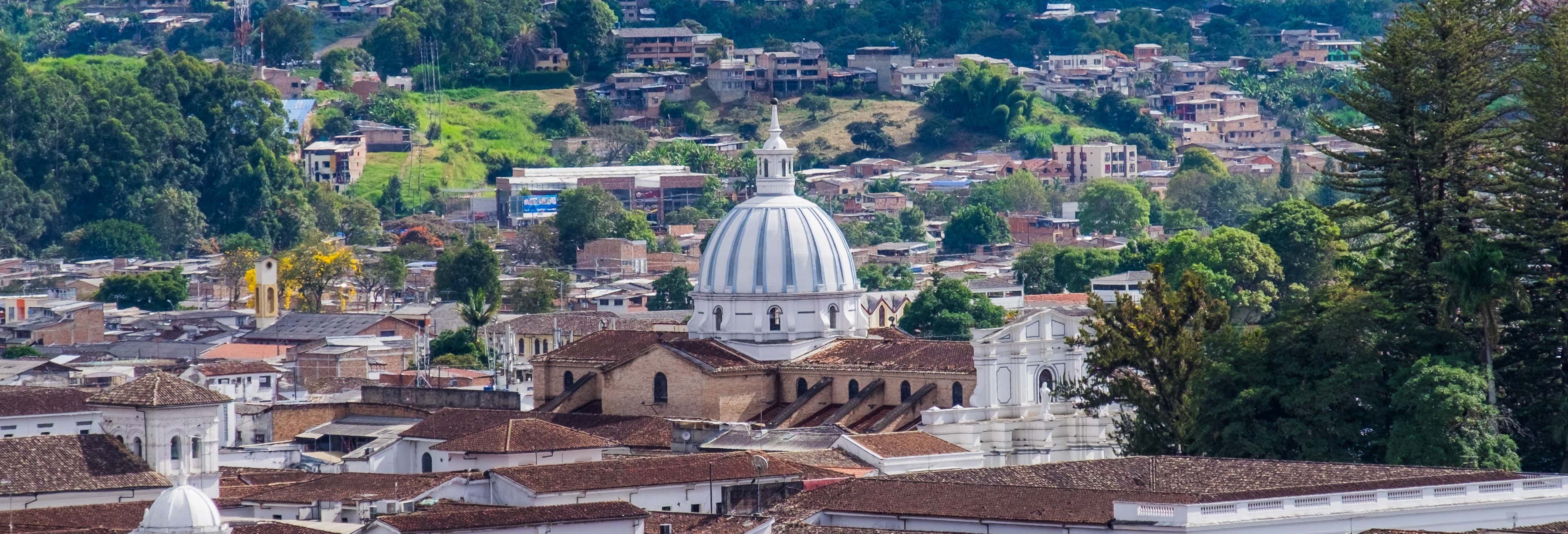
The morning in Cauca usually smells of wet earth and roasting coffee. It is a green corner of Colombia where the Andes mountains seem to ripple like a disturbed blanket, beautiful and jagged. For those living in the rural stretches between Popayán and Pasto, the bus is more than a vehicle. It is a lifeline. It carries students to exams, grandmothers to clinics, and farmers to the market with sacks of produce balanced on their knees.
On a Tuesday that started like any other, one such bus became a coffin.
Seven lives ended in a flash of heat and jagged metal. Twenty others were left with wounds that will map their bodies for the rest of their lives. The blast occurred in the municipality of Páez, specifically in the village of Guadualejo. It was not a mechanical failure. It was not a freak accident of the road. It was a deliberate act of violence—a bomb—ripping through the thin aluminum shell of a public transport vehicle.
The Anatomy of a Second
To understand the weight of seven deaths, you have to look past the tally.
Imagine a young woman sitting by the window. Let's call her Elena. She is not a real person named in the police report, but she represents the reality of the commute. She is scrolling through her phone, checking a message from her mother. The bus hits a pothole. She adjusts her bag. The man across the aisle is dozing, his head lolling against the glass. These are the mundane, quiet rhythms of a Tuesday morning.
Then, the world turns orange.
The sound of a bomb is not like the movies. It is a physical wall. It is a pressure that slams into your chest and steals the air from your lungs before you can scream. In an instant, the smell of coffee is replaced by the acrid, biting stench of ammonium nitrate and burning rubber. The windows don’t just break; they become thousands of tiny, high-velocity knives.
When the smoke cleared in Guadualejo, the bus was a skeleton. Local residents, people who had been hanging laundry or opening shop doors moments before, ran toward the wreckage. They didn't find a "news event." They found their neighbors.
The Invisible Borders of Cauca
Why a bus? Why here?
Cauca is a region where the geography is as complex as the politics. For decades, it has been a chessboard for armed groups. Even after the historic peace deals that dominated international headlines years ago, the ground remained contested. Dissident factions of the FARC, the ELN, and various drug trafficking cartels operate in the shadows of these mountains.
To these groups, a road is not just a way to get from point A to point B. It is a corridor of control.
When a bomb goes off on a public highway, the target isn't just the people on the bus. The target is the very idea of safety. It is a message sent to the government in Bogotá, written in the blood of civilians who have no part in the war. By hitting a bus, the perpetrators paralyze a region. They remind every teacher, every nurse, and every farmer that their movement is a privilege they haven't paid for.
The authorities, led by Regional Police Commander Colonel Wilson Román Silva, quickly pointed toward the Jaime Martínez mobile column, a dissident group that has been tightening its grip on the area. But for the families standing outside the San José de Popayán hospital, the name of the group matters far less than the empty chair at the dinner table.
The Weight of Twenty-Seven
Statistics have a way of numbing us. We hear "seven killed" and our brains categorize it as a tragedy, but a manageable one. We hear "over twenty injured" and we assume they will recover.
Recovery is a deceptive word.
In the aftermath of a blast like the one in Cauca, the injuries are horrific. Shrapnel wounds, severe burns, and the loss of limbs are the immediate concerns. But then there is the invisible damage. The "secondary blast injuries" caused by the pressure wave can rupture eardrums and collapse lungs.
Then there is the psychological shrapnel.
Consider the survivors. They are left with a fundamental brokenness. How do you ever board a bus again? How do you close your eyes without seeing the flash? The "injured" list in a news report never accounts for the father who can no longer work because his hands shake, or the child who stops speaking because the world proved itself to be loud and cruel without warning.
A Cycle Without a Wheel
The tragedy in Cauca is a stark reminder that peace is not a document signed in a capital city. Peace is the ability to take a bus to work without wondering if you will arrive in pieces.
Colombia has spent years trying to shed the skin of its violent past. In many ways, it has succeeded. Cities like Medellín and Bogotá are centers of innovation and tourism. But the "periphery"—the rural stretches like Cauca—often feels left behind, trapped in a loop where the actors change names but the script remains the same.
The government often responds to these blasts with "increased troop presence" and "investigative committees." These are necessary, perhaps, but they feel hollow to a community that has seen soldiers come and go while the bombs keep falling. The real struggle is not just catching the men who planted the device; it is addressing the vacuum of authority that allows them to exist in the first place.
Security is often discussed in terms of "robust" military strategy, but for the people of Guadualejo, security is much simpler. It is the sound of a bus engine humming down the road, and the silence that follows when it safely passes the next bend.
The Echo in the Valley
As the sun sets over the mountains of Cauca, the wreckage is eventually towed away. The glass shards are swept into the dirt. The headlines will move on to the next crisis, the next political scandal, or the next sporting event.
But in seven homes tonight, there is a stillness that no news cycle can capture.
There is a pair of shoes by the door that will not be stepped into tomorrow. There is a phone that keeps ringing on a bedside table, the screen lighting up with "Mom" or "Where are you?" until the battery finally dies.
The road is open again. The buses are running. They have to. In Cauca, life doesn't stop because of a bomb; it just gets heavier. People climb the steps, find a seat, and look out the window at the beautiful, jagged green mountains, clutching their bags a little tighter as they wait for the hum of the tires to drown out the memory of the blast.
The tragedy isn't just that the bomb went off. The tragedy is that tomorrow morning, someone will have to get back on the bus.