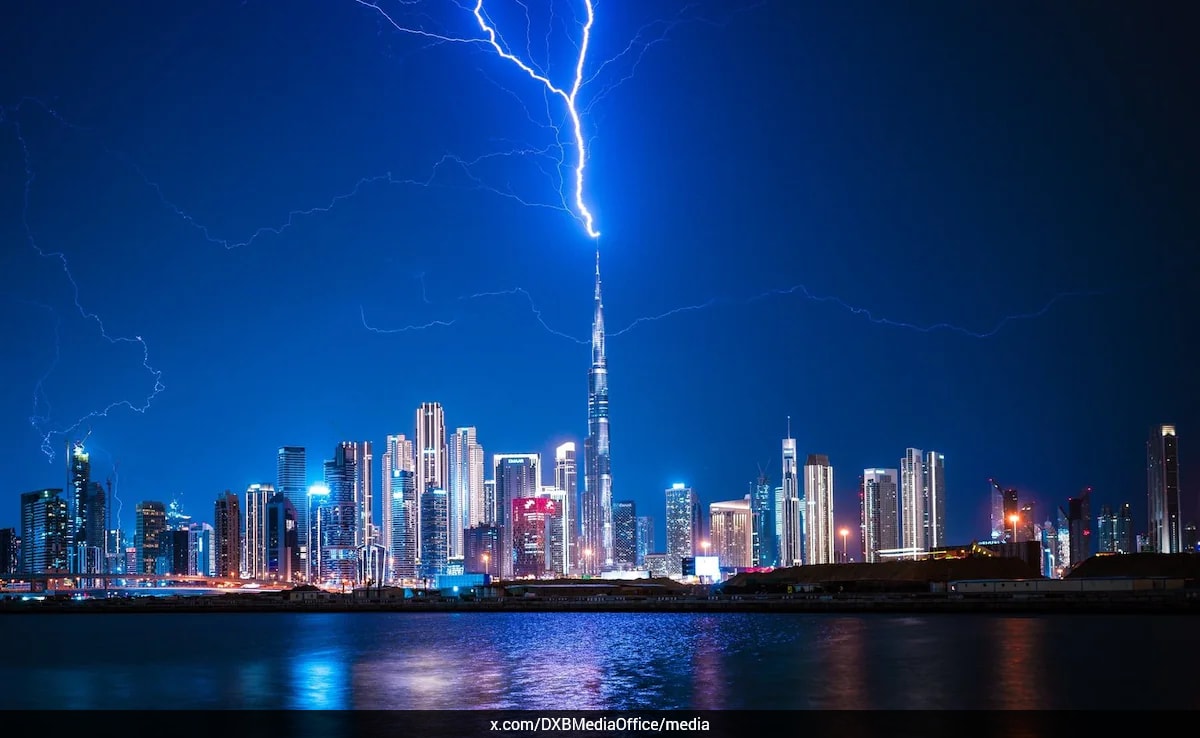
The internet is currently drowning in long-exposure shots of the Burj Khalifa draped in purple lightning. We get it. It looks like a scene from a cyberpunk epic. It’s "stunning." It’s "majestic." It’s also a massive distraction from the reality of what you’re actually looking at.
While the "lazy consensus" of travel journalism treats these storms as a rare, aesthetic gift from nature, they are actually a technical stress test that reveals the fragility of hyper-modern desert infrastructure. Stop staring at the bolt. Start looking at the drainage.
The Cloud Seeding Myth and the Vanity of Control
Every time a drop of rain hits the pavement in Dubai, the armchair experts jump to the same tired conclusion: "The government overdid the cloud seeding."
It’s a neat, digestible narrative. Man plays God, God throws a tantrum. But it's wrong. Cloud seeding—technically referred to as Salt Flare Injection—doesn't create moisture out of thin air. It merely nudges existing moisture to precipitate more efficiently. You cannot "seed" a massive low-pressure system coming off the Gulf into existence.
The real story isn't that we are making it rain; it’s that we are fundamentally unprepared for when it does. I’ve stood on balconies in Downtown Dubai during these "stunning" displays and watched multi-million dollar penthouses turn into indoor swimming pools because the architectural priority was floor-to-ceiling glass, not tropical-grade waterproofing. We built a city for 360 days of sun and are shocked when the other five days turn the Sheikh Zayed Road into a canal.
Aesthetics Are the Enemy of Awareness
The galleries you see on news sites are curated to hide the grit. They want the "Electric City" vibe. They don't show you the labor camps on the outskirts where the drainage is nonexistent. They don't show the logistical nightmare of a city that grinds to a halt because its residents—bless their hearts—don't know how to drive on a surface with a friction coefficient lower than dry sandpaper.
When you see lightning hitting the tip of a skyscraper, you aren't seeing a "miracle of nature." You are seeing a massive grounding system doing its job. The Burj Khalifa is essentially a $1.5 billion lightning rod. It’s physics, not magic.
The Cost of the Shot
Consider the mechanics of that "perfect" lightning photo:
- ISO 100-200: To keep the noise down.
- Aperture f/8 to f/11: To keep the city sharp.
- Shutter Speed 10-30 seconds: To catch the strike.
That 30-second window is a lie. It compresses time to make a chaotic, dangerous weather event look like a static piece of art. It ignores the $100 per hour Uber surges, the flooded basement parking lots, and the fact that the city’s sewage system—designed for a desert—is literally screaming under the pressure.
The "Perfect Storm" is a Design Flaw
We need to stop asking "How beautiful is the lightning?" and start asking "Why is the water still here three days later?"
Dubai’s rapid expansion is a marvel of civil engineering, but it’s an engineering of "now." Concrete and asphalt are non-porous. In a natural desert environment, the wadis (dry riverbeds) handle flash floods. In a metropolitan jungle, we’ve paved over the natural escape routes. Every stunning photo of a lightning strike over the Marina is a reminder that we have prioritized the vertical over the horizontal. We can build 800 meters into the sky, but we struggle to move water two inches underground.
I’ve consulted for urban planners who look at these storms with genuine dread. They don't see "stunning views." They see the massive energy load required to keep the city’s pumps running. They see the salt corrosion on the facade of "luxury" buildings that weren't sealed for high-humidity, high-salinity storm surges.
Your Travel Feed is Lying to You
The "People Also Ask" section for Dubai weather is a graveyard of common sense.
- "Is it safe to visit Dubai during a storm?"
- "When is the best time to see lightning in Dubai?"
The honest answer? It’s a mess. If you want to see lightning, stay in your hotel. The city is a masterpiece of logistics until it rains. Then, the facade cracks. The "stunning views" are a marketing pivot to distract you from the fact that the airport—the busiest international hub on the planet—can be crippled by a couple of inches of water.
The fascination with these photos is a symptom of our obsession with the "Grammable" over the functional. We celebrate the flash because the reality—stagnant water, traffic paralysis, and architectural oversight—is boring.
Stop Romanticizing the Infrastructure Gap
There is a specific type of arrogance in building a glass-and-steel forest in a sandpit and then acting surprised when nature reminds us it exists. The lightning isn't "lighting up the city" for your benefit. It is a discharge of atmospheric tension that occurs regardless of whether there is a Chanel boutique underneath it or a sand dune.
The nuance missed by every gallery-style article is that these storms are becoming more frequent. Climate patterns in the Arabian Peninsula are shifting. What was once a "once-in-a-decade" photo op is becoming an annual headache.
If we keep focusing on how pretty the bolts look against the LED screens of the Burj, we’re going to miss the window to actually fix the city’s circulatory system. We are admiring the sparks on a short-circuiting wire.
Put the camera down. Look at the puddles. That’s where the real story is.
Stop buying the postcard. Demand a city that works when it's wet.