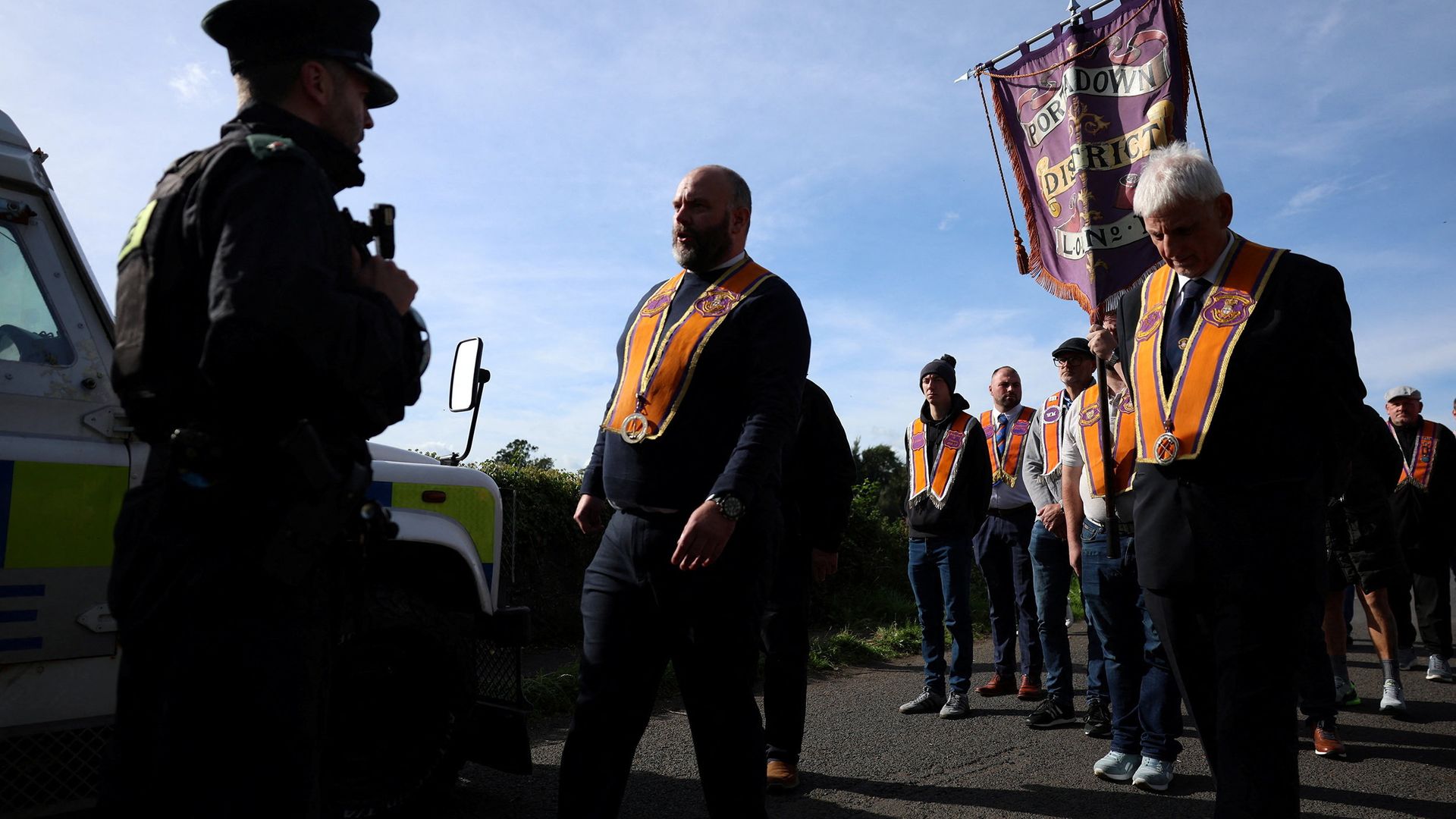
Ghost towns don't usually appear overnight. But in Portadown, tension builds with a quiet, heavy certainty that veterans of the Troubles know all too well. When Northern Ireland Secretary Sir Chris Bryant stepped in to block the contentious Orange Order march down the Garvaghy Road, he didn't just stop a single parade. He pulled the pin on a political grenade that has been ticking for decades.
If you're wondering why a local marching dispute in County Armagh can rattle the foundations of Stormont, you have to look past the surface headlines. This isn't about traditional routes or cultural expression alone. It’s a stress test for a peace process that's running on empty fumes.
The Anatomy of a Thirteen-Day Standoff
The numbers tell a grueling story. For nearly two weeks, Portadown sat at the center of a volatile 13-day impasse. On one side, the Portadown District Orange Order insisted on walking their traditional route from Drumcree Church. On the other, nationalist residents of the Garvaghy Road drew a hard line against what they view as sectarian triumphalism.
Initially, the Parades Commission gave the green light, ruling that conditions permitted the procession. That determination sparked immediate fury, a spike in community anxiety, and a rapid descent into familiar tribal trenches. Mediation failed. The rhetoric hardened.
When Police Service of Northern Ireland (PSNI) Chief Constable asked Bryant to review that original determination, the pressure reached a boiling point. Bryant pulled the plug, issuing a ban that prevented the march from moving forward as planned.
The Political Fallout
Reactions to the ban laid bare the fragile division still plaguing Northern Ireland politics. Unionist leaders reacted with fierce condemnation. Democratic Unionist Party (DUP) leader Gavin Robinson didn't mince words, accusing authorities of bowing to republican agitation and warning that the rule of law has been fundamentally undermined. From the DUP's perspective, caving to threats of disorder creates a dangerous precedent where shouting the loudest wins the day.
Conversely, nationalist figures and leaders across the border urged caution and relief, emphasizing that a return to past confrontations serves no one. Taoiseach Micheál Martin noted that unionists would view the decision through a painful prism, urging politicians to handle the aftermath without triumphalism.
Yet, telling people to stand down doesn't magically erase the underlying friction. Trust doesn't rebuild overnight when every community interaction feels like a zero-sum game.
Why This Matters Beyond Portadown
You might ask why an annual marching dispute still carries this kind of weight in 2026. The reality is that Northern Ireland’s institutional architecture remains fragile. Every time a major cultural clash forces Westminster to override local commissions, it exposes structural flaws in how parades, protests, and community consent are managed.
When the framework governing public assemblies lies in tatters, everyday citizens pay the price. Local businesses suffer from lockdown mentalities. Families deal with the psychological toll of barricades and flashing police lights.
The core question isn't whether a single march happens or gets canceled. It's whether Northern Ireland can ever move past a politics defined by blockades and vetoes. Until leaders find a durable framework for cultural expression that doesn't require emergency intervention from the Secretary of State, these standoffs will keep returning.
Give the communities breathing space. That was Bryant’s plea as the police operation wound down. But breathing space is a temporary fix. The real work starts when the cameras leave and someone has to rebuild the trust left in the rubble.