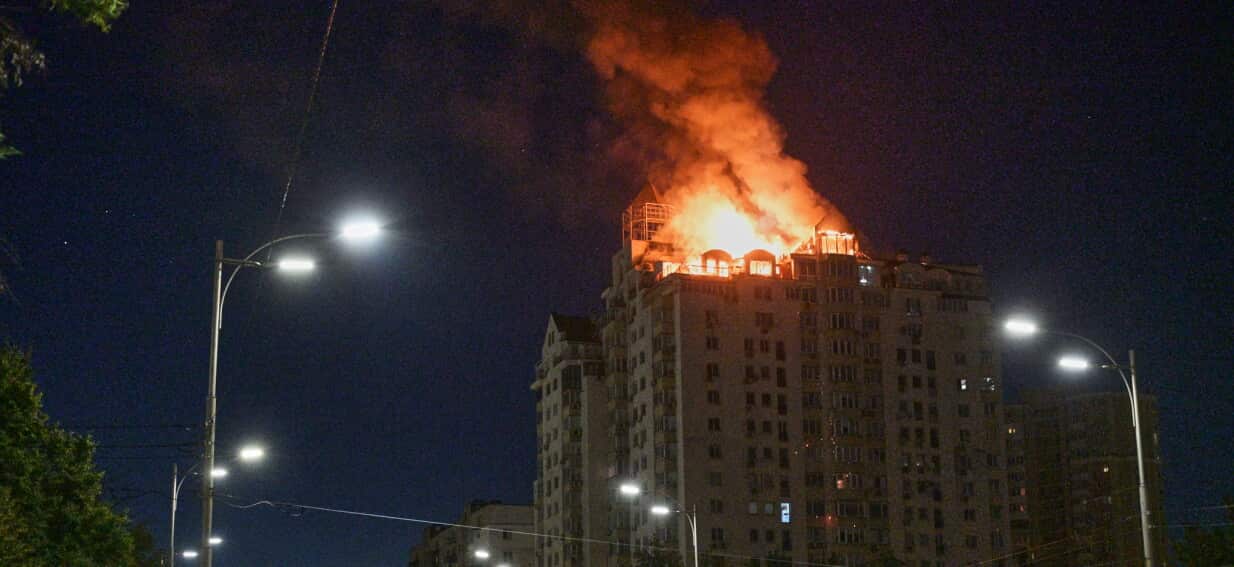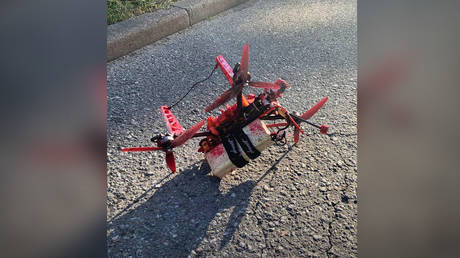
A pair of commercial quadcopters buzzed through the night sky over Stockholm, heading straight for the Russian Embassy. It was roughly 2:00 a.m. when the quiet suburb became the latest stage for a bizarre, high-stakes geopolitical stunt. One drone dropped a container packed with red paint onto the embassy grounds. The other carried something far more alarming—a mock improvised explosive device. That second drone crashed right on the property, sending the diplomatic staff into an absolute frenzy.
Russia immediately went on the defensive, blasting out angry Telegram statements and accusing Sweden of failing to protect its foreign missions. They called it an open attempt to intimidate their staff. Honestly, they aren't entirely wrong about the intent. Dropping fake bombs on an embassy is a clear psychological message.
But this isn't just an isolated incident of neighborhood vandalism. It points to a massive, glaring vulnerability in diplomatic security that most Western nations simply don't know how to handle.
The Anatomy of the Stockholm Incident
The details coming out of Stockholm paint a chaotic picture. This wasn't some sophisticated military operation. It was a cheap, highly effective display of gray-zone harassment using off-the-shelf consumer tech.
The first drone did its job by splashing bright red paint across the premises, a symbolic gesture clearly meant to represent blood. The second drone created the real panic. When security teams discovered the downed quadcopter with a fake bomb attached, the situation escalated from a simple cleanup job to a major security scare.
The Russian Foreign Ministry wasted no time pointing fingers. They released statements slamming Swedish law enforcement, claiming that the local police do nothing more than file formal reports. According to Moscow, there have been dozens of similar acts of vandalism against their property in Sweden over the past two years.
They also brought up the 1961 Vienna Convention on Diplomatic Relations. Under international law, receiving states are legally bound to protect foreign embassies from intrusion, damage, or any disturbance of the peace. Russia claims Sweden is dropped the ball entirely.
The Vienna Convention in the Age of Cheap Drones
International treaties written in the middle of the twentieth century didn't anticipate the existence of twenty-dollar plastic drones. The Vienna Convention says a host country has a special duty to take all appropriate steps to protect the premises of a mission. Historically, that meant putting up high fences, installing security cameras, and placing police officers at the front gate.
A fence doesn't stop a quadcopter.
Local police forces face a logistical nightmare here. Stopping a drone requires detecting it early, identifying whether it poses a lethal threat, and deploying counter-drone measures in a crowded urban area. If a police officer shoots down a drone, where do the bullets fall? If they use electronic jamming, how does that affect neighboring civilian communications?
These are the practical questions that Russian diplomats completely ignore when they demand perfect protection. They want Sweden to treat every flying piece of plastic like an incoming military missile. For Swedish authorities, pulling that off without turning Stockholm into a militarized zone is practically impossible.
Why Sweden is Stuck in the Middle
Sweden recently joined NATO, a move that fundamentally shifted the regional security dynamic. Tensions between Stockholm and Moscow are at an all-time high. Because of that, the Russian Embassy has become a magnet for intense public anger.
People are furious about ongoing geopolitical conflicts, and they want to show it. In a free society like Sweden, protests are legal. Vandalism isn't, but tracking down a drone operator who is sitting in a parked car three blocks away is incredibly difficult.
The Kremlin previously suggested that Swedish authorities might even be authorizing these drone flights behind the scenes. That claim is ridiculous. Sweden doesn't want fake bombs dropping inside its borders any more than Russia does. A fake bomb requires an explosive ordnance disposal team to verify it, which ties up local emergency services and creates a genuine public safety hazard.
The real issue is that the technology used to commit these acts has completely outpaced the laws and tactics designed to stop them.
The Reality of Modern Embassy Harassment
Look across Europe, and you'll see this happening everywhere. Russian embassies in Poland, Germany, and the Baltic states have faced constant protests. Activists have dumped manure outside diplomatic gates, blasted sirens at midnight to wake up staff, and painted nearby streets in symbolic colors.
Drones just represent the natural evolution of these tactics. They allow an activist—or an operative—to breach the physical perimeter of a heavily guarded compound without ever risking arrest at the gate.
This creates a terrifying ambiguity for security personnel. When a drone flies over an embassy wall, the guards have no idea if it's carrying a camera, a bucket of paint, or a pound of high explosives. They have seconds to react. By using a fake IED, the perpetrators in Stockholm forced the embassy staff to treat the incident as a live terror attack, maximizing the psychological disruption.
Fixing the Glaring Security Gap
So, what happens next? Relying on local police to patrol the sidewalks isn't cutting it anymore. If countries want to protect their diplomatic assets, they need a radical rethink of urban airspace security.
Embassies need to invest in localized, low-frequency radio jamming systems that can force rogue drones to land safely the moment they cross a property line. They need automated detection arrays that can track the radio signatures of consumer quadcopters before they even reach the perimeter.
Governments also need to crack down on the anonymous purchase of high-payload consumer drones near sensitive sites. If someone can buy a drone cash-in-hand, tape a fake pipe bomb to it, and fly it into an embassy with zero digital footprint, these incidents will keep happening.
The Stockholm incident is a loud wake-up call. Cheap tech has broken the traditional rules of diplomatic immunity, and the international community needs to catch up before a fake bomb turns into a real one.