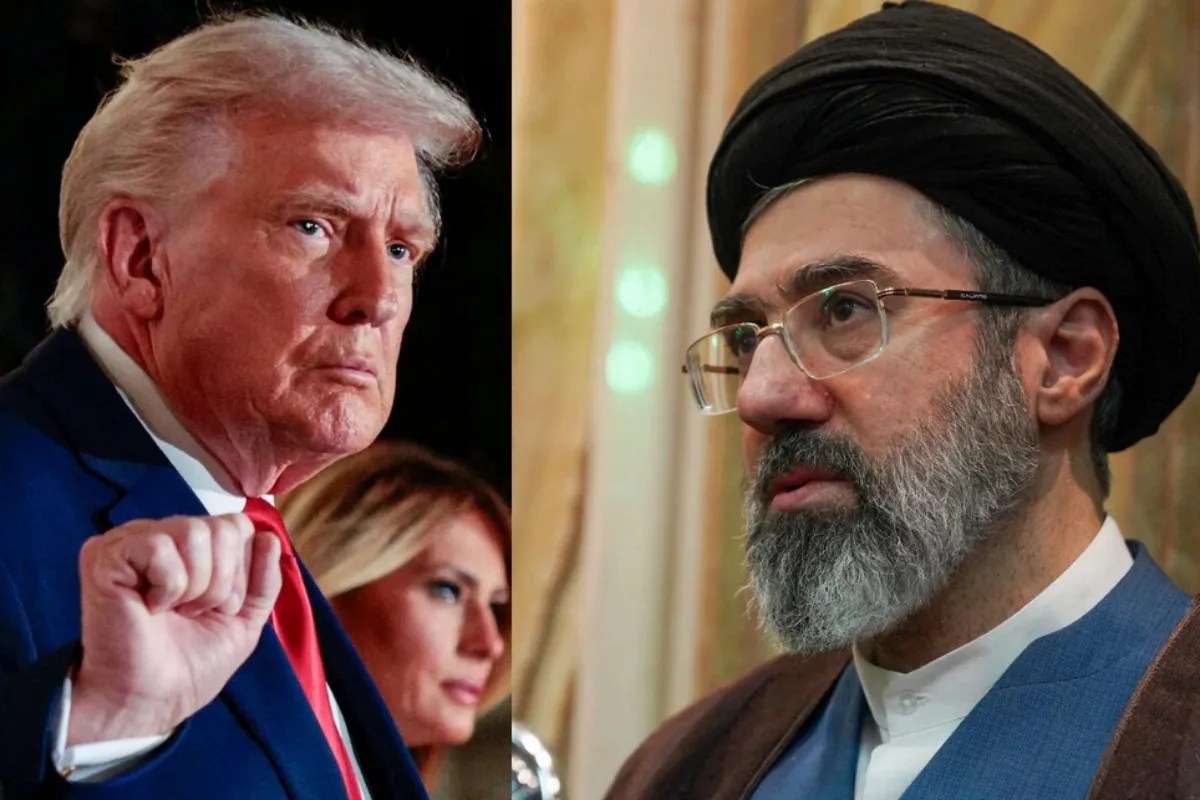
Donald Trump has a way of shattering the quiet of a Sunday afternoon with a single sentence. This time, the tremor didn't come from a rally stage or a televised debate, but from the digital ether, carrying a claim that reframes the entire geography of power in the Middle East. He says the deal is done. He says China, the silent giant of the East, has finally stepped out of the shadows to do what decades of Western diplomacy couldn't: they convinced Iran to put down the match.
If true, the implications are staggering. We aren't just talking about a ceasefire; we are talking about a fundamental shift in who keeps the peace.
For years, the script followed a predictable, bloody rhythm. Washington would push, Tehran would pull, and the region would hold its breath. But the narrative Trump is spinning suggests a new director has taken over the set. Beijing, long content to simply buy oil and build infrastructure, has allegedly used its massive economic gravity to pull Iran toward the negotiating table. It’s a move that feels less like traditional diplomacy and more like a creditor calling in a debt.
The Weight of the Silent Hand
Imagine a merchant in a Tehran bazaar. He doesn't care about the grand theories of international relations. He cares about the price of saffron, the cost of electricity, and whether his sons will be drafted into a war that feels endless. To him, China isn't an ideological ally; it’s a life raft. Iran’s economy has been gasping for air under the weight of global sanctions for a generation. China provided the oxygen.
When you are the only person buying what a desperate nation is selling, your whispers carry the force of a hurricane. Trump’s claim hinges on this exact dynamic. He suggests that Xi Jinping didn’t just ask for peace; he likely made it the price of continued patronage. This is the "Art of the Deal" played on a global chessboard, where the pieces are made of oil barrels and microchips.
The skepticism from the establishment is loud. Critics point out that Trump has a penchant for hyperbole, a tendency to claim credit for shifts that are still in flux. But even his most vocal detractors have to admit that the wind is blowing from a different direction. The Middle East is exhausted. The old guard is changing. And the vacuum left by a pivoting West is being filled by a power that speaks the language of commerce rather than the language of "regime change."
The Invisible Stakes of a Beijing Peace
A ceasefire brokered by China is a bitter pill for many in the halls of power in D.C. to swallow. It signifies a world where the United States is no longer the sole indispensable nation. If China can indeed pacify the most volatile rivalry in the world, they prove that the "Beijing Consensus"—stability through trade and non-interference—actually works.
But what does this mean for the person on the ground in Gaza, or the family living near the northern border of Israel? For them, the "who" matters far less than the "what." If the rockets stop falling, they don't care if the ink on the treaty was dried by a pen from Washington or Beijing.
Peace is rarely a product of sudden moral clarity. It is almost always a product of exhaustion and necessity. Iran is tired. Their proxies are stretched thin. Their streets have seen protests that the government can't simply beat into submission anymore. They need an out. China, looking to secure its energy routes and the stability of its "Belt and Road" investments, needs them to take it.
The Trump Factor
Trump’s role in this story is that of the ultimate disruptor. By shouting this claim from the rooftops, he forces the current administration into a corner. If the ceasefire happens, he claims the vision was his. If it fails, he blames the current leadership for losing the "lead" he supposedly established. It is a brilliant, if chaotic, bit of political theater.
Yet, behind the bluster, there is a core of uncomfortable truth. The world is moving on from the post-Cold War era. We are entering a period of "multi-aligned" powers where nations like Iran can shop for the best deal. They are no longer trapped between a rock and a hard place; they have found a third way.
A New Map of the World
Think about the sheer logistical reality of what is being proposed. For China to guarantee a ceasefire, they must have skin in the game. This isn't about sending peacekeepers in blue helmets. It's about the threat of turning off the financial tap. It’s about the promise of high-speed rail, 5G networks, and a seat at the table of the future.
The Western world views peace through the lens of human rights and democratic values. China views it through the lens of order and efficiency. It is a colder, more transactional kind of peace, but in a region that has been burning for decades, "cold" is a luxury many are willing to pay for.
The skeptics will tell you that Iran will never truly abandon its revolutionary goals. They will say that China is playing a double game. They might be right. But look at the numbers. Look at the shipping lanes. Look at the desperation in the eyes of the people who actually have to live through the "geopolitics" we discuss in air-conditioned rooms.
The Echoes of the Great Game
History doesn't repeat, but it certainly rhymes. A century ago, empires fought over these same sands with cavalry and telegrams. Today, the weapons are currency swaps and satellite imagery. Trump's assertion that China has "persuaded" Iran is a recognition that the center of gravity has shifted. The Atlantic century is giving way to something else—something Pacific, something vast, and something deeply unfamiliar to the Western mind.
We often think of peace as a grand, soaring emotion. A hug between enemies. A flag being lowered. But more often, peace is just a quiet room. It’s the absence of the siren. It’s the ability to plan for next week without wondering if your house will still be standing.
If China has indeed brokered this deal, they haven't done it out of the goodness of their hearts. They’ve done it because war is bad for business. And in the 21st century, business is the only language that everyone still speaks.
The sun sets over the Persian Gulf, casting long shadows across the tankers waiting to move. They carry the lifeblood of the global economy. For years, those ships moved under the watchful eye of the American Navy. Now, they move with the silent permission of a bank in Beijing. Trump’s claim might be premature, or it might be the most honest thing said about the region in years. Either way, the world woke up today to find that the desert looks a little different than it did yesterday. The sand hasn't moved, but the shadows have.