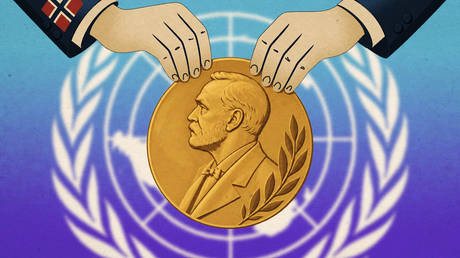
Every October, political pundits dust off the same tired conversation. Will Donald Trump finally secure the Nobel Peace Prize?
He wants it badly. His allies lobby for it loudly. Lawmakers submit nomination letters claiming his foreign policy interventions deserve the highest diplomatic honor on earth. Yet, the five-member Norwegian Nobel Committee in Oslo consistently looks elsewhere, leaving the former and current U.S. president empty-handed.
Stop waiting for a shock announcement. Trump has virtually zero chance of winning the award.
This isn't about petty partisan bias, though that is the favorite talking point of his supporters. The structural mismatch between how Donald Trump conducts foreign policy and how the Nobel Committee defines peace runs too deep.
The Short-Term Deal Fallacy
Foreign policy purists and Oslo insiders look at conflict resolution through a completely different lens than Trump does. Trump operates like a real estate developer. He wants splashy, rapid-fire breakthroughs. Think of the Abraham Accords or various brokered ceasefires. He flies in, forces parties to the table, extracts a signature, and declares victory.
The Nobel Committee cares about institutional longevity.
International relations experts note that stopping active shooting is only the first step. Real peace requires building democratic institutions, addressing root economic and social causes, and securing multilateral agreements that survive changes in administration. Trump prefers bilateral, transactional deals built on personal rapport rather than durable institutional frameworks. When those deals fracture or fail to address the core grievances of populations on the ground, the committee takes notice.
The Rhetoric Problem
Alfred Nobel's will specifies that the prize should go to the person who has done the most "for fraternity between nations, for the abolition or reduction of standing armies and for the holding and promotion of peace congresses."
Trump's public communication style directly clashes with this mandate. His strategy relies on maximalist threats, public insults, and aggressive posturing. You cannot spend years tweeting bellicose warnings about total destruction, mocking foreign leaders, and threatening trade wars, and then expect a conservative Scandinavian committee to hand you a medal for international fraternity.
Even when his administration notches a genuine diplomatic win, the accompanying rhetoric often undercuts the cooperative spirit the prize rewards. Diplomacy built on coercion leaves a bitter aftertaste in international capitals. The committee looks for bridge-builders who embody multilateral reconciliation, not disruptors who treat alliances like transactional business arrangements.
The Institutional Architecture of Oslo
Most people misunderstand who actually picks the winner. The Norwegian Nobel Committee is appointed by the Storting, Norway's parliament. While it operates independently of the government, its members reflect a European, institutionalist worldview.
They value international bodies like the United Nations, global climate agreements, and human rights frameworks. Trump has spent his political career openly attacking international agreements, pulling out of climate pacts, and undermining traditional alliances like NATO. Expecting an institution rooted in European liberalism to honor an arch-critic of the post-war international order ignores basic political reality.
Nominations are easy to secure. Any national lawmaker, university professor, or former laureate can submit a name. That is why Trump has racked up numerous nominations over the years. But a nomination is a bureaucratic formality, not an endorsement. Thousands of names go into the hat every single year.
Trump will keep chasing the validation of the Oslo committee because it represents the ultimate global stamp of legitimacy. But until his approach to foreign affairs fundamentally shifts from disruption to reconciliation, the answer from Norway will remain the same.



