For over 160 years, the rotunda of the California State Capitol reserved its highest posthumous tribute exclusively for elected men. That ended on November 16, 2026.
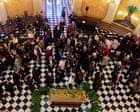
When pallbearers carried Dolores Huerta's casket beneath the historic dome in Sacramento, she became the first woman and the first non-elected civilian ever to lie in honor at the California State Capitol. Most coverage treats this milestone like a polite ceremonial footnote. It isn't. It's the final, undeniable proof that an outsider who spent seventy years kicking open legislative doors finally reshaped the building from the inside out.
Huerta died of cancer at her home in Bakersfield on October 28, 2026, at age 96. Less than three weeks later, thousands of farmworkers, nurses, Girl Scouts, indigenous dancers, and California's highest-ranking politicians converged on Sacramento to witness a tribute that almost nobody in 1950s California would have thought possible.
Breaking a 168-Year Capitol Precedent
To understand why this ceremony matters, look at who came before her. According to the California State Library, nine individuals had previously lain in state at the Capitol, starting with State Senator William I. Ferguson in 1858 and most recently Congressman Robert Matsui in 2005. Every single one of them held public office. Every single one was a man.
Protocol draws a sharp line between lying in state (reserved for elected officials) and lying in honor (granted to private citizens who rendered extraordinary service to the public). By passing a joint resolution through both the Assembly and the Senate, California lawmakers didn't just bend tradition—they rewrote the civic hierarchy.
Governor Gavin Newsom and Acting Governor Monique Limón ordered flags at the Capitol and all state buildings flown at half-staff. Look at who led the official delegation following Huerta's casket into the rotunda:
- Governor-Elect Xavier Becerra
- Senate President pro tempore Monique Limón
- Assembly Speaker Robert Rivas
Notice a pattern? When a young Dolores Huerta first arrived in Sacramento in the 1950s to lobby as a volunteer for bilingual voting access and basic driver's license tests in Spanish, there wasn't a single Latino lawmaker serving in the California Legislature. Zero. Seven decades later, the three top elected leaders welcoming her body into the Capitol rotunda were all Latino Californians whose political careers sit directly on the foundation she poured.
Becerra, speaking in Spanish during the tribute, recalled knowing her simply as Tía Lola (Aunt Lola) long before he understood the weight of her given name. "Dolores" translates to "pains". As Becerra pointed out, she spent her life absorbing the pain of invisible laborers so their children could step into rooms once locked against them.
What Happened During the Sacramento Procession and Ceremony
You don't honor a street organizer with a stiff, silent funeral. Sacramento didn't try.
On Monday morning, November 16, roughly 600 community members gathered at Crocker Park before marching alongside a white hearse down Capitol Mall toward the West Steps. Marigold-adorned lowriders led the route while indigenous dancers moved past the Tower Bridge. People carried bundles of marigolds and sang De Colores, the Spanish folk anthem that echoed across California's agricultural valleys during the farmworker strikes of the 1960s and 1970s.
Chants of "Sí, se puede!"—the rallying cry Huerta coined in 1972 during an Arizona organizing campaign—rang out against the Capitol stone.
The schedule moved with deliberate precision:
- 11:00 a.m. The community-led procession departed Crocker Park along Capitol Mall, joined directly by state lawmakers.
- 11:30 a.m. Huerta's casket arrived at the West Steps, where pallbearers escorted her into the rotunda.
- 12:00 p.m. Lawmakers, family members, and labor leaders held a private, invite-only tribute beneath the dome.
- 12:30 p.m. to 6:00 p.m. The Capitol doors opened wide so everyday Californians could walk past her casket and pay their final respects.
Assembly Speaker Robert Rivas, who called Huerta both a family friend and a personal mentor, captured the shift in power during the rotunda remarks. For more than seven decades, she stood outside that building demanding dignity for farmworkers, women, and immigrants. On November 16, the institution itself bowed to her.
Why Most History Books Misunderstand Her Role
If you ask an average person who built the farmworker movement, nine times out of ten they'll say César Chávez. That's an incomplete reading of history, and honestly, it erases the person who actually got the laws passed.
Chávez was the spiritual figurehead who led fasts and marches. Huerta was the strategist, lobbyist, and contract negotiator who turned moral outrage into enforceable legal rights.
In 1962, she co-founded the National Farm Workers Association with Chávez in Delano, California, which later evolved into the United Farm Workers (UFW). While pickets lined the vineyards during the five-year Delano Grape Strike, Huerta relocated to New York City to coordinate the nationwide grape boycott. She convinced millions of East Coast shoppers to stop buying table grapes, crushing grower profits until major producers signed historic union contracts in 1970.
Then she took on Sacramento directly. Her legislative fingerprints are all over California's legal code:
- 1961: Lobbied successfully for old-age pensions for non-citizen residents and Spanish-language driver's exams.
- 1963: Helped secure Aid to Families with Dependent Children (AFDC) for California farmworkers.
- 1975: Engineered the political coalition behind the California Agricultural Labor Relations Act, the first law in the continental United States guaranteeing farmworkers the right to organize and bargain collectively.
At the November 16 gathering, SEIU Local 2015 President Arnulfo De La Cruz summed up her method best: "Dolores didn't just build a movement, she built leaders".
Confronting the Full Truth of Her Legacy
Honoring someone properly means refusing to sanitize their life. Several attendees and commentators at the Sacramento tribute pointed out something vital that sanitized obituaries often skip.
Huerta didn't just fight growers and conservative governors; she fought fierce sexism inside her own movement. Raising eleven children while negotiating multimillion-dollar labor contracts meant enduring constant criticism from male colleagues who thought a woman belonged at home rather than at the bargaining table.
Late in her life, at age 95, Huerta publicly revealed that Chávez—her longtime co-founder and boss—had raped her in the 1960s. Acknowledging that painful truth doesn't diminish her work; it makes her survival and persistence almost superhuman. Younger organizers standing outside the Capitol in November 2026 specifically cited her candor and resilience as the reason they felt empowered to speak up in male-dominated spaces today.
Her coalition-building also stretched far beyond Latino communities. Decades ago in California's Central Valley, Huerta forged deep working alliances with Punjabi Sikh farmworkers and growers, recognizing early on that cross-cultural solidarity beats division every single time. That lifelong bridge-building showed up clearly in the days immediately following her Sacramento tribute.
From Sacramento Back to Bakersfield
Sacramento was the state's official goodbye, but Bakersfield was home.
Three days after the Capitol ceremony, on November 19, mourners gathered at the IBEW Local 428 Hall in Bakersfield for a public rosary and evening vigil. The next day, November 20, thousands packed Dignity Health Arena for an interfaith memorial service and celebration of life.
True to the way Huerta lived, the Bakersfield service didn't belong to a single faith or demographic. Alongside Catholic traditions, Sikh representative Paran Singh Mangat, Muslim representative Aziza Hasan, and Hindu representative Dr. Sudarshan Kapoor offered prayers and sacred readings. Puneet Maharaj, executive director of the California Nurses Association, noted earlier in the week that Huerta taught women across every profession—from hospital wards to agricultural fields—that demanding care and compassion is an act of militancy.
How to Carry Forward the Work She Left Behind
United Farm Workers communications director Antonio De Loera made a blunt point outside the Capitol: Huerta never cared about statues, rotunda ceremonies, or politicians' speeches. She cared about the workers still risking retaliation or deportation every morning just to earn a living wage.
If you want to honor what happened at the California State Capitol on November 16, don't treat her life like a closed chapter in a museum exhibit. Take three concrete steps right now:
- Support grassroots civic training: Explore the organizing programs run by the Dolores Huerta Foundation, which trains everyday residents in rural California communities to run for school boards, water districts, and city councils.
- Audit your own workplace and community boards: Look at who sits in the room when decisions get made about wages, safety, or local budgets. If the people doing the hardest work aren't at the table, push to open the door.
- Verify where your food comes from: Check for union labels—like the black UFW eagle—when buying produce, and pay attention to heat-illness protections and wage-theft laws in your own state.
Dolores Huerta proved you don't need an official title to command the most powerful room in California. You just have to refuse to leave until the work is done.