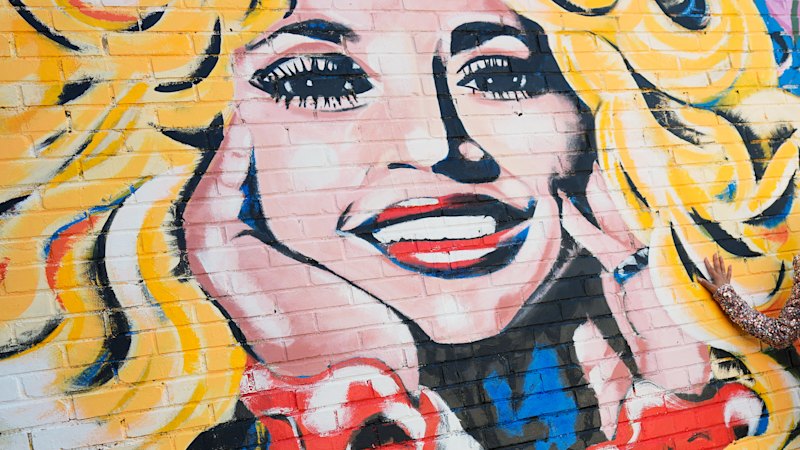
Dolly Parton is not America because she is a barefoot Appalachian folk hero who strummed her way out of poverty on a three-string guitar. She is America because she built an impenetrable, privately held corporate empire while wearing four-inch heels and a permanent smile.
For decades, cultural commentators have written about her charm, her philanthropy, and her self-deprecating wit. They treat her theme park, Dollywood, as a rustic petting zoo wrapped in nostalgia. They are wrong. Dollywood and her broader commercial apparatus represent a masterclass in modern capitalism, shrewd labor relations, and brand control that Silicon Valley tech founders and corporate conglomerates spend billions trying to replicate. Expanding on this theme, you can also read: Stop Mourning Yayoi Kusama and Start Questioning the Machine That Built Her.
Look past the rhinestones. Underneath the sparkling surface lies a ruthless, highly disciplined strategist who owns her masters, controls her image, and outmaneuvered major entertainment corporations before most modern executives finished business school.
The Ownership Doctrine
Most recording artists sign away their catalog for an upfront check and a percentage of royalties. Parton did the opposite in 1999 when she bought back her publishing company, Vanguard, and retained absolute ownership of her master recordings. Analysts at GQ have shared their thoughts on this matter.
When Elvis Presley wanted to record "I Will Always Love You" in 1974, Colonel Tom Parker demanded half of the publishing rights as a condition of the cover. Parton said no. She walked away from millions of dollars in guaranteed Elvis royalties to protect her intellectual property. Decades later, Whitney Houston recorded the track, and the resulting windfall proved Parton made the single best financial decision in country music history.
Owning your work sounds simple. Very few artists actually do it. Parton understood early that fame is ephemeral, but copyright law is eternal. She treated every song as a permanent equity asset rather than a temporary promotional tool.
- Every lyric is registered under her own publishing entities.
- Every licensing deal is filtered through her personal approval board.
- Every merchandising partnership requires profit-sharing structures heavily favored toward her private holding company.
This is not the behavior of a naive southern songbird. This is the playbook of a shrewd media magnate who recognized that creative freedom requires absolute financial independence.
The Pigeon Forge Economic Engine
Dollywood does not exist in a vacuum. Located in Pigeon Forge, Tennessee, the park employs thousands of local workers and generates hundreds of millions of dollars in regional economic impact.
Critics often dismiss regional theme parks as low-rent alternatives to Disney or Universal. They miss the entire operational strategy. Hersched Family Entertainment, the co-owner and operator of Dollywood alongside Parton, runs the property with a localized precision that corporate theme parks lost decades ago.
While major conglomerates raise ticket prices while slashing guest experience, Dollywood consistently reinvests in regional culture, craftsmanship, and community relations. Parton ensured that her park acts as an economic anchor for Sevier County.
- The Dollywood Foundation funds the Imagination Library, mailing free books to millions of children worldwide, establishing a localized philanthropy model that scales globally.
- The park features working blacksmiths, glassblowers, and heritage artisans, preserving Appalachian trades while turning historical preservation into a high-margin tourist attraction.
- Employees, locally referred to as hosts, receive tuition-free higher education programs fully funded by the company, bypassing the labor shortages plaguing the broader hospitality sector.
By tying her brand directly to regional pride, Parton created a defensive moat around her business. You cannot boycott Dollywood without boycotting East Tennessee. You cannot criticize Parton without alienating millions of working-class families who view her as their economic savior.
Weaponized Persona
The most brilliant aspect of Parton's career is her complete control over public perception. She famously quipped that it costs a lot of money to look this cheap. That single sentence is a masterclass in corporate defense.
By leaning hard into self-deprecating jokes about her appearance, her wigs, and her plastic surgery, she disarms critics before they can attack her. She creates a caricature of herself that is bulletproof. Nobody can expose a fraud when the person being satirized is a deliberate, highly calculated creation controlled entirely by the artist.
Behind the caricature sits a relentless workaholic. She has written over three thousand songs. She has starred in major feature films, launched a cosmetics line, produced television series, and maintained a grueling touring schedule well into her late seventies.
Corporate CEOs hire expensive crisis management firms to protect their reputations. Parton spent fifty years manufacturing an impenetrable public armor out of glitter and charm.
The Myth Versus The Balance Sheet
To view Parton solely through the lens of wholesome entertainment is to miss the mechanics of her enduring influence. She survived the brutal transitions of the music industry—from vinyl to cassettes, CDs to streaming—not by adapting to every trend, but by forcing the industry to adapt to her independent structure.
She never signed an exclusive, long-term 360-deal with a major label. She releases records through independent distribution networks when it suits her, partners with Netflix for targeted film projects, and launches rock albums when she feels like expanding her demographic reach, as evidenced by her recent crossover success.
She controls the narrative, the capital, and the means of production.
America loves her because she makes us feel safe, nostalgic, and understood. But the real reason she remains an unmatched cultural and financial titan is that she out-capitalized the capitalists while making everyone think she was just a singer from the Smokies.
The rhinestones are real. So is the profit margin.