The backstage of a massive arena smells like ozone, stale coffee, and the faint, sweet trace of lingering adrenaline. To the thousands outside, screaming into the twilight, the tour is a monolith. It is a singular, breathing machine of light and sound. But machines are made of parts, and parts can unbolt themselves when the vibration gets too loud.
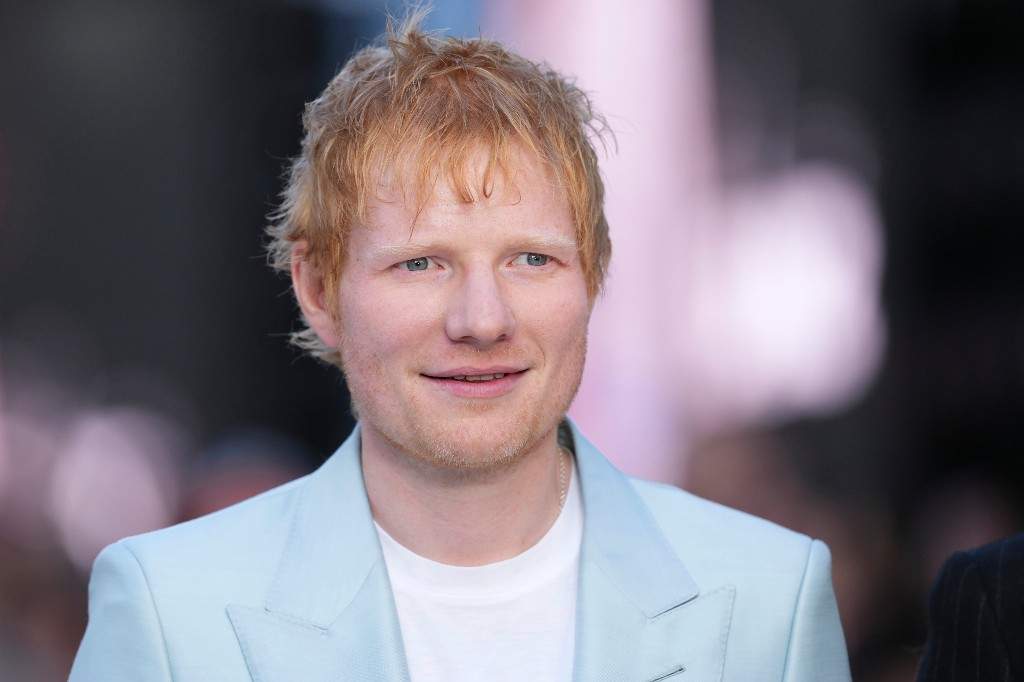
Ed Sheeran knows the sound of those bolts loosening.
When Macklemore quietly stepped away from the tour, vanishing from the high-profile lineup that had carried them across vast geographic and cultural territories, the internet did what the internet always does. It filled the vacuum with static. Rumors hissed through comment sections. Blame was cast like confetti. People wanted a villain, or at least a clean narrative arc where someone slammed a door and walked into the rain.
Instead, there was only the microphone, and the heavy weight of a clarification.
"I am not complicit," Sheeran would ultimately make clear, cutting through the fog of speculation with a bluntness that caught the room off guard.
It is a striking word, complicit. It carries the weight of courtrooms and silent agreements, of standing by while something fractures. It implies that a shared stage means a shared mind, that friendship in the public eye is an unbreakable contract where every choice made by one man must be owned by the other.
But anyone who has ever shared a workspace, a band, or a grueling months-long journey across time zones knows the myth of that collective identity.
Touring is not a seamless brotherhood of uninterrupted harmony. It is a pressure cooker. You live in metal tubes, you sleep on the hum of diesel engines, and your world shrinks to the dimensions of a green room and a barricade. In that kind of proximity, fissures do not form slowly. They snap.
When creative or personal divergences happen under the white-hot glare of international media, they are rarely simple. They are tangled in logistics, differing worldviews, and the sheer, brutal exhaustion of being perpetually perceived. Macklemore’s exit wasn't just a scheduling conflict or a polite parting of ways; it was a collision of trajectories. And when one traveler decides the road is leading somewhere they no longer care to walk, stopping is the only honest option left.
Yet, the public demands a communal fallout. We look at two artists who once shared the same spotlight and expect their moral compasses to be welded together. If one pivots, we interrogate the other. What did you know? When did you know it? Why didn't you stop them?
This is where the illusion of proximity fails us.
Proximity is not alignment. Sharing an itinerary does not mean sharing a conscience. Sheeran’s insistence that he is not complicit is not an act of abandonment; it is a boundary. It is the artist stepping back behind the velvet rope and saying: This instrument is mine, but that choice was his.
Consider what happens when we refuse to allow public figures their individual agency. We trap them in a perpetual peer group, treating grown men like high school clique members who must either rise together or fall together. It is an exhausting standard, born of a culture that treats celebrity lives as serialized drama rather than human existence.
Ed Sheeran built his entire career on the myth of the lone troubadour. Even when flanked by massive production values, thousands of screaming fans, and opening acts of global renown, the core image remains unchanged: a guy with a loop station, an acoustic guitar, and a story to tell. That solitary foundation makes the entanglement of tour politics particularly jarring. He is a man accustomed to carrying his own weight, suddenly forced to explain the cargo of the truck driving behind him.
The silence that followed Macklemore’s departure was deafening precisely because it was filled with so much noise from the outside. Fans parsed lyrics. Pundits dug through old interviews looking for foreshadowing. Every social media post was weighed on a jeweler's scale, searching for hidden messages.
We love a mystery. We love to decode the subtext of a cancelled appearance. But sometimes a departure is just a departure. Sometimes the road simply forks, and two people who were walking side-by-side realize they are heading toward entirely different horizons.
There is a quiet dignity in refusing to adopt someone else's exit. Sheeran didn't dramatize the split, nor did he offer a platitudinous corporate statement drafted by a publicist trying to protect ticket sales. He simply drew a line in the dust of the backstage corridor.
On one side of that line is his music, his rhythm, his relentless schedule. On the other is Macklemore’s choice, standing on its own merits and consequences.
The arena lights go down. The crowd roars, a tidal wave of warm human breath and expectation. The loop pedal clicks on. For the next two hours, there will be no room for questions, no space for invisible entanglements, only the vibration of a string and the sound of one voice cutting through the dark.