Imagine trying to buy an area twice the size of Manhattan without anyone noticing. Walt Disney actually pulled it off in the mid-1960s. He didn't want land speculators ruining his grand vision, so he weaponized dummy corporations and fake identities to scoop up cheap Central Florida swampland. That clandestine operation became Walt Disney World, forever altering the landscape of American tourism and real estate strategy.
If word got out that the man behind Mickey Mouse was eyeing Florida acreage, prices would have exploded overnight. Understanding how Disney executed this massive land grab reveals a masterclass in corporate secrecy, long-term planning, and high-stakes negotiation.
The Problem with Disneyland and the Search for Space
Disneyland opened in Anaheim in 1955, and Walt was already feeling boxed in. Hotels, motels, and tourist traps cropped up right outside his park's berm, siphoning off profits and ruining the immersive illusion he wanted to maintain. He needed breathing room. He needed a buffer zone.
In the early 1960s, Walt and his executive team started scouting locations for a second, much larger park known internally as "The Florida Project". They settled on Central Florida for several practical reasons. It sat at the crosshairs of major highways, boasted a warm climate year-round, and sat inland enough to mitigate the immediate, devastating impacts of coastal hurricanes.
The target area spanned across Orange and Osceola counties, consisting mostly of remote cattle ranches, citrus groves, and untamed wetlands. It looked worthless to locals. To Walt, it was a blank canvas.
Shell Companies and the Art of Deception
To acquire over 27,000 acres without triggering a massive price hike, Disney needed a smoke screen. The company deployed a network of dummy corporations and shell companies with obscure names.
Agents working for Disney purchased parcels under titles like the Reedy Creek Ranch Corporation, the Latin-American Development and Management Corporation, and MT Lot Properties—a clever pun on "empty lot". Local landowners had no idea they were selling dirt to Hollywood royalty.
Rumors ran wild across Central Florida. People whispered that the mysterious buyer purchasing up swamp tracts was NASA expanding its operations, or perhaps industrial giants like Ford, the Rockefellers, or billionaire Howard Hughes. Some locals even suspected Boeing was moving in. Disney's operatives played along, keeping low profiles and buying land cheap. Early parcels went for as little as $100 to $200 an acre.
Tracking Down Absentee Owners
Buying large cattle ranches was easy compared to what came next. Decades earlier, parts of the target area had been sliced up into tiny, five-acre plots through mail-order schemes and sold off to hundreds of unsuspecting investors across the country.
Disney's point man for the land acquisitions, Robert Foster, had to hunt down these absentee owners scattered nationwide. Imagine tracking down the heirs of a deceased speculator living in rural Iowa just to buy a scrap of useless Florida swamp. Negotiators flew across the country, making cash offers before anyone could connect the dots back to California.
The strategy worked brilliantly until it didn't. The sheer volume of transactions raised eyebrows.
The Cat Gets Out of the Bag
The corporate espionage unraveled in October 1965. An enterprising Orlando Sentinel reporter named Emily Bavar traveled to California to interview Walt Disney. Straight to his face, she asked if Disney was the mysterious buyer snapping up all the land in Central Florida.
Walt flashed a trademark evasive grin and deflected the question. Bavar read between the lines, treated the non-denial as a confirmation, and published the story.
The secret was dead. Overnight, the local real estate market went completely insane. Land that had previously traded for a couple of hundred dollars an acre suddenly skyrocketed. Speculators flooded the region hoping to cash in on Disney's coattails, pushing some subsequent land prices up to tens of thousands of dollars per acre. Fortunately for Walt, the vast majority of the core acreage was already locked up.
Building an Empire on a Swamp
Securing the dirt was only half the battle. Central Florida terrain is notoriously soggy, flat, and prone to flooding. Transforming thousands of acres of wetlands into a functioning resort required an unprecedented engineering effort.
Disney brought in massive dredging equipment to dig canals, move millions of cubic yards of earth, and build an advanced water management system that still controls flooding across the property today.
Because Disney wanted total autonomy over how this massive territory was developed, the company lobbied the Florida legislature. In 1967, lawmakers created the Reedy Creek Improvement District. This unique legislative move essentially gave Disney municipal government powers, allowing the company to oversee its own zoning, building codes, and infrastructure without fighting through local red tape.
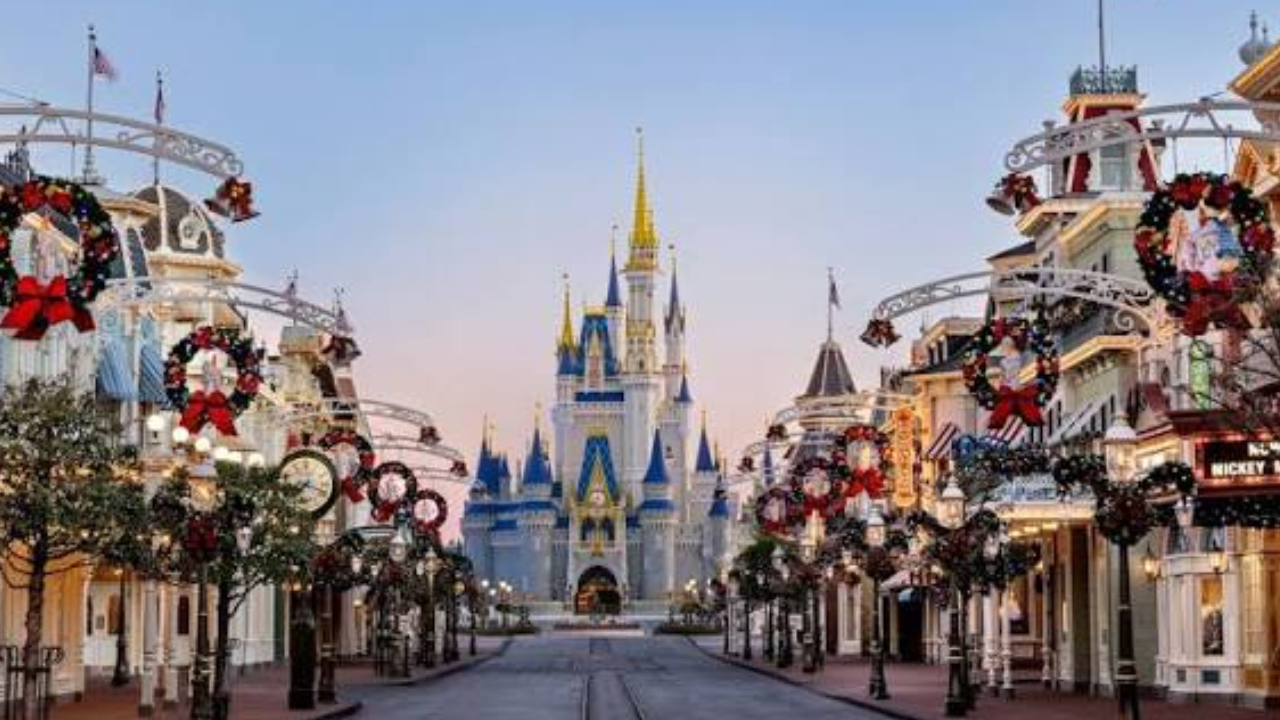
The massive land gamble paid off beyond anyone's wildest projections. Walt Disney World finally opened its gates on October 1, 1971. While Walt didn't live to see it finished, the 27,443 acres he secretly secured gave his company something Disneyland could never match: absolute control, limitless elbow room, and the power to build a self-contained world from scratch.