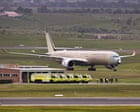
Airbus just pulled off a massive milestone for global aviation. A brand-new Airbus A350-1000ULR took off from the manufacturing plant in Toulouse, France, and touched down in Melbourne after flying nonstop for over 19 hours.
That is nearly 17,000 kilometers in a single shot. More than 67,000 aviation nerds tracked the flight live, making it the most-watched journey on the internet that day.
The aircraft, registered as F-WULR, carried four test pilots and five flight test engineers. They weren't carrying regular passengers yet. This flight was part of the rigorous certification process for Qantas' long-awaited Project Sunrise.
Sitting in a metal tube for 19 to 22 hours sounds like a unique form of punishment to some people. To others, skipping a painful layover in the Middle East or Asia is worth every single minute.
How a plane carries enough fuel for 22 hours straight
You can't just take a standard commercial jet and tell the pilot to keep flying past its limit.
Standard long-range jets simply run out of gas. To solve this, Airbus modified the A350-1000 by adding a specialized rear center fuel tank that holds an extra 20,000 liters of jet fuel.
They also bumped up the maximum takeoff weight. But extra fuel creates a physics dilemma: fuel adds weight, and weight burns more fuel.
To make the math work, Qantas made a radical decision regarding seat count.
A standard Airbus A350-1000 usually fits anywhere between 350 and 410 passengers in a standard multi-class layout. The Project Sunrise variant will carry just 238 passengers.
Fewer people means less baggage, less water, and less dead weight. It turns out the secret to ultra-long-haul flying isn't just bigger fuel tanks—it's flying significantly emptier planes.
Surviving a 20-hour flight without losing your mind
When you're stuck in the air for almost a full day, traditional seating models fall apart. Deep vein thrombosis becomes a genuine health threat, and cabin fever sets in hard around hour 14.
Qantas is tackling this with a dedicated "Wellbeing Zone" positioned between Economy and Premium Economy. It isn't just a place where you stand by the galley waiting for a glass of water. It's a physical space equipped with:
- Sculpted handles and integrated stretch bars built into the walls.
- On-screen guided movement programs designed by exercise physiologists.
- Hydration stations serving specialized snacks and beverages designed to combat dehydration.
- Custom circadian lighting systems engineered to trickle daylight cues into the cabin, forcing your brain to adapt to the destination time zone before you even land.
More than 40 percent of the aircraft interior is dedicated to premium cabins, including First Class suites with separate beds and recliners. Even Economy passengers get an extra inch of legroom compared to standard long-haul configurations, alongside integrated storage and individual charging setups.
Why stopovers aren't dead just yet
Nonstop ultra-long flights aren't for everyone, and they certainly won't be cheap.
When Qantas launches its direct Sydney-to-London and Sydney-to-New York routes in late 2027, ticket prices will carry a heavy premium. Premium business travelers whose companies foot the bill will flock to them because saving four hours on a round trip means an extra day of work or rest.
Yet, a huge slice of travelers actually prefers a midway layover.
Stopping at Changi Airport in Singapore or Hamad International in Doha gives you a chance to take a real shower, eat a fresh hot meal on solid ground, and stretch your legs in an environment that isn't pressurized to 6,000 feet.
Carrying tons of extra fuel for the first eight hours of a 20-hour flight is inefficient from an environmental point of view. Burning fuel just to carry fuel raises the carbon footprint per passenger unless airlines offset it with heavy mixes of Sustainable Aviation Fuel (SAF).
What happens next for Project Sunrise
Airbus pushed back initial deliveries due to global supply chain snags, setting the new target for the first operational aircraft delivery in early 2027.
If you want to book a seat on one of these historic non-stop routes:
- Watch for Qantas ticket sales to open in early 2027.
- Expect the first scheduled commercial route between Sydney and London to launch around October 2027.
- Prepare your wallet—fewer seats per aircraft naturally means higher baseline ticket prices.
- Invest in proper compression socks and get used to doing in-flight stretches if you plan to sit in Economy for nearly a full day straight.
Direct flights are pushing physical human limits, but as aircraft technology improves, the world gets smaller by the day.