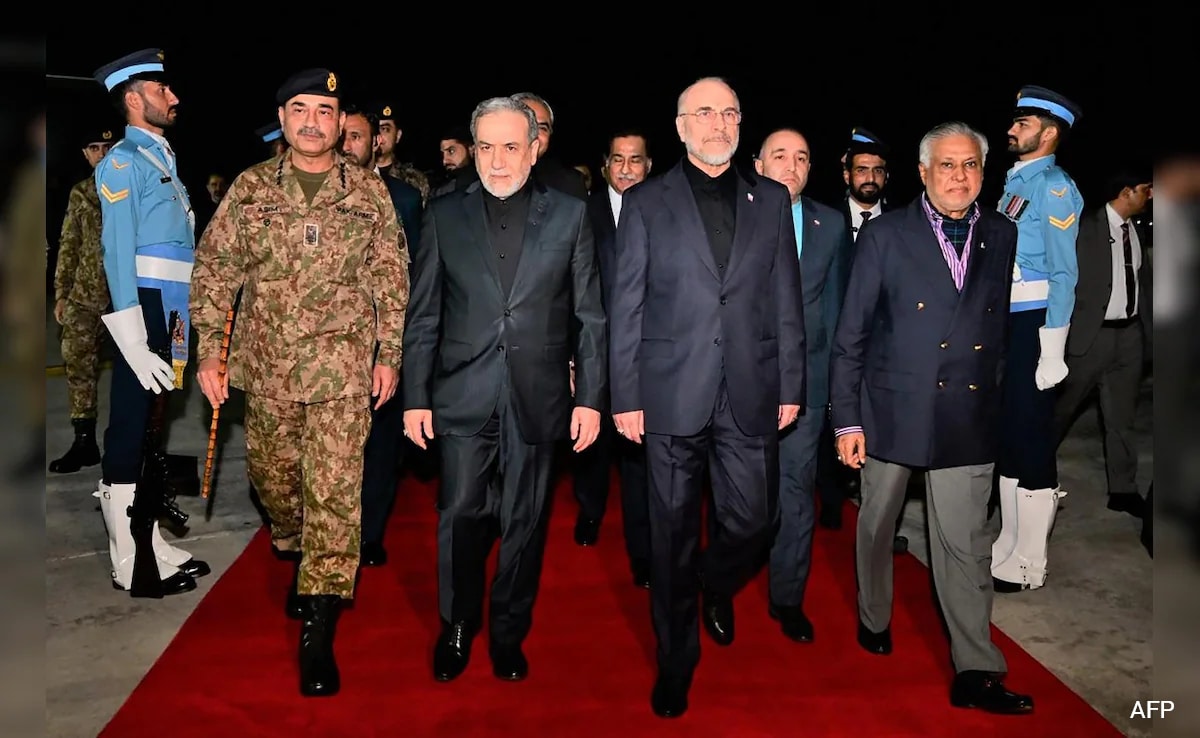
Stop Buying the "Logistics as Persecution" Narrative
Most newsrooms are lazy. They see a headline about a foreign delegation switching from planes to buses and trains and immediately run with a story about "heightened security threats" or "diplomatic intimidation." It’s a predictable script. It’s also exactly what the Iranian delegation wanted you to think.
When talks fail, you have two choices: admit you had no leverage, or manufacture a narrative of victimhood. The recent spectacle of Iranian officials zig-zagging across borders via ground transport isn't a security precaution. It is a calculated piece of political theater designed to distract from the fact that they left the negotiating table with absolutely nothing.
I have spent two decades watching high-stakes international negotiations. When a delegation actually fears for its life, they don't take a public bus. They don't board a passenger train where variables are impossible to control. They move in armored motorcades with state-sponsored security details.
Choosing "humble" transit is a PR move. It’s an attempt to signal to their domestic audience—and the sympathetic global fringe—that they are the underdog being bullied by a superpower. It’s time to stop reporting on the travel itinerary and start looking at the empty briefcase.
The Myth of the "Insecure" Flight Path
Let’s dismantle the logic of the "threat" immediately. The argument suggests that a private or commercial flight was too dangerous, yet a train—fixed to a track, following a public schedule, and passing through multiple uncontrolled geographic chokepoints—is somehow safer.
In the world of risk assessment, this is a joke.
- Aviation Security: Modern flight paths for diplomatic missions are coordinated through ICAO (International Civil Aviation Organization) protocols. They are tracked, monitored by secondary radar, and exist in a highly regulated environment.
- Ground Transit Vulnerability: A bus is a soft target. A train is a sitting duck.
If there were a legitimate, credible threat from a state actor or a sophisticated paramilitary group, putting your high-value targets on a train is malpractice. The only reason to do it is if the "threat" is a ghost you’ve conjured to explain away a messy exit.
When Negotiations Fail, Drama Rises
The "failed US talks" mentioned in the periphery of these reports are the real story. In international relations, there is a direct correlation between the lack of a signed memorandum and the theatricality of the departure.
I’ve seen mid-level diplomats pull these stunts when they know the homecoming will be cold. If you return to Tehran and say, "We asked for sanctions relief and got laughed out of the room," you’re finished. If you return and say, "The Great Satan’s operatives forced us to flee through the night on a local railway to escape an assassination plot," you’re a hero.
It is the classic Sunk Cost Fallacy of Diplomacy. They spent the political capital to show up, failed to get a result, and now must justify the trip through "survival."
The Logistics of Disruption
Consider the sheer administrative friction of moving a high-level delegation across borders without a dedicated aircraft. You are dealing with:
- Visa checks at multiple terrestrial checkpoints.
- Physical baggage handling in public terminals.
- Communication blackouts in rural transit zones.
No sovereign nation subjects its leadership to this unless the goal is to be seen suffering. This isn't "clandestine movement." Clandestine movement is a nondescript SUV and a fake passport. This was a parade of inconvenience.
Dismantling the "People Also Ask" Delusions
"Is it common for diplomats to take public transport for safety?"
No. It is common for them to take public transport for photo ops. Boris Johnson on a bicycle is a brand. A delegation on a train is a sob story. Safety is found in speed, armor, and unpredictability—none of which are provided by a Greyhound-style bus.
"Why would the US threaten a delegation during active talks?"
They wouldn't. The US State Department, regardless of the administration, operates under the Vienna Convention on Diplomatic Relations. To threaten a visiting delegation is to invite the immediate expulsion of every American diplomat worldwide. It is a tactical net-zero. The "threat" is almost always a misinterpretation of routine surveillance or, more likely, a complete fabrication for domestic consumption.
The Professional Price of Victimhood
By leaning into this narrative, the Iranian delegation isn't just lying to the public; they are signaling weakness to the market.
In the world of global trade and geopolitical hedging, strength is quiet. Strength is a quiet flight home because you just secured a multi-billion dollar trade route or a nuclear concession. When you start complaining about the bus ride, you are telling every other world power that you have no move left but to cry foul.
This is the "Small State" strategy being used by a nation that desperately wants to be a "Great Power." You cannot have it both ways. You cannot claim to be a regional hegemon while acting like a hunted dissident.
The Cost of Credibility
Every time the media treats these logistical pivots as genuine security responses, the bar for international discourse drops. We are rewarding bad acting.
Imagine a scenario where a CEO fails to close a merger, misses the private jet, and then tells the board he had to take an Uber across three state lines because the rival CEO was trying to "sabotage" his car. He’d be fired before he hit the next rest stop. Yet, in geopolitics, we call this a "tense diplomatic standoff."
The reality is boring, but the reality is the truth:
- The talks hit a wall because the demands were unrealistic.
- The delegation had no "win" to bring home.
- The travel "hardships" were a pivot to gain sympathy from a base that thrives on anti-Western grievance.
Stop analyzing the train tracks. Start analyzing the silence from the negotiating room. The bus ride wasn't an escape; it was a distraction from a massive, multi-level professional failure.
The next time you see a headline about a "harrowing" diplomatic journey involving public transport, ask yourself one question: What are they trying to make me forget?
Usually, it’s the fact that they just lost the game.
Go back to the transcripts. Look at the stalled agreements. That’s where the real "threat" lived—the threat of irrelevance. The bus was just a way to make irrelevance look like martyrdom.


