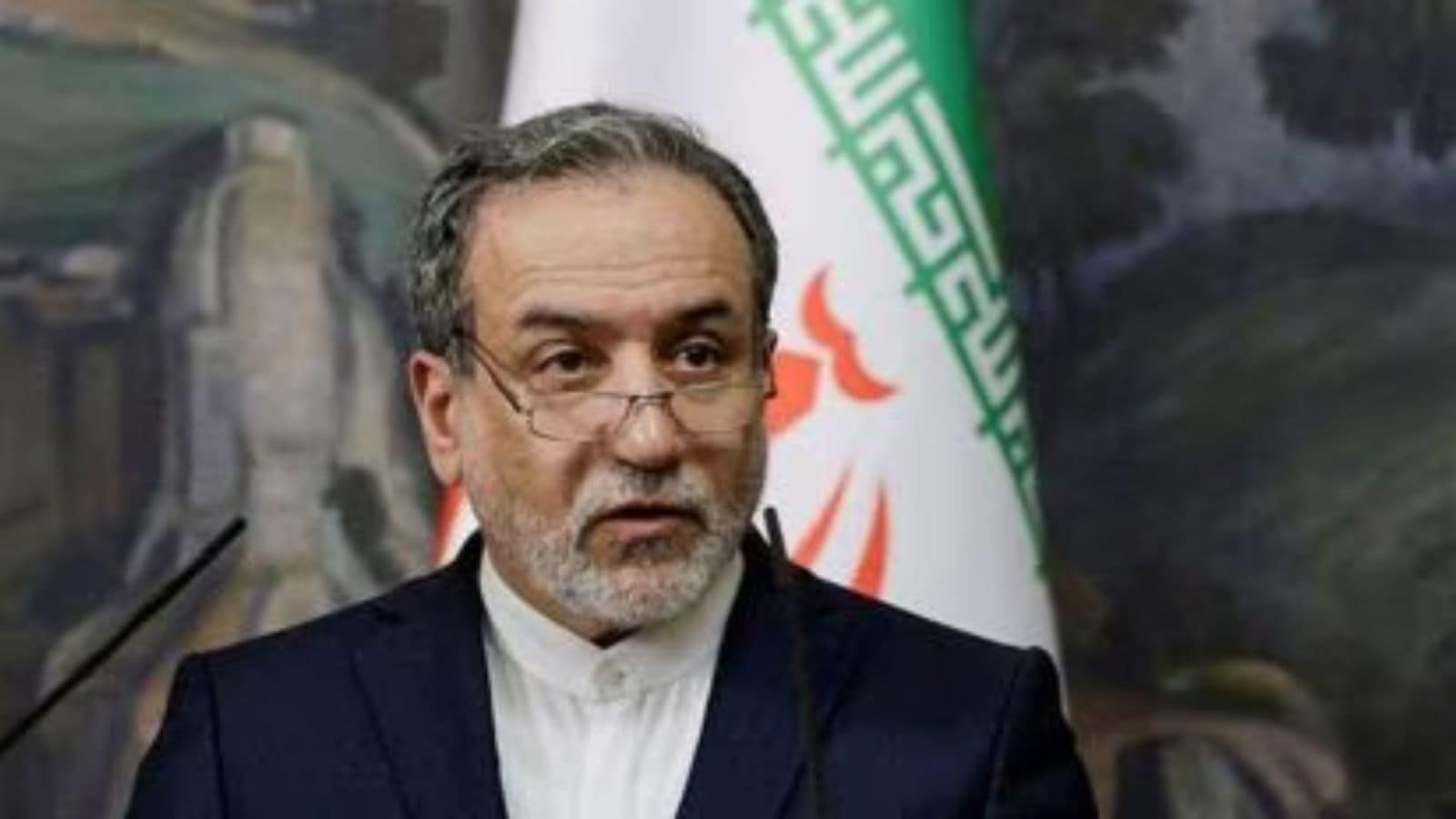
The diplomatic press is lazy. Every time a high-ranking official like Iranian Foreign Minister Abbas Araghchi mentions "openness to dialogue" or "altering rhetoric," the headlines follow a predictable, weary script. They treat these statements as a fragile olive branch, a tiny crack in a frozen door that might lead to a breakthrough if only Washington finds the right adjectives.
Stop buying the lie.
Rhetoric isn't the hurdle. It’s the product. To suggest that the decades-long friction between Washington and Tehran hinges on "threatening language" is to misunderstand the very architecture of power in the Middle East. Diplomacy, in its current form, is a performance art designed to preserve the status quo, not to break it.
The Myth of the Linguistic Pivot
Araghchi’s claim that Iran is open to diplomacy if the US changes its tone is a masterclass in strategic ambiguity. It places the burden of proof on the West while changing nothing on the ground. If the US softens its tone, Tehran claims a moral victory. If the US remains firm, Tehran cites American "arrogance" as the reason for continued enrichment and regional proxy activity.
It’s a win-win for the hardliners.
In reality, the "rhetoric" is the only thing keeping the current systems of governance in both nations comfortable. For the Islamic Republic, "The Great Satan" isn't a diplomatic grievance; it’s a foundational pillar of domestic legitimacy. For Washington, the "Rogue State" label justifies billion-dollar arms deals to the Gulf and a permanent naval presence in the Strait of Hormuz.
You don’t dismantle a multi-billion dollar geopolitical ecosystem by swapping "hostile" for "constructive."
The Sanctions Paradox
Everyone asks: "When will the sanctions work?"
They are asking the wrong question. Sanctions are already working—just not in the way the public thinks. We’ve been told for years that economic pressure forces a regime to the table. I’ve watched this play out across multiple administrations, and the result is always the same: the ruling elite gets richer through black-market smuggling and shadow banking, while the middle class—the only group capable of internal reform—is wiped out.
By the time Araghchi speaks of "diplomacy," he is speaking from a position of hardened insulation. The Iranian economy has developed a "resistance" model that thrives on being an outcast. When you remove a country from the global financial system, you don’t make them desperate for a handshake; you make them experts at living in the dark.
The Nuclear "Red Line" is a Circle
The standard news cycle obsesses over the Joint Comprehensive Plan of Action (JCPOA) as if it’s a holy relic. The "lazy consensus" suggests that we just need to get back to the 2015 baseline.
That baseline is dead. It was built for a world that no longer exists.
Since the US withdrawal in 2018, Iran has mastered the technical knowledge of high-level enrichment. You cannot sanction away a formula that lives in a scientist's head. Whether they have a "breakout time" of two weeks or two months is a distinction without a difference. The capability is the deterrent.
Araghchi knows this. Washington knows this. The talk of "diplomacy" is merely a way to manage the clock. Iran wants time to solidify its regional alliances—specifically its growing military-industrial partnership with Russia. The US wants time to figure out how to pivot to Asia without the Middle East catching fire.
The Russia-China Shadow
The biggest failure of the current "Araghchi-style" diplomatic coverage is the total omission of the East.
In 2015, Iran was relatively isolated. In 2026, Iran is a key node in a new geopolitical axis. Tehran provides the drones that keep the front lines moving in Eastern Europe. Beijing provides the oil revenue that keeps the Iranian Rial from total collapse.
When Araghchi says he wants the US to change its rhetoric, he isn't asking for a seat at the table. He's letting Washington know that he has other tables he can sit at. The leverage has shifted. The West continues to act as if it is the only source of legitimacy, while the "Global South" creates a parallel reality where US approval is a luxury, not a necessity.
The Internal Power Play
To understand why this "diplomacy" talk is a ghost, look at the internal mechanics of Tehran. The Foreign Ministry is not the seat of power. Araghchi is the face, but the IRGC (Islamic Revolutionary Guard Corps) is the muscle.
I’ve seen this play out in backroom negotiations: The diplomats promise a freeze, and the security apparatus orders a launch. This isn't necessarily a sign of a "divided government"—it’s a coordinated strategy of "Good Cop, Bad Cop" on a civilizational scale.
- The Diplomat: Offers vague hope to stall sanctions.
- The Guard: Creates "facts on the ground" to ensure those sanctions never actually matter.
If you are waiting for a unified Iranian stance that favors Western-style stability, you are waiting for a country that doesn't exist.
Stop Asking if Diplomacy is Possible
The "People Also Ask" sections of the internet are filled with queries like: "Can the US and Iran be friends?" or "Will there be a new nuclear deal?"
These questions are fundamentally flawed. They assume that "peace" is the goal.
Peace is bad for business. Peace requires the dismantling of the IRGC’s economic empire. Peace requires the US to explain why it still needs a massive military footprint in a region that has supposedly "stabilized."
The goal isn't peace; it's calibrated friction.
Calibrated friction allows for high oil prices, massive defense budgets, and internal scapegoating. Araghchi’s calls for a "change in rhetoric" are just a request to adjust the thermostat of that friction. He doesn't want the fire out; he just doesn't want it to burn the house down this week.
The Actionable Truth
If you are a policy analyst, an investor, or a concerned citizen, ignore the speeches. Ignore the "openness to dialogue." Instead, track three metrics that actually matter:
- The Volume of Non-Dollar Trade: As long as Iran can trade in Yuan or Rubles, US rhetoric is irrelevant.
- Drone Export Frequency: This is Iran’s new currency. It buys them protection from Moscow that the UN could never provide.
- The Survival of the Iranian Middle Class: If the people are too busy standing in line for meat to organize, the regime has no incentive to change its "rhetoric" or its reality.
The obsession with Araghchi’s latest soundbite is a distraction. It’s a way for the media to pretend that the world is a series of misunderstandings that can be solved with a better translator.
It isn't. It’s a cold, calculated game of survival where "diplomacy" is just another weapon system.
Stop looking for a breakthrough. The stalemate is the intended outcome.



