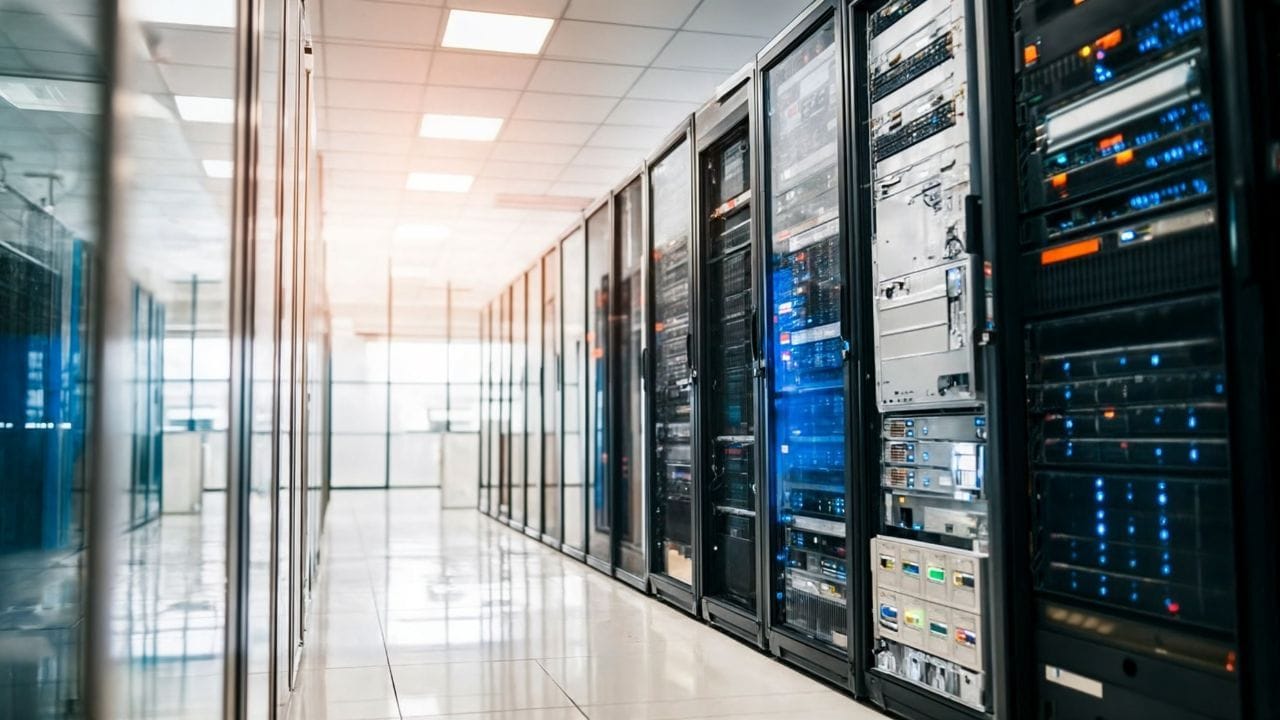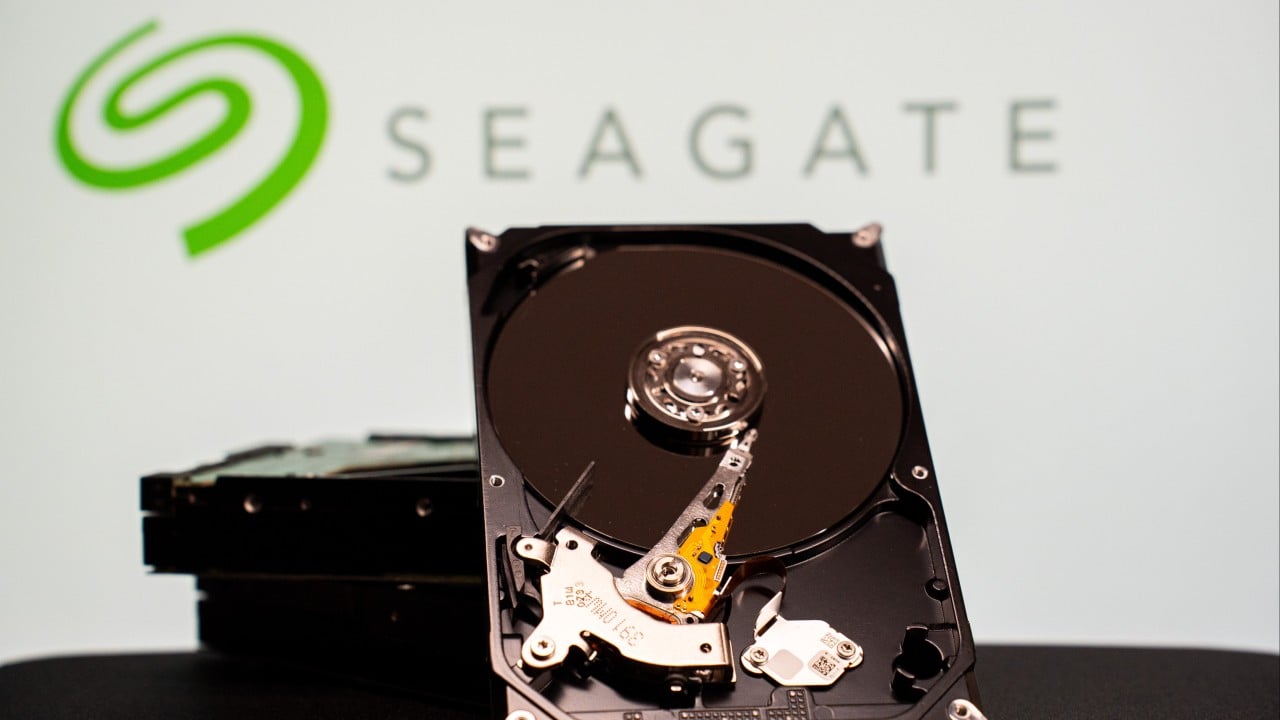
Somewhere in a climate-controlled warehouse in the Pacific Northwest, a series of tiny magnetic grains just flipped their polarity. It happened in a fraction of a millisecond. To the machine, it was a binary calculation. To a photographer in Ohio, it was the moment her daughter’s first steps were committed to a permanent record. To a researcher in Zurich, it was the final data point in a decade-long study on melting glaciers.
We treat data like air. We assume it is infinite, free, and always there when we reach for it. We view our "cloud" storage as a weightless utility, a digital attic where we can toss every blurry selfie and every unread PDF without consequence.
But the attic is full. And the rent is going up.
Seagate, one of the few remaining titans of the hard drive industry, recently signaled that the era of cheap, bottomless storage has hit a wall. They are calling it the "new normal." I call it the end of the digital honeymoon. For years, the cost of a gigabyte tumbled downward in a predictable, comforting slide. You could buy a four-terabyte drive for the price of a decent steak dinner. That trajectory has stopped. It isn't just fluctuating; it is resetting at a higher altitude.
The culprit is a silicon-hungry beast that we’ve all been feeding: Artificial Intelligence.
The Great Data Siphon
To understand why your next hard drive or cloud subscription is about to get more expensive, you have to look at the appetite of a Large Language Model. These systems don't just "learn" once. They are voracious. They require massive, sprawling datasets to train, and even more massive "inference" pools to operate in real-time.
Imagine a library. For decades, we were just adding books to the shelves at a steady pace. Now, a giant has moved into the reading room. This giant reads a million books a second, and it needs a copy of every single one of them kept in a high-speed, high-availability format nearby. To make room for the giant, the library has to expand. But the bricks and mortar—the raw materials of storage—are in short supply.
When AI companies buy storage, they don't buy it by the drive. They buy it by the acre. They are outbidding the consumer, the small business, and even the mid-sized government agency. They are the high-rolling whales at a poker table, and the rest of us are just trying to hold onto our chips.
The Physics of the Wall
There is a technical reason for this squeeze that goes beyond simple corporate greed. We have reached the limits of how many bits we can cram onto a platter of spinning metal or a sliver of flash memory using traditional methods.
Think of a parking lot. For years, we made the cars smaller so we could fit more of them in. Eventually, the cars became so small that they started to interfere with each other’s doors. To get more density now, we have to build multi-story garages. In the world of hard drives, this looks like Heat-Assisted Magnetic Recording (HAMR). It involves using a tiny laser to heat the disk surface so data can be written more tightly.
It is a marvel of engineering. It is also incredibly expensive to manufacture.
Seagate and its rivals aren't just raising prices because they can. They are raising them because the "easy" storage is gone. Every new terabyte from here on out requires a breakthrough in physics. We are no longer picking low-hanging fruit; we are building a ladder to reach the top of the tree, and the cost of the wood for that ladder is skyrocketing.
A Tale of Two Tiers
Let’s look at a hypothetical scenario to see how this hits the ground.
Meet Elias. He runs a small boutique film restoration house. For ten years, his business model relied on the fact that storage costs would drop by roughly 15% to 20% every year. He told his clients, "Don't worry about the raw footage; we’ll keep it all."
Last month, Elias received a notice from his cloud provider. His monthly storage bill was jumping by 25%. When he looked into buying physical backup drives to move his data on-site, he found that the enterprise-grade drives he usually bought were backordered, and the price had spiked.
Elias is now facing a "Digital Eviction." He has to look at his archives and decide what survives. Is the B-roll of a 1950s wedding in Topeka worth the $4.00 a month it now costs to keep it spinning? What about the raw files for a documentary that didn't find a distributor?
This isn't just an accounting problem. It’s an editorial one. When storage becomes a luxury, we stop being collectors and start being censors. We begin to prune our history based on what we can afford to keep.
The Invisible Shortage
Most people won't notice the price hike immediately. It won't be a sudden $100 jump in the price of a laptop. Instead, it will be death by a thousand cuts.
Your "free" tier on a photo app will shrink from 15GB to 10GB. The price of a 4K movie download might tick up. Your company’s IT department will suddenly announce a new "data retention policy" that deletes emails older than two years. These are all symptoms of the same fever. The world is producing more data than it can afford to store, and the AI industry is currently sitting at the front of the breadline.
There is a cruel irony here. AI was supposed to help us organize and make sense of our vast mountains of information. Instead, its sheer physical requirements are forcing us to burn the mountains down just to keep the lights on in the server room.
The Cost of Remembering
We are entering a period of digital scarcity that contrasts sharply with the "abundance mindset" of the 2010s. During that decade, we were taught that deleting anything was a mistake. "Search, don't sort," was the mantra.
Now, we must learn to sort again.
This shift has a psychological cost. There is a specific kind of anxiety that comes with deciding what to delete. It’s the digital equivalent of standing over a trash can with a box of old Polaroids. Once you hit "Empty Trash," that version of the past is gone. It is a permanent loss of resolution in our collective memory.
When Seagate says price hikes are the new normal, they aren't just talking about margins and quarterly earnings. They are announcing the end of the "Save Everything" era. They are telling us that the digital attic has a weight limit, and the floorboards are starting to creak.
The Ghost in the Machine
Consider the ripple effect on innovation. If a startup wants to build a new tool that helps doctors analyze X-rays, they need to store millions of those X-rays. If the cost of that storage doubles, the startup might never get off the ground. The "AI boom" that is driving the demand for storage might ironically end up strangling the very smaller-scale innovations that could benefit from it.
The big players—the Googles, the Microsofts, the Metas—can afford the "new normal." They own the infrastructure. They can absorb the price hikes or pass them on to billions of users in increments so small we barely feel them. But the independent creator, the small researcher, and the local archivist are the ones who will feel the cold.
We are building a world where the ability to "remember" is becoming a corporate privilege.
The Finality of the Bit
I remember the first hard drive I ever bought. It was 20 megabytes. It was the size of a shoebox and sounded like a jet engine taking off. I thought I could never possibly fill it.
I filled it in a year.
Since then, I have owned dozens of drives. I have watched them get smaller, quieter, and cheaper. I grew complacent. I assumed the trend line was a law of nature, like gravity. But economics is not physics. Demand is currently outstripping our ability to innovate our way out of a shortage.
The next time you go to save a file, look at the progress bar. Think about the laser heating that disk to a thousand degrees just so your data can find a home. Think about the massive AI clusters in Virginia and Dublin that are fighting you for that same square millimeter of space.
The "New Normal" isn't just a headline in a financial trade rag. It is a signal that our digital footprint is finally catching up with our physical reality. We are running out of room.
The delete key is about to become the most important button on your keyboard.