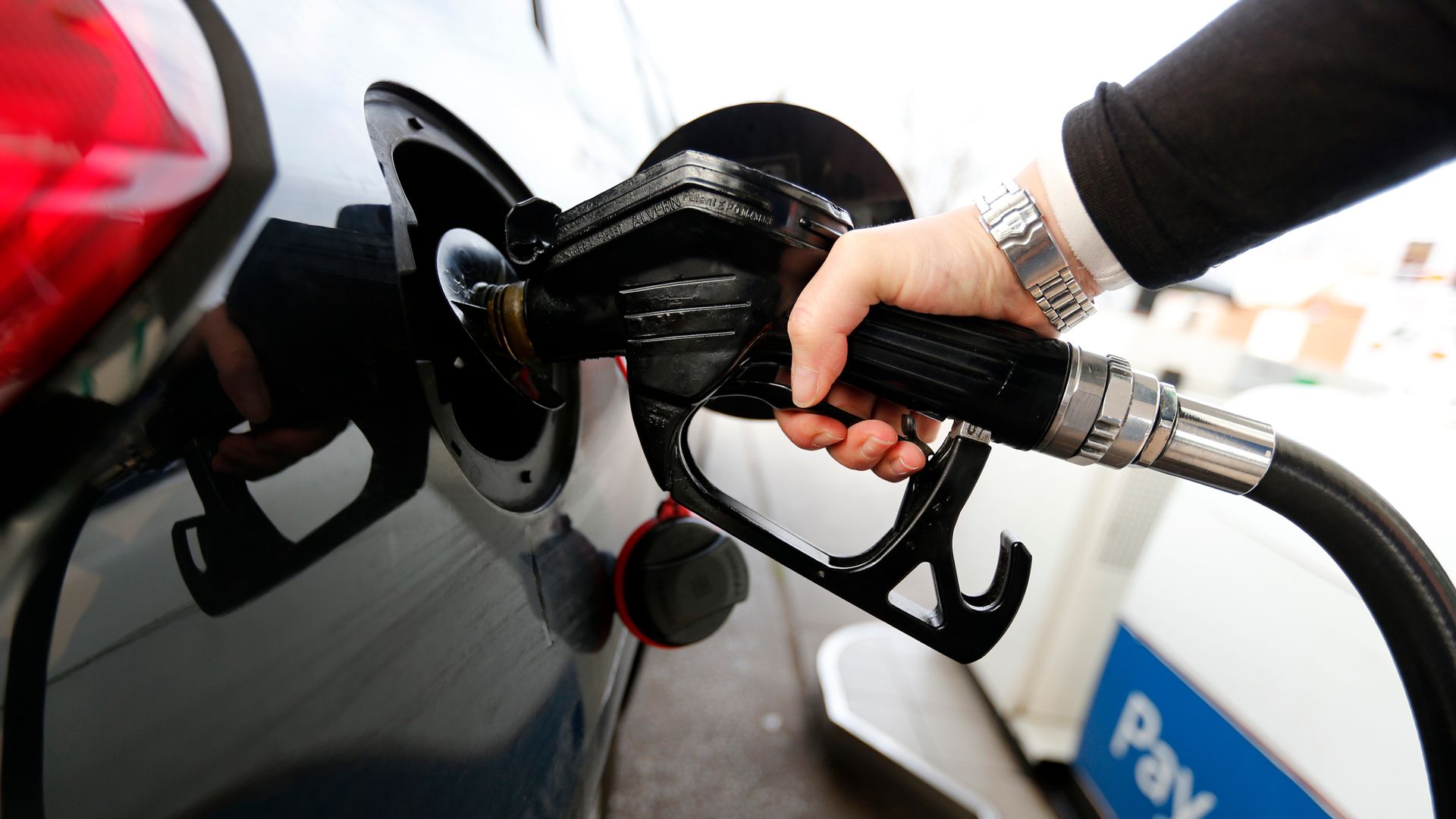
Retailers are bleeding. The local gas station is a charity case. Diesel prices are "killing" the small businessman.
We’ve all heard the sob story. Whenever Brent crude spikes or a refinery in the Gulf goes offline, the industry PR machine cranks out the same tired narrative: fuel retailers are losing money on every gallon of diesel sold because wholesale costs are rising faster than they can hike the price at the pump. It’s a compelling tale of the little guy getting crushed by global macro-volatility. You might also find this related story insightful: Why Trump is Right About Tech Power Bills but Wrong About Why.
It is also, mathematically speaking, a fantasy.
If you believe fuel retailers are "losing money" when prices spike, you aren’t looking at the ledger; you’re looking at a carefully curated snapshot designed to keep regulators off their backs. The reality is that high-price environments are the most profitable periods for the fuel industry, provided you understand the difference between a "margin" and a "business model." As highlighted in latest articles by Investopedia, the results are widespread.
The Lag Time Lie
The "losing money" argument relies on a concept called the "margin squeeze." The logic goes like this: a retailer buys 5,000 gallons of diesel at $3.50. Overnight, the wholesale price jumps to $3.80. The retailer, fearing the guy across the street won't move, keeps his price at $3.75. Suddenly, he's "losing" five cents a gallon on the next load.
This is a local, short-term accounting trick. It ignores the replacement cost vs. FIFO (First-In, First-Out) accounting reality. Retailers sell inventory they bought yesterday at today’s inflated prices. When prices are rising, they are riding a wave of inventory gains that the public never sees.
More importantly, the industry uses these spikes to reset the floor. When wholesale prices eventually drop—and they always do—retail prices "feather" down. They drop by a fractions of a cent while wholesale plummets by nickels. This "rockets and feathers" effect is where the real money is made. The volatility isn't the enemy; it's the catalyst for the next profit expansion.
Diesel is the Loss Leader That Isn't
Stop looking at the pump. The pump is a customer acquisition tool.
In modern fuel retail, diesel is the hook, but the C-store (convenience store) is the bank. The industry claims they make only a few cents per gallon on fuel. Fine. Let’s concede that for a moment. If a trucker pulls in to fill a 150-gallon tank, even a "thin" margin of 5 cents nets the station $7.50.
But that driver isn't just buying fuel. They are buying a $4.00 energy drink with a 60% margin. They are buying a $12.00 "fresh" sandwich with a 50% margin. They are using a shower facility that costs almost nothing to maintain but generates pure cash flow.
When diesel prices are high, the total transaction value at the site increases. High prices create a sense of urgency and "tank-topping" behavior. A driver who sees prices climbing will fill up now rather than later. This drives foot traffic. To claim the station is "losing money" because the fuel margin narrowed slightly while the store's high-margin inside sales are booming is like a casino claiming they're broke because they gave away too many free drinks at the high-stakes table.
The Volume Fallacy
Critics argue that high prices kill demand. "People drive less when it's expensive," they say.
In the passenger car market? Maybe. In the diesel market? Absolutely not.
Diesel powers the global supply chain. It moves the freight, the grain, and the construction equipment. This is inelastic demand. A logistics firm cannot simply decide not to deliver the Amazon packages because diesel hit $5.00. They pay the price and pass it on via fuel surcharges.
Retailers know this. They have a captive audience. Unlike gasoline, where a consumer might skip a Sunday drive to save money, diesel consumers are professional buyers who must purchase. This guaranteed volume ensures that even if the margin per gallon shrinks by 1%, the sheer reliability of the throughput keeps the lights on and the shareholders happy.
The "Independent Station" Ghost
Whenever the industry wants sympathy, they trot out the "independent mom-and-pop" owner. We are told these folks are one price spike away from bankruptcy.
I have spent years looking at the operational data of these "struggling" independents. The ones who go out of business aren't failing because of diesel prices. They are failing because they didn't upgrade their tanks, their credit card processors are charging them 3% on a $400 fill-up, or their store looks like a set piece from a 1980s horror movie.
The sophisticated independents—the ones who understand hedging and fuel procurement—thrive during spikes. They use the volatility to outmaneuver the slow-moving corporate chains. They buy on the "dip" in the spot market and hold their retail price steady while the big brands adjust based on corporate mandates.
The Myth of the "Competitive Market"
We are led to believe that gas stations are in a cutthroat war where a one-cent difference determines survival. If that were true, prices would be uniform. They aren't.
Travel ten miles in any direction and you’ll see a 30-cent spread in diesel prices. Why? Because fuel retail is about real estate, not commodity pricing. If you own the corner at the off-ramp of a major interstate, you aren't "losing money" on diesel. You are charging a premium for convenience, and the "market price" is whatever you say it is until the line of trucks disappears.
Hedging: The Hidden Profit Center
The biggest secret the industry keeps is how they actually buy fuel. They don't just wait for the tanker to show up and pay whatever the "price of the day" is.
Large-scale retailers use derivatives and futures contracts to lock in prices.
Imagine a scenario where a major retailer locks in 50% of their Q3 diesel supply at $3.00 a gallon. If the retail price spikes to $4.50 because of a "crisis," they aren't losing money. They are printing it. They are selling $3.00 fuel for $4.50 while crying to the local news about "narrowing margins" based on the current spot price they aren't even paying.
It's a brilliant shell game. By pointing to the spot market—the most expensive way to buy fuel—they create a narrative of victimhood while their actual procurement costs remain stable.
Stop Asking if They're Losing Money
The question is a distraction. You should be asking why, in an era of record-breaking energy company profits, the retail narrative remains so focused on the "struggle."
The next time you see a headline about fuel retailers "suffering" through a price hike, look at the construction happening at the site. Look at the new pumps, the expanded C-stores, and the acquisition of smaller chains by private equity firms. Private equity doesn't buy into "losing money" businesses.
They are buying into the world's most consistent cash-flow machine. They are betting that even as the world goes electric, the heavy-duty diesel market will remain a captive, high-volume goldmine.
The real money isn't in the fuel. It's in the volatility. It's in the fear. It's in the "price of doing business" that the end consumer—you—is forced to pay while the retailer laughs all the way to the bank.
If they were truly losing money, they'd turn off the pumps. They haven't. They never will.
Stop buying the sob story. Start looking at the receipts.
The industry is doing just fine.