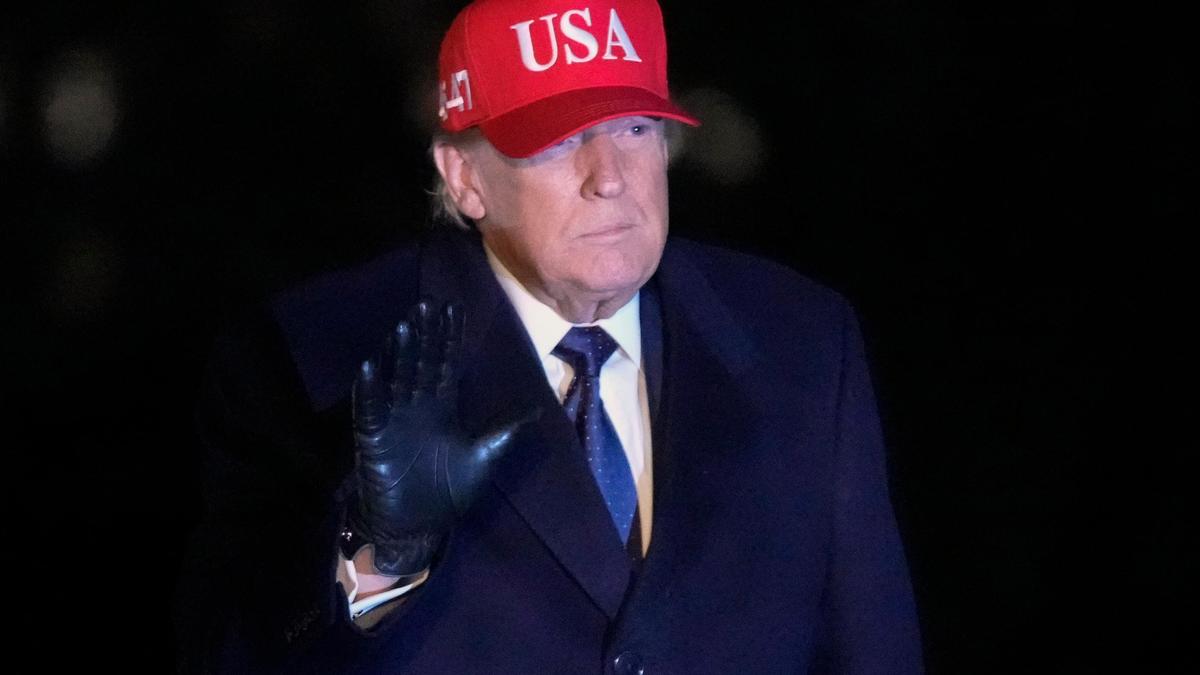
The illusion of a unified Western front shattered this week not in the skies over Tehran, but in the mahogany-rowed offices of Downing Street and the social media feeds of Mar-a-Lago. Donald Trump’s public admission of being "very disappointed" with Keir Starmer reveals a fracture in the Anglo-American alliance that goes far deeper than a simple disagreement over flight paths. At the heart of this friction is a fundamental dispute over the sovereign right of the United Kingdom to say "no" to a superpower.
Keir Starmer’s initial refusal to allow U.S. bombers to launch offensive strikes from British soil—specifically the strategic crown jewel of Diego Garcia and the heavy-bomber hub at RAF Fairford—wasn't just a legalistic hiccup. It was a calculated attempt to prevent the UK from being dragged into a conflict that Number 10 views as a high-stakes gamble with no clear exit strategy. Trump, ever the transactionalist, saw it as a betrayal. "That’s probably never happened between our countries before," Trump told The Telegraph, signaling that the era of the "Special Relationship" being a blank check is officially over.
The Diego Garcia Leverage
To understand the intensity of the fallout, one must look at the geography of the Indian Ocean. Diego Garcia is not just a base; it is the only place on earth where the U.S. can station its massive B-2 and B-52 bomber fleets with total security and reach across the Middle East. While the U.S. military operates the site, the soil remains British.
Last year, the Starmer government finalized a deal to transfer sovereignty of the Chagos Archipelago to Mauritius while securing a 99-year lease for the base. Trump initially lambasted the move as "great stupidity," then briefly softened his tone after a call with Starmer, only to weaponize the issue again the moment the UK hesitated on Iran. By blocking the initial wave of strikes, Starmer effectively grounded the heaviest components of the American air arsenal.
Trump’s irritation stems from the fact that without Diego Garcia, the U.S. is forced to rely on more vulnerable regional partners or launch from the American mainland, which requires a logistical circus of mid-air refueling and increased fatigue for flight crews.
The Ghost of 2003
Starmer’s hesitation is haunted by the legacy of the Iraq War. In the halls of Westminster, the "mistakes of Iraq" are cited with the frequency of a religious mantra. The Prime Minister is acutely aware that any participation in a "preemptive" strike without a specific UN mandate or a direct, imminent threat to British soil would be political suicide and a legal minefield.
The government’s legal advisors reportedly warned that "offensive" participation in the assassination of Iranian leaders could violate international law. Starmer eventually pivoted on Sunday night, but only after an Iranian-made drone struck the runway at RAF Akrotiri in Cyprus. This "defensive" loophole allowed the UK to green-light the use of its bases for strikes on missile depots and launch sites, while still refusing to join the "offensive" campaign to decapitate the Iranian regime.
- The Offensive Stance: Target-rich environments involving political leadership and economic infrastructure.
- The Defensive Stance: Intercepting incoming drones and neutralizing launch platforms that directly threaten British assets or regional allies.
This distinction is thin. To the Trump administration, it is a distinction without a difference—a cowardly evasion by a junior partner that wants the protection of the American umbrella without the wet work of holding the handle.
A Targeted Sovereignty
The tension is exacerbated by the internal pressure within Britain. Conservative leader Kemi Badenoch has accused Starmer of "dithering delay," arguing that the UK should have stood shoulder-to-shoulder with its oldest ally from minute one. Meanwhile, the left wing of the Labour party is horrified that British soil is being used at all, fearing that the UK is now a legitimate target for Iranian proxies.
The drone strike on Cyprus proved them right. Even a "limited" involvement carries unlimited risk. When a British base is used to refuel an American jet that later drops a bomb on an Iranian target, the recipient of that bomb rarely cares about the "defensive" phrasing of the British Prime Minister.
Strategic Disconnects in the Alliance
| Point of Contention | U.S. Position (Trump) | UK Position (Starmer) |
|---|---|---|
| Legal Basis | Presidential authority and preemptive security. | Strict adherence to international law and self-defense. |
| Chagos Islands | Sovereignty is secondary to military utility. | Sovereignty transfer ensures long-term stability of the lease. |
| End Game | "Regime change" or total deterrence through force. | Negotiated nuclear settlement and regional containment. |
The Brink of Irrelevance
The real danger for the UK is not just Iranian retaliation, but American indifference. Trump’s rhetoric suggests that if the UK cannot be relied upon during the "big" moments, its status as a top-tier partner will be downgraded. For decades, Britain has traded on its military utility to maintain a seat at the top table. If it loses the stomach for American-led interventions, it risks becoming just another European power—highly vocal but strategically sidelined.
Starmer is trying to thread a needle that may not exist. He wants to be a "rule of law" leader in a world where the primary superpower is currently being led by a man who views international law as a suggestion. The Prime Minister’s statement that "this government does not believe in regime change from the skies" was a direct shot at the White House. It was principled, it was firm, and it might be the most expensive sentence he ever utters.
The standoff over Diego Garcia is a preview of the next four years. The UK is no longer the reliable sidekick; it is a hesitant stakeholder, increasingly wary of the cost of the "Special Relationship." As the conflict in the Middle East widens, the distance between London and Washington is becoming a geographical reality that no amount of diplomatic handshaking can bridge.
Would you like me to analyze the specific legal frameworks cited by the UK government regarding the "defensive" use of Diego Garcia?