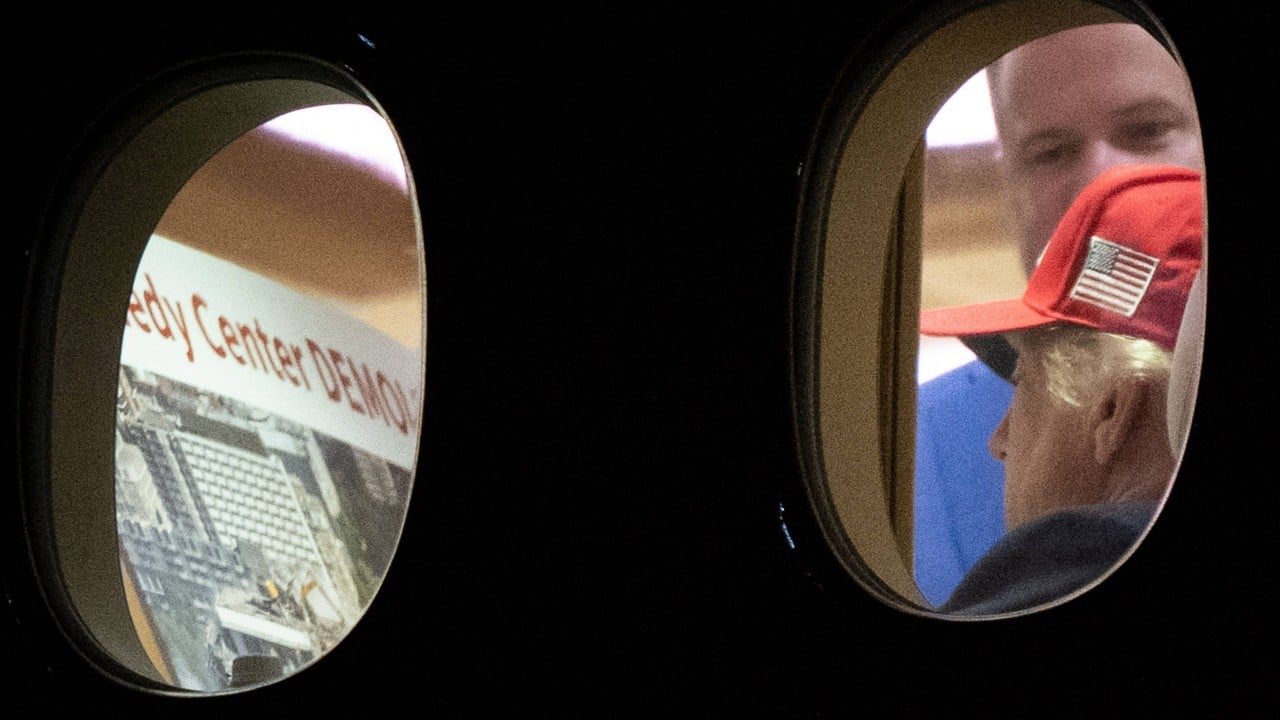
The internet spent the last forty-eight hours hyperventilating over a digital image. A rendering surfaced showing the Kennedy Center flattened into a pile of rubble, and political Twitter instantly descended into collective hysteria. Pearls were clutched. Statements were drafted. Pious pundits declared that civilization itself was teetering on the edge of an abyss because a brutalist slab of Washington concrete faced a theoretical wrecking box.
It is a masterclass in misplaced outrage.
The prevailing narrative treats every institutional landmark as a sacred artifact that must be preserved in amber, regardless of whether it serves its original purpose or has degraded into an expensive, subsidized ghost town. This lazy consensus assumes that physical permanence equals cultural relevance. It does not. In fact, the obsession with protecting concrete boxes is the exact reason why elite American culture has ossified into a self-congratulatory museum piece.
Strip away the sentimentality, and the Kennedy Center is a monument to bureaucratic architectural hubris. Designed by Edward Durell Stone and opened in nineteen seventy-one, it was meant to be a glittering beacon of American artistic supremacy. Instead, it became a massive, marble-clad bunker where blue-blood donors pay exorbitant ticket prices to sip lukewarm champagne at intermission while local, independent art scenes starve for funding in empty warehouses across the river.
When people panic over an image of its destruction, they are mourning the building, not the art. They are weeping for a branding exercise.
I have spent two decades watching cultural institutions bleed public money while producing zero disruptive, dangerous, or vital work. I have seen organizations blow millions on administrative bloat, glossy brochures, and donor galas while the actual creators living three miles away cannot afford rent. When you treat a building as an untouchable cathedral, you prioritize real estate over expression. You make architecture more important than ideas.
Let us look at the mechanics of this panic. The image in question triggered a predictable reflex among institutional gatekeepers. They operate under a simple operational rule: if a building has a famous name attached to it, any critique of its physical or structural viability is treated as an existential threat. This is institutional self-preservation masquerading as civic virtue. The curators, directors, and administrative boards do not care about the democratization of art; they care about their endowment funds, their gala season, and their real estate footprint.
If a hypothetical scenario arose where the entire complex was bulldozed tomorrow, what would actually be lost? Not the symphony, not the ballet, not the theatrical traditions. Those things are portable. They live in human minds and bodies, not in acoustic tile ceilings that cost six million dollars to repair. In fact, untethering institutional art from massive, centralized monuments might be the only shock to the system required to force these dinosaurs to innovate.
For decades, cultural power has been centralized in monumental mausoleums that suck the oxygen out of the surrounding ecosystem. These centers were built during an era when civic prestige meant erecting colossal temples to high art, paid for by taxpayers and corporate patrons who wanted their names etched into marble plaques. That era is dead. The digital age atomized audiences, decentralized creation, and rendered massive, monolithic performance halls financially unsustainable without endless infusions of government grants and corporate guilt money.
Yet, the pundit class clings to the monument. They treat any challenge to the physical status quo as vandalism.
Consider the sheer absurdity of the financial models supporting these spaces. Millions of dollars flow into maintaining brutalist concrete fortresses that leak heat, require constant structural remediation, and serve elite touring acts that could easily sell out mid-sized commercial theaters. Meanwhile, grassroots venues that actually incubate tomorrow's talent close their doors every single month due to commercial rent hikes. The priorities are inverted. We subsidize the mausoleum while starving the nursery.
The panic over a demolition rendering reveals a deep, underlying terror among the cultural elite: the fear of irrelevance. If the building goes down, the illusion goes with it. The illusion that Washington possesses a thriving, organic artistic pulse rather than a government-subsidized country club for diplomats and lobbyists.
Let us define our terms clearly. Culture is not a physical structure. Culture is a living, mutating network of human behaviors, linguistic shifts, technological experiments, and aesthetic risks. Architecture is merely its container. When the container becomes so bloated, expensive, and culturally bankrupt that it requires continuous defensive posturing just to justify its utility, the container has failed.
The defenders of the current setup will tell you that monumental institutions project national power and prestige. They argue that a great nation needs great stages. But this is a category error. A great nation produces great art through freedom, friction, and underground vitality, not through federally backed cultural bureaucracy wrapped in travertine marble. Athens did not produce Sophocles because the state built a giant bureaucratic arts complex; it happened because the society engaged in vigorous, unvarnished public debate in open spaces.
When a society becomes more concerned with the architectural upkeep of its cultural palaces than with the freedom of the artists working within them, it has entered its late-stage administrative decay.
Look closely at who defends these spaces. It is never the working-class musician, the scrappy independent filmmaker, or the avant-garde playwright working out of a makeshift studio. It is the board member, the foundation trustee, the executive director pulling a six-figure salary, and the political class looking for a photogenic backdrop for a national holiday broadcast. For them, the building is a status symbol, an altar where they perform rituals of elite belonging.
When that altar is threatened—even hypothetically by an internet rendering—they scream vandalism. They call it an attack on history. But history is not preserved by protecting bad architecture; history is forged by discarding what no longer works to make room for what is next.
The architectural history of Washington, D.C., is littered with failed monuments that prioritized scale over human scale. Brutalism was an architectural philosophy born of totalitarian efficiency disguised as civic democratic grandeur. It gave us massive monolithic blocks of poured concrete that alienate pedestrians, block natural light, and demand millions of dollars in climate-controlled preservation just to prevent the materials from spalling and crumbling into the Potomac.
When you look at the structure of the Kennedy Center from an engineering standpoint, it is a logistical nightmare. Its sprawling footprint isolates it from the urban grid, turning it into a fortress accessible primarily by automobile or a grueling trek across highway overpasses. It was designed in an era when urban planning meant carving up neighborhoods with concrete ribbons to serve suburban commuters. Preserving this relic is an endorsement of mid-century urban planning failures that cut cities off from their waterways.
Consider the organizational chart of a major cultural institution. For every working stagehand, lighting technician, or resident actor, there are twenty vice presidents of strategic development, directors of donor relations, communications specialists, and compliance officers. The building itself requires an army of facility managers just to keep the HVAC systems from flooding the backstage dressing rooms. This bloated administrative superstructure devours the vast majority of operating revenues, leaving crumbs for actual artistic production. When you defend the building, you are defending a jobs program for bureaucratic middlemen who treat culture as a spreadsheet item rather than a living practice.
Imagine a scenario where the entire complex is dismantled and replaced with a decentralized network of open-air amphitheaters, hyper-local performance pods, and flexible community arts incubators distributed across every ward of the city. The capital would instantly transform from a sterile repository of state-sanctioned culture into a vibrant, polyphonic laboratory of human creativity.
Instead, we remain trapped in the architecture of administrative nostalgia.
The defenders of the status quo will argue that private donors provide a substantial portion of the operating capital, proving market demand. But let us look closer at how those donations work. They are tax-sheltered vanity projects. Wealthy patrons buy seats on the board of trustees to secure social standing, network with cabinet members, and ensure their names appear on program notes. The money does not flow to risk-taking artists; it flows to safe, predictable touring revivals of Broadway hits that have already been vetted by commercial markets in New York.
The Kennedy Center does not take artistic risks. It absorbs risk-free cultural products and wraps them in a flag.
This brings us to the core contradiction of state-adjacent cultural institutions. They claim to represent the soul of the nation, yet they are structurally incapable of challenging the power structures that fund them. True art is inherently subversive. It pokes, questions, disrupts, and occasionally offends. A massive government-backed temple perched on the edge of the Potomac River is structurally optimized to do the exact opposite: soothe, flatter, and reinforce the vanity of the ruling class.
When an AI-generated image or a speculative rendering of its demolition causes such acute panic, it exposes the fragility of this entire ecosystem. The elites know that without the physical monument to anchor their social rituals, the illusion of their cultural authority dissolves.
We must stop falling for the architecture trap. The buildings do not matter. The people inside them and the system protecting them are what require scrutiny.
The next time a digital image of a cultural landmark's destruction causes a collective media meltdown, do not look at the building. Look at the people screaming the loudest. Ask yourself what they are protecting: the fragile future of human expression, or their own administrative sinecures.
The answer is always the same. They are protecting the marble because they know they cannot survive without it.
Tear down the mental walls first. The physical ones will take care of themselves.


