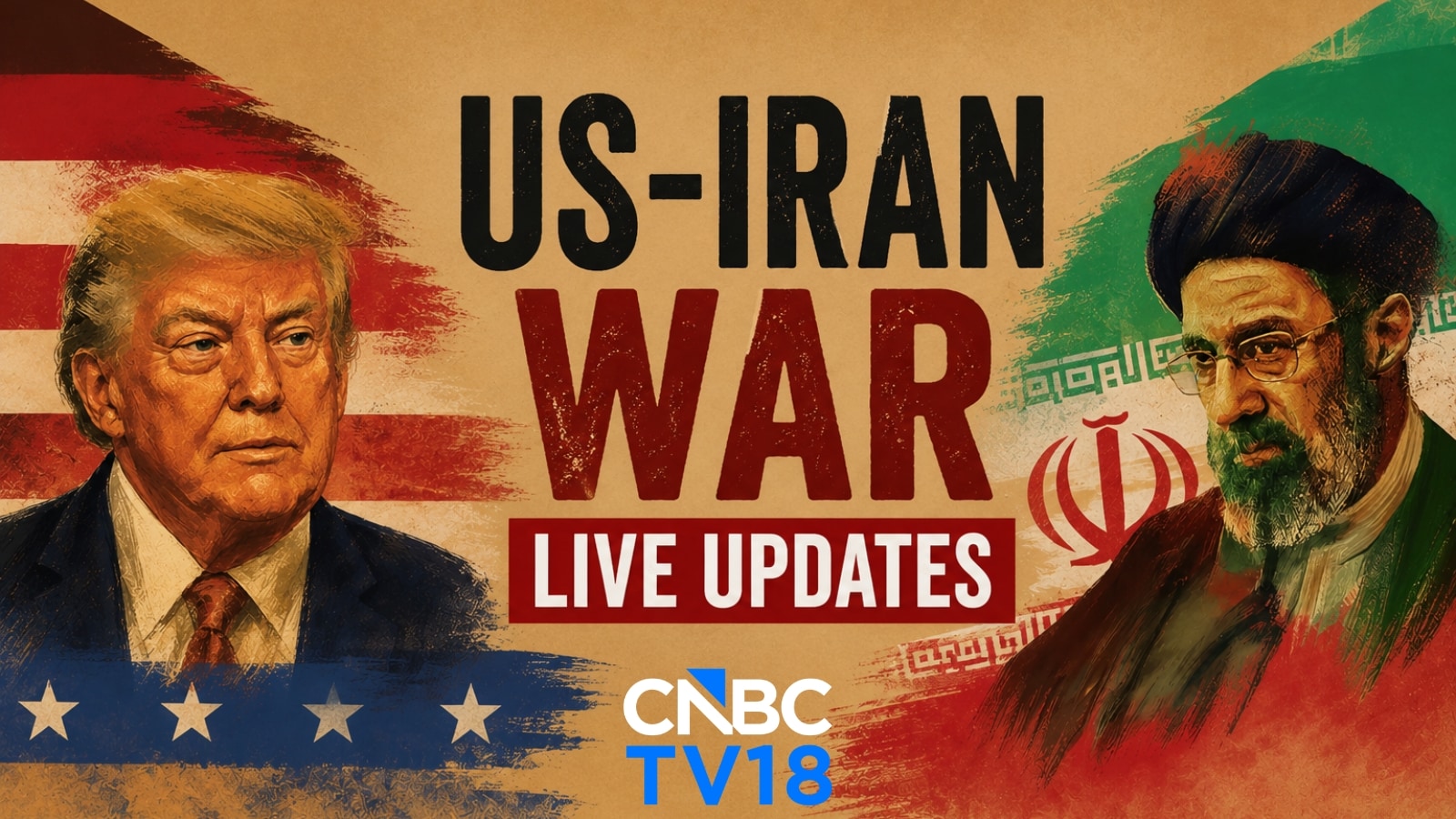
Saying "Iran cannot have a nuclear weapon" is the easiest, safest applause line in Western politics. It sounds tough. It projects resolve. And according to decades of nuclear proliferation data and diplomatic history, it completely misses the actual threat sitting on the table in Doha, Vienna, and Washington.
When Donald Trump emerged from talks with the Qatari Prime Minister declaring that preventing an Iranian nuclear weapon is "non-negotiable," mainstream media outlets treated the statement as a bold policy line. It wasn't. It was a repetition of the exact same bipartisan consensus that has governed American foreign policy since the George W. Bush administration. Every president says it. Every prime minister echoes it. And every year, Tehran's breakout time shrinks from months to weeks to days.
The problem isn't the goal of preventing a nuclear-armed Iran. The problem is the lazy diplomatic orthodoxy that treats binary slogans as a substitute for leverage, while ignoring the reality of nuclear latency.
The Illusion of the "Non-Negotiable" Red Line
To understand why standard diplomatic rhetoric fails, you have to look at how nuclear programs actually operate. Conventional commentary treats nuclear proliferation like a light switch: either a country has a bomb, or it doesn't.
Nuclear physicists and arms control analysts view it very differently. In international security studies, the real battlefield is nuclear latency—also known as the "Japan option." A threshold state possesses all the technical infrastructure, fissile material, and delivery systems required to assemble a warhead rapidly, without ever crossing the formal threshold of testing or assembling a weapon.
Here is what happens when Western leaders draw loud, "non-negotiable" red lines against a weapon while lacking a credible mechanism to roll back enrichment:
- Tehran adapts to the ceiling: Iranian strategists read the same news transcripts. They know that crossing the weaponization threshold triggers military strikes or catastrophic isolation. So they stop just short of it.
- Enrichment becomes the real currency: By stockpiling uranium enriched to 60%—just a short technical step away from weapons-grade 90%—Iran gains all the deterrence benefits of a nuclear arsenal without paying the diplomatic price of testing one.
- Sanctions lose their bite: Once an economy is heavily sanctioned, adding new designations yields diminishing returns. Maximum pressure without a realistic off-ramp teaches the target state how to build a resistance economy.
I have watched policy teams in Washington spend years drafting airtight sanctions packages designed to force capitulation, only to see the target country double down on underground centrifuge cascades. You cannot sanction away technical knowledge that engineers have already mastered. Once scientists know how to run advanced IR-6 centrifuges, bombing a facility sets the clock back by months, not decades.
What the Doha Talks Actually Reveal About Leverage
Look closely at the setting of Trump's statement: bilateral talks with the Qatari Prime Minister.
Mainstream coverage focuses on the tough quote for the cameras. Analysts who track Gulf diplomacy look at the venue. Qatar is not a bystander; it is the primary diplomatic clearinghouse between Washington and Tehran. When an American leader stands next to Qatari leadership and issues a maximalist demand, two things are happening simultaneously.
First, it is public posturing aimed at domestic audiences and regional allies like Israel and Saudi Arabia, assuring them that Washington will not strike a weak bargain. Second, it is an opening bid in an indirect negotiation mediated by Doha.
Yet here is the flaw in relying on maximalist rhetoric as a negotiating tactic: it traps the negotiator.
International relations scholars, notably Thomas Schelling in his foundational work on deterrence and bargaining, demonstrated that public commitments bind the hands of the leader who makes them. If you declare an outcome "non-negotiable" in front of the press, any compromise required to actually achieve that outcome looks like a humiliating retreat.
When Trump withdrew the United States from the Joint Comprehensive Plan of Action (JCPOA) in 2018, the stated goal was to negotiate a "better deal" that permanently ended Iran's enrichment capabilities and curtailed its ballistic missile program. Instead, freed from International Atomic Energy Agency (IAEA) inspection limits, Iran expanded its enriched uranium stockpile more than twenty-fold over the next several years.
The empirical record shows a stark contrast between what tough talk promises and what it delivers:
| Policy Approach | Stated Objective | Measurable Outcome on Iran's Program |
|---|---|---|
| 2015 JCPOA Framework | Cap enrichment at 3.67%, maintain strict IAEA monitoring | Breakout time extended to roughly 12 months; stockpile capped at 300 kg |
| Post-2018 Maximum Pressure | Force total capitulation via severe economic sanctions | Breakout time shrank to under two weeks; enrichment reached 60% purity |
| Current "Non-Negotiable" Rhetoric | Deter weaponization through ambiguity and regional signaling | Program remains deeply buried underground with reduced camera access |
Dismantling the Myths Around Iranian Nuclear Strategy
If you look at common public questions surrounding U.S.-Iran relations, almost every single one rests on a faulty premise.
"Why doesn't the U.S. just destroy the nuclear sites?"
This question assumes nuclear programs exist in neat, above-ground buildings waiting for bunker-busters. They don't. Facilities like Fordow and the deeper tunnels near Natanz are buried beneath mountains of reinforced granite, specifically engineered to survive conventional airstrikes.
More importantly, military analysts at institutions like the Center for Strategic and International Studies (CSIS) have repeatedly pointed out that a strike without a post-strike political settlement guarantees one outcome: the target country immediately expels all international inspectors and races to build a bomb in secret. A bombing campaign delays a program by two to four years while eliminating the exact intelligence visibility needed to track it.
"Can Qatar actually force Iran to back down?"
No. Doha has influence, not command. Qatar shares the massive North Dome/South Pars gas field with Iran, giving both nations a vital economic incentive to avoid regional war. Qatar uses this channel to pass messages, broker prisoner swaps, and unfreeze humanitarian funds. Expecting Doha to deliver Iranian nuclear disarmament is like expecting a courtroom translator to settle a murder trial.
"If Iran gets a bomb, won't they use it immediately?"
This is the core assumption driving existential panic, yet it contradicts everything known about state survival. Deterrence theory relies on rational self-preservation. The leadership in Tehran is ideological, ruthless, and deeply invested in regime survival. Launching a nuclear strike against Israel or U.S. assets would guarantee the immediate, total annihilation of the Iranian state.
The real danger of a nuclear-armed or nuclear-threshold Iran isn't a suicidal first strike. It is nuclear umbrella deterrence. Protected by the threat of nuclear escalation, Tehran could fund, arm, and direct regional proxies—Hezbollah, the Houthis, Iraqi militias—with near-total impunity, knowing conventional retaliation would carry unacceptable risks.
The Downside of Abandoning Maximalism
Let's be honest about the flaw in the counter-argument. Moving away from "non-negotiable" absolutism and accepting a managed containment or arms-control framework has massive, ugly downsides.
First, any realistic diplomatic deal leaves Iran with an industrial-scale enrichment infrastructure. Critics will rightly point out that allowing Tehran to spin centrifuges—even at low levels—keeps them permanently on the doorstep of a weapon. You are trading permanent elimination for temporary verification.
Second, lifting sanctions to buy nuclear limits injects billions of dollars into an economy controlled largely by the Islamic Revolutionary Guard Corps (IRGC). That money doesn't just buy medicine and infrastructure; a portion of it inevitably subsidizes regional proxy networks and ballistic missile production.
There is no clean option on the menu. Every choice is a trade-off between bad outcomes:
- Maximalist pressure keeps the moral high ground but drives enrichment underground and accelerates breakout timelines.
- Military action resets the clock temporarily at the cost of regional war and total loss of inspection visibility.
- Transactional diplomacy caps the nuclear program and restores IAEA cameras, at the cost of enriching an adversarial regime.
Pretending that a stern press conference next to a Gulf mediator resolves this trilemma isn't strategy. It is theater.
What Effective Deterrence Actually Looks Like
If Washington wants to stop Iran from crossing the nuclear finish line, repeating the phrase "non-negotiable" will not move a single centrifuge. Effective statecraft requires shifting from public slogans to quiet, verifiable constraints.
- Stop negotiating in front of microphones. Every public ultimatum forces Tehran to escalate its enrichment to prove it cannot be bullied. Real progress happens when demands are passed privately through Omani or Qatari backchannels without domestic political grandstanding.
- Target breakout time, not theoretical capability. You cannot erase nuclear physics from the minds of Iranian scientists. Focus every diplomatic and intelligence lever on keeping enrichment purity below 5% and ensuring 24/7 IAEA physical and electronic monitoring.
- Link relief strictly to verification, not promises. In previous iterations of diplomacy, timelines were tied to calendar dates. Any future framework must tie economic breathing room directly to continuous, unimpeded inspector access—the moment a camera goes dark, snapback mechanisms trigger automatically.
- Separate nuclear containment from regional rollback. Trying to solve Iran's nuclear program, ballistic missile arsenal, and proxy network in a single grand bargain guarantees failure on all three fronts. Contain the existential nuclear threat first; address conventional regional aggression through integrated air defense and targeted interdiction.
History is merciless to leaders who confuse tough rhetoric with actual leverage. Until policymakers stop treating nuclear non-proliferation as a soundbite and start treating it as a grind of verification, inspectors, and cold deterrence, Tehran will keep spinning centrifuges while Washington keeps spinning headlines.