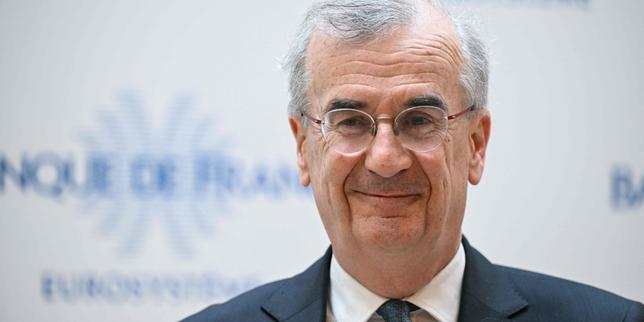
The Banque de France just issued a pinky-swear that everything is fine. Even if oil hits $145 a barrel, they claim the French economy will dodge a recession. It is a comforting bed-time story for institutional investors. It is also dangerously wrong.
Central banks have a long, storied history of predicting "soft landings" right until the wheels fall off the aircraft. By asserting that a nearly 100% spike in energy costs wouldn't trigger a technical recession, they aren't just being optimistic; they are ignoring the fundamental physics of how a modern economy breathes. Energy isn't just a line item. It is the master resource. When the cost of the master resource doubles, the math of "no recession" only works if you torture the data until it confesses.
The Myth of Resilience
The official narrative relies on the idea that the French economy is "diversified" and "resilient." We’ve heard these words so often they’ve lost all meaning. Resilience is usually just a lagging indicator of a consumer still spending on credit.
The Banque de France argues that labor markets are tight and household savings will act as a shock absorber. This is a classic misreading of psychological thresholds. When a liter of fuel or a monthly heating bill crosses a certain price point, consumer behavior doesn't just "slow down." It breaks.
I’ve seen this play out in the 2008 lead-up. Back then, the consensus was that subprime was "contained." Today, the consensus is that energy inflation is "manageable." They are using the same playbook. They look at aggregated GDP figures while ignoring the micro-fractures in manufacturing and transport that happen long before the official quarterly data shows a minus sign.
The $145 Oil Math Doesn't Add Up
Let’s look at the mechanics. If oil hits $145, we aren't just talking about expensive weekend trips. We are talking about:
- Fertilizer and Food: The Haber-Bosch process, which feeds the world, is tethered to energy prices. A $145 barrel translates to a vertical spike in grocery prices.
- Petrochemicals: Plastics, resins, and medical supplies all start with a barrel of oil.
- Logistics: Every truck on the A7 highway becomes a liability.
The central bank’s model suggests that a "modest slowdown" in growth is the worst-case scenario. This assumes a linear relationship between energy prices and economic output. But economies are non-linear systems. They are ecosystems. If you remove the water from a forest, the trees don't just grow a bit slower. They catch fire.
To believe the Banque de France, you have to believe that $145 oil won't trigger a massive "risk-off" event in the credit markets. When energy-intensive industries start seeing their margins turn negative, banks stop lending to them. When the lending stops, the recession starts. It’s that simple. The "no recession" claim assumes the financial plumbing stays perfect while the basement is flooding.
Why Central Bankers Lie (To Themselves)
They aren't necessarily trying to deceive the public. It's worse: they believe their own models. These models are built on historical correlations that no longer exist.
Most central bank forecasting tools are based on the Great Moderation—a fluke period of thirty years where globalization and cheap Russian gas kept a lid on volatility. We are now in a regime of scarcity. You cannot model a scarcity-driven shock using a surplus-driven formula.
The Productivity Trap
The argument for avoiding a recession often hinges on productivity gains. The theory is that firms will simply become more efficient to offset the energy costs.
As someone who has spent years analyzing corporate balance sheets during crises, I can tell you: efficiency takes time and capital. If your energy bill triples in six months, you don't have the "slack" to invest in new, efficient machinery. You cut staff. You cancel projects. You survive. Survival mode is the literal definition of an economic contraction.
The Inflation Ghost
The Banque de France also suggests that inflation will magically return to $2%$ even in these stress scenarios. This is a fantasy. If oil is at $145$, the "second-round effects"—where workers demand higher wages to pay for the $145$ oil—become baked into the cake.
The central bank then faces a brutal choice they refuse to admit in their reports:
- Option A: Raise rates to $7%$ or $8%$ to kill the inflation, which guaranteed a deep recession.
- Option B: Keep rates low to "save" the economy, which leads to currency devaluation and a stagflationary spiral.
Their current report suggests there is an Option C: Everything stays fine and we all go to the beach. Option C does not exist in reality.
The Wrong Question
People are asking, "Will we have a recession?"
The better question is: "What does an economy look like when it can no longer afford its own energy requirements?"
By focusing on the binary "Recession: Yes/No," we miss the actual decay. Even if GDP prints a $0.1%$ growth rate (avoiding the technical definition of a recession), the standard of living for the average French citizen will have plummeted. If your income grows by $1%$ but your essential costs grow by $15%$, you are in a personal recession. The central bank's obsession with the "technical" avoids the "actual."
The Actionable Truth
If you are waiting for the Banque de France to give you the "all clear" before you adjust your business strategy or your portfolio, you are already behind.
- Audit your energy exposure: Don't just look at your utility bill. Look at the energy intensity of your entire supply chain. If your suppliers are thin-margin businesses, they will go under at $120$ oil, let alone $145$.
- Ignore the "Soft Landing" noise: Prepare for a volatile "hard landing." This means increasing liquidity now, not when everyone else is trying to exit the door.
- Watch the Credit Spreads: Forget the GDP forecasts. Watch what the market is charging for high-yield debt in the industrial sector. That is where the truth lives.
The central bank is playing a game of chicken with reality. They are betting that the "psychology of confidence" can override the "physics of energy." It never has, and it won't this time.
Stop looking at the curated charts and start looking at the gas pump. The economy isn't a spreadsheet; it’s a combustion engine. And you can’t run an engine without fuel, no matter what the Governor says.
Get liquid. Get lean. And stop believing in miracles signed by bureaucrats.
Would you like me to analyze the specific impact of these energy price targets on the European manufacturing sector's debt-to-equity ratios?