The air inside the dairy barn at three in the morning usually smells of sweet alfalfa and damp concrete. It is supposed to be the coolest part of the day, a brief reprieve before the sun cuts across the valley. But last July, when Elena stepped through the sliding wooden doors, the heat hit her like a physical blow. It was trapped. Static. The cows were already standing, their heavy flanks heaving in a synchronized, desperate rhythm.
When we talk about global temperature anomalies, we tend to speak in decimals. We dissect a report from the World Meteorological Organization stating that the next five years will almost certainly see global temperatures reach near-record highs. We look at charts predicting an 86 percent chance that one of these years will dethrone the current record holder. Recently making news in this space: The Geopolitical and Logistical Friction of International Repatriation Frameworks.
But decimals do not breathe.
For Elena, a third-generation farmer, the climate crisis does not look like a graph. It looks like the digital readout on her milk tank. When a dairy cow’s core temperature rises by even a fraction of a degree, her appetite plummets. Milk production drops. The invisible machinery of biology grinds to a halt under the weight of thermal stress. That night, Elena spent four hours rigging temporary misting lines, her hands slick with sweat and grime, watching the horizon turn an ominous, pale yellow. She was fighting for tenths of a degree, right there on the dirt floor. Further details into this topic are covered by The New York Times.
We are all fighting for tenths of a degree now.
The Illusion of the Thermostat
The human brain is notoriously bad at understanding incremental systemic change. If you adjust the thermostat in your living room from 72 to 74 degrees, you barely notice. You might shed a sweater. You might not even do that. Because of this everyday experience, when scientists warn that the planet is on track to temporarily breach the 1.5-degree Celsius threshold above pre-industrial levels, the collective response is often a collective shrug.
It sounds like a mild spring afternoon.
To understand why this is a catastrophic misunderstanding, we have to abandon the living room analogy. Think instead of the human body. Your core temperature sits comfortably around 98.6 degrees Fahrenheit. If that temperature ticks up by a mere 2 degrees, you have a fever. You feel miserable. If it rises by 4 degrees, you are bedridden, delirious, and rushing to the emergency room.
The Earth is an organism with a fever. The five-year forecast isn't just predicting a warm spell; it is documenting a sustained, systemic spike in the planet's vitals.
This warming is fueled by a double-edged sword: the relentless accumulation of greenhouse gases and the cyclical emergence of powerful climate patterns like El Niño. Think of greenhouse gases as a heavy wool blanket thrown over the planet. El Niño is the hot water bottle slipped beneath the sheets. Together, they create an incubator.
The data backing this is unyielding. Meteorological agencies worldwide tracking surface air temperatures, ocean heat content, and glacial melt rates have reached a terrifying consensus. The atmospheric concentration of carbon dioxide has bypassed levels unprecedented in human history. We are no longer debating future possibilities. We are chronicling current events.
The Melting Asphalt and the Ghost Towns
Let us move from the pasture to the pavement.
Imagine a highway construction worker named Marcus. He spends his days in the urban corridors of the American Southwest. To Marcus, the near-record heat of the coming half-decade translates to a specific, terrifying phenomenon: the softening of the world around him.
When ambient temperatures hover around 115 degrees Fahrenheit, asphalt can reach 160 degrees. It ceases to be solid ground. It becomes a viscous, searing trap. Marcus has seen work boots melt. He has seen colleagues collapse from heat stroke within twenty minutes of stepping onto a job site.
The heat changes how we build, how we work, and where we can safely exist.
GLOBAL TEMPERATURE PROJECTIONS (Next 5 Years)
--------------------------------------------------
Chance of exceeding warmest year on record:  86%
Chance of temporarily breaching 1.5°C:        47%
Primary Drivers: Anthropogenic Emissions + Ocean Oscillations
--------------------------------------------------
As these numbers materialize in our daily lives, they trigger a migration that is already beginning, albeit quietly. It starts with insurance policies. Companies look at the data, calculate the risk of unprecedented heatwaves and the wildfires they ignite, and quietly pull out of entire zip codes. Property values dip. Then the local businesses close because the summers are too brutal to sustain foot traffic.
Slowly, communities fade into ghost towns, evacuated not by a sudden cataclysm, but by the slow, suffocating insistence of a rising thermometer.
The economic toll is staggering, yet it is the psychological weight that lingers. There is a specific anxiety that comes with looking at a clear blue sky and feeling dread instead of joy. It is the realization that the most fundamental element of our environment—the weather—has become unpredictable, hostile, and volatile.
The Great Oceanic Battery
To truly grasp the momentum of the next five years, we have to look beneath the waves. The atmosphere gets the headlines because that is where we live, but the oceans are the planet's true heat sink.
More than 90 percent of the excess heat trapped by greenhouse gases is absorbed by the world's oceans. Water has a high specific heat capacity. It takes a massive amount of energy to raise the temperature of the sea. But once that energy is stored, it does not dissipate quickly. It acts like a giant, planetary battery, slowly discharging heat back into the system over decades.
This marine warming creates a feedback loop. Warm water expands, driving sea levels higher. It fuels more intense tropical storms, turning routine weather systems into historic disasters.
Last autumn, a marine biologist friend described diving on a reef she had studied for twenty years. She expected some bleaching. She was prepared for it. What she wasn't prepared for was the silence. The vibrant greens and deep purples of the coral had turned a ghostly, skeletal white. The fish were gone. The entire ecosystem had vanished in the span of a single, unseasonably warm summer.
She sat on the boat deck afterward, her wetsuit peeling down to her waist, staring at the horizon. She didn't cry. The grief was too heavy for tears. It was just a numb, quiet acceptance that the baseline of the world had shifted permanently beneath her feet.
The Myth of the Faraway Problem
For decades, climate change was marketed poorly. It was presented as a tragedy for polar bears, an issue for low-lying island nations in the distant future, or a problem for our grandchildren to solve. This framing allowed us to compartmentalize the danger. It let us believe that we could opt out of the consequences if we lived far enough inland or possessed a high-quality air conditioner.
That illusion has shattered.
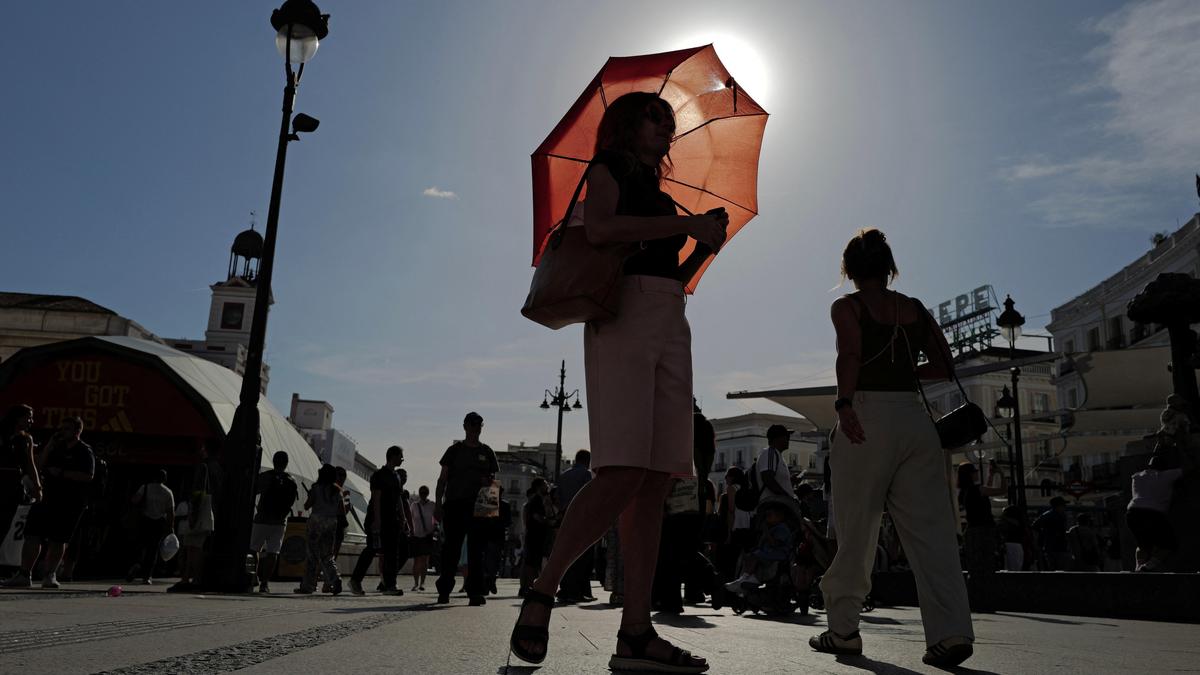
The next five years will prove that there is no geographic immunity. The heat domes that settled over parts of Europe and North America in recent years were not anomalies; they were a preview of the new normal. When the jet stream weakens and meanders—a phenomenon directly linked to Arctic warming—it traps high-pressure systems in place for weeks.
Suddenly, a city built for mild summers finds itself enduring weeks of triple-digit temperatures. The power grid strains. Transformers explode. The elderly and vulnerable, trapped in upper-floor apartments without cooling infrastructure, face life-threatening conditions.
This is not a future scenario. It is the immediate reality confronting municipal leaders from Paris to Seattle. We are racing to retrofit cities designed for a climate that no longer exists. We are planting urban canopies, painting roofs white to reflect solar radiation, and opening public cooling centers in a desperate bid to keep our neighbors alive.
Redefining the Horizon
The data presented in these global reports can feel paralyzing. It is easy to look at an 86 percent probability of record-breaking heat and sink into fatalism. If the trajectory is set, if the momentum of the past century is driving us toward this destination, what is the point of fighting?
The point is that every fraction of a degree matters.
There is a vast difference between a world that warms by 1.5 degrees and one that warms by 1.6 degrees. That single tenth of a degree represents millions of lives saved from extreme heat stress. It represents agricultural yields preserved, coastal communities protected, and ecosystems thrown a lifeline.
We must stop viewing the climate crisis as a binary game of success or failure. It is a continuous battle of mitigation. We are navigating a dangerous mountain road; missing the optimal turnout does not mean we should drive off the cliff. We slam on the brakes. We steer. We minimize the impact.
This requires a radical shift in how we deploy technology, how we structure our economies, and how we value resources. It means transitioning from fossil fuels with an urgency that matches the speed of the rising temperatures. It means investing in resilient infrastructure, smarter grids, and sustainable agriculture that can withstand the volatile years ahead.
The Final Chord
Back in the valley, as the sun finally broke over the ridge, Elena’s misting system held. The temperature inside the barn dropped just enough. The cows settled, their breathing slowing to a steady, rhythmic cadence.
Elena leaned against the wooden gate, her shirt soaked through, watching her herd. She had won that night's battle. But as she looked up at the pale, shimmering sky, she knew the heat would return tomorrow. It would return next month, next year, and for all the years after that.
The reports and statistics are not a eulogy for the planet. They are a mirror. They show us exactly where we stand and precisely what we are up against. The next five years will be hot, they will be difficult, and they will test the limits of our resilience.
The heat is coming, but how we respond to it—how we protect each other, how we adapt, and how fiercely we fight for those vital fractions of a degree—remains entirely up to us.