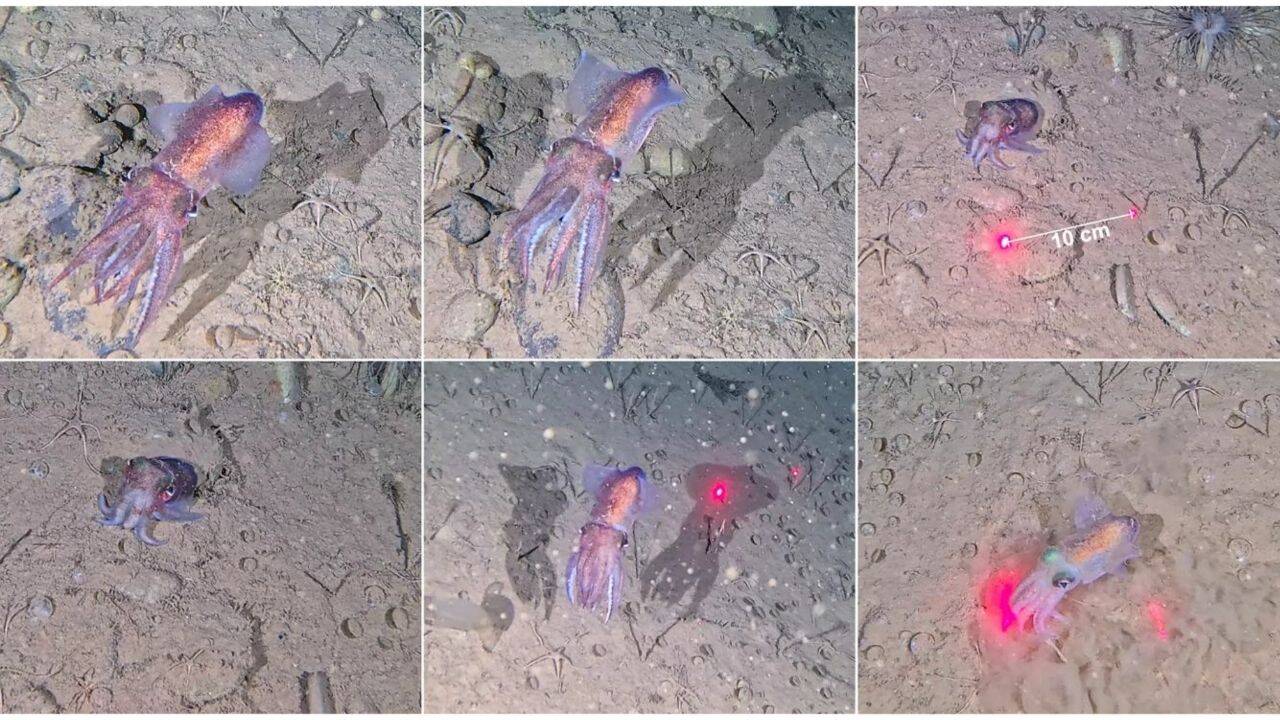
Marine biologists recently documented the first direct visual evidence of a rare deep sea squid brooding its eggs in the high Arctic water column. For decades, researchers relied on pelagic trawls, dead specimens, and surface debris analysis to piece together the life cycles of bathypelagic cephalopods. The visual capture of a brooding female changes the baseline of our understanding regarding high latitude reproductive strategies, shifting the discourse from theoretical metabolic models to empirical behavioral tracking.
The primary challenge in studying high latitude cephalopods lies in the logistical constraints of the deep ocean. Extreme hydrostatic pressure, near freezing temperatures, and total absence of solar radiation create an operational environment where traditional marine observation fails. When specimens are brought to the surface via nets, the sudden decompression and thermal shock destroy soft tissue structures and induce severe behavioral artifacts, rendering observational data invalid.
Direct submersible footage bypasses these mechanical failures. It permits the isolation of behavioral variables in situ, revealing how physical adaptations in deep sea species solve the thermodynamic and evolutionary pressures of polar marine biomes.
The Energetic Cost Function of Bathypelagic Reproduction
Reproduction in polar environments requires an extreme reallocation of biological capital. In temperate or tropical zones, pelagic squid often spawn masses of gelatinous eggs that drift independently in ocean currents, relying on sheer volume to ensure reproductive survival. This broadcast spawning strategy minimizes parental investment post fertilization.
In the bathypelagic Arctic zone, this strategy is mathematically unviable. The metabolic rate of ectotherms at temperatures hovering near zero is heavily suppressed, but the time required for embryonic development scales exponentially. Cold water slows cell division, meaning eggs left unattended in the open water column would face near total predation over a multi month or multi year incubation timeline.
To overcome this, certain deep sea cephalopod lineages evolved specialized parental care mechanisms. The documented Arctic squid exhibits brooding behavior, carrying its egg mass directly rather than abandoning it. This shifts the maternal cost function across two distinct vectors:
- Metabolic Depletion: The female ceases active hunting to prioritize buoyancy regulation and physical defense of the clutch, relying entirely on stored lipid reserves.
- Locomotor Compromise: Carrying a massive egg clutch alters the hydrodynamic profile of the animal, increasing drag and reducing escape velocity against apex predators like deep diving marine mammals or large fish.
This trade off implies that brooding represents a terminal reproductive investment. In many deep dwelling cephalopod species, females perish after the eggs hatch, having exhausted every unit of somatic energy to ensure the survival of a single generation.
Physiological Adaptations for Polar Pelagic Survival
Sustaining life in the permanent darkness of the deep Arctic demands specific structural and biochemical modifications. Understanding how a brooding cephalopod maintains position in the water column without expending finite energy reserves requires analyzing its neutral buoyancy system.
Marine animals typically use one of three mechanisms to maintain depth: swim bladders, lipid accumulation, or ionic substitution. Because swim bladders collapse under the extreme pressure of the bathypelagic zone, deep sea squid rely on chemical composition. They replace heavy ions in their body fluids with lighter ammonium ions, effectively creating an internal floatation tank that matches the density of surrounding seawater.
When a female squid adds an enormous egg mass to her body weight, this delicate buoyancy equilibrium is disrupted. The mass of the eggs alters the center of gravity and total density. The observed specimen compensates through continuous, subtle adjustments of its fin musculature and funnel jet, maintaining a stationary hover in the water column. This precise hovering behavior minimizes turbulent water displacement, which would otherwise alert nearby predators to the presence of a compromised, slow moving adult.
The Environmental Variables of the High Arctic Water Column
The habitat where this footage was captured is defined by extreme environmental constants. The bathypelagic layer, situated below one thousand meters, experiences absolute darkness, stable salinity, and temperatures consistently between minus one and four degrees Celsius.
Unlike surface waters subject to seasonal plankton blooms, the bathypelagic food web operates on marine snow, the detrital rain of organic matter sinking from the photic zone. Energy is scarce. Consequently, the timing of reproduction cannot be tied to seasonal food availability for the adults, because the adults themselves are living on a fixed energy budget. Instead, embryonic development must be synchronized with deep water current patterns that disperse paralarvae to microhabitats where baseline nutrients are slightly elevated.
The physical presence of the female protecting the eggs acts as a buffer against specific biological risks:
- Predation Mitigation: Specialized deep sea amphipods and fish constantly target nutrient rich egg masses. Active guarding prevents parasitic or direct consumption.
- Oxygenation Maintenance: Stagnant water around a dense cluster of eggs leads to localized hypoxia. The gentle, rhythmic ventilation provided by the female ensures a constant flow of oxygenated seawater across the embryonic membranes.
Comparative Reproductive Strategies Across Cephalopod Taxa
To contextualize the Arctic brooding observation, marine scientists contrast it with related pelagic and benthic strategies.
| Strategy | Primary Mechanism | Environmental Driver | Metabolic Impact |
|---|---|---|---|
| Broadcast Spawning | Pelagic egg masses drift freely | High primary productivity zones | Low maternal investment; high mortality |
| Benthic Nesting | Eggs attached to hard ocean floor substrates | Shallow to moderate depth shelves | Moderate investment; localized protection |
| Pelagic Brooding | Direct carrying of the clutch in the water column | Bathypelagic and abyssopelagic zones | Terminal maternal investment; high protection |
The transition from broadcast spawning to pelagic brooding in extreme environments illustrates a clear evolutionary divergence. Species that inhabit stable, resource poor environments favor high investment per offspring over high volume output. The energy diverted to the egg mass represents a calculated bet that a protected clutch in the deep Arctic yields a higher net fitness return than thousands of unprotected eggs released into hostile currents.
Observational Limitations and Methodological Gaps
While the recent visual documentation provides critical empirical data, several variables remain unquantified due to the limitations of current deep sea observation technology.
- Duration of Brooding: The exact length of the incubation period remains unknown. In similar deep water species like Gonatus onyx or various octopods, brooding can last from several months to over four years. Measuring this precisely requires long term stationary monitoring systems rather than transient submersible passes.
- Energetic Source Tracking: It is unclear whether brooding females engage in opportunistic micro predation while carrying eggs or if they subsist purely on catabolism of muscle and digestive gland tissue. Stable isotope analysis of tissue samples from future specimens will be required to resolve this nutritional pathway.
- Species Taxonomy: Distinguishing between cryptic species in the deep Arctic is notoriously difficult. Genetic sampling must accompany visual confirmation to map the exact phylogenetic tree of these brooding lineages.
Deploy autonomous deep sea landers equipped with low light cameras and environmental sensors to monitor identified brooding sites over multi year cycles without human submersible intervention.