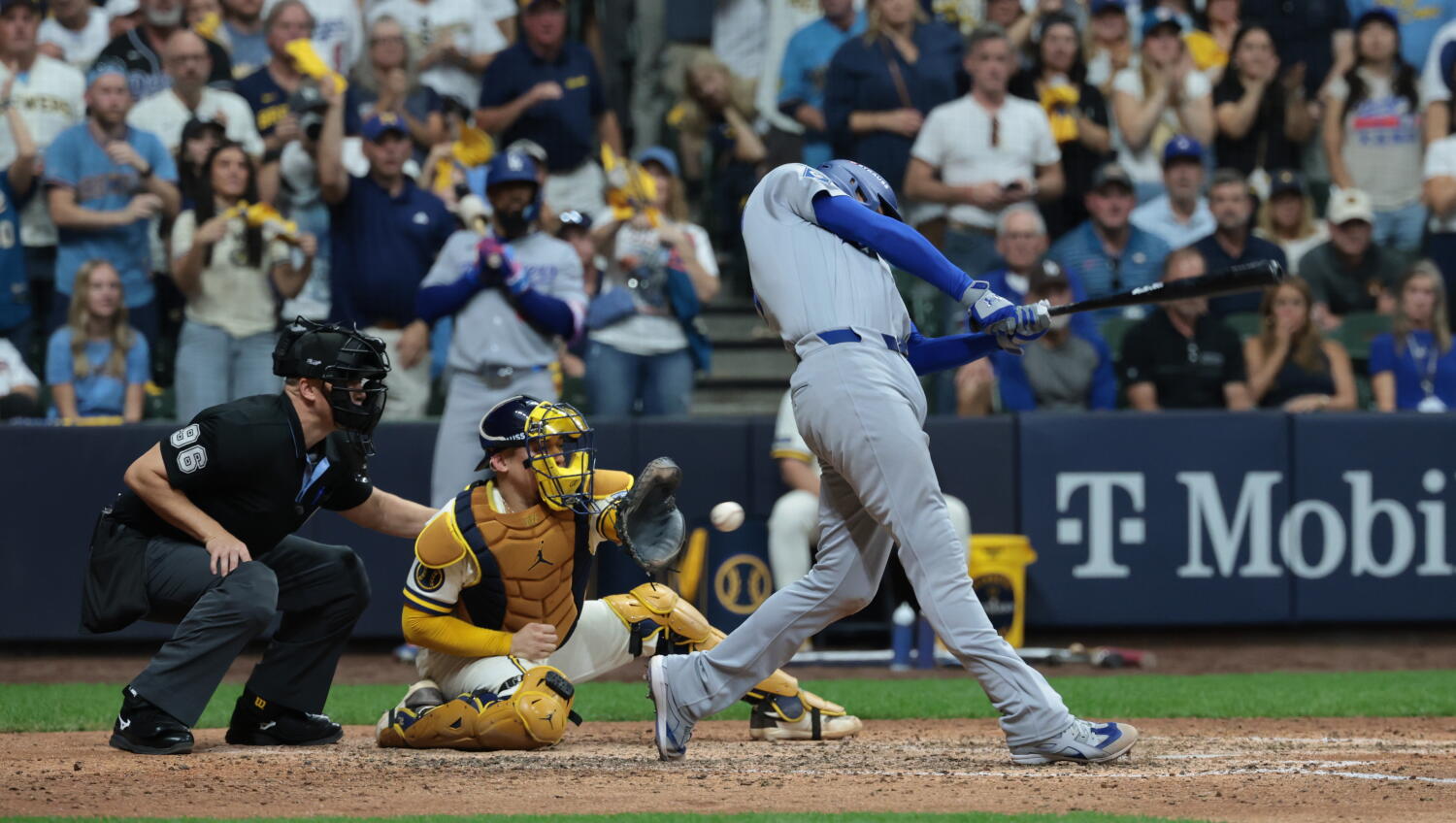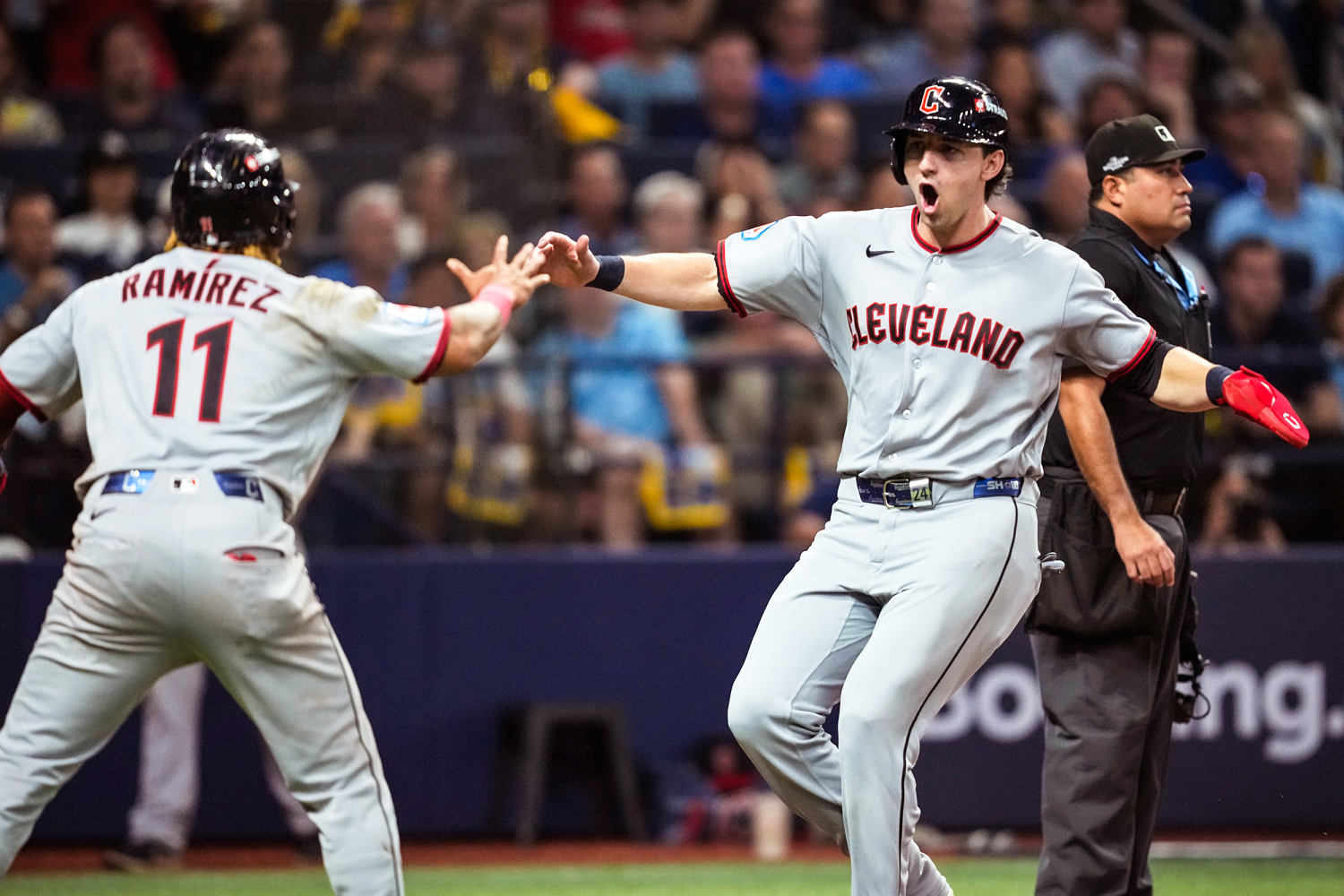
Postseason success is rarely a byproduct of sustained dominance; rather, it is an exercise in exploiting high-leverage variance. When the Cleveland Guardians defeated the Tampa Bay Rays 7-3 in Game 1 of the American League Championship Series, the box score recorded a routine offensive explosion anchored by Chase DeLauter and José Ramírez. Yet, a superficial reading of home runs and run differentials obscures the structural mechanics that governed the outcome. October baseball exposes the fragility of pitching depth when elite bats force opposing managers into suboptimal leverage distributions.
To deconstruct this matchup, we must examine the game through three primary operational vectors: the leverage management index of the pitching staffs, the batted-ball profile optimization achieved by Cleveland's top-of-the-order hitters, and the defensive conversion rate under high-stress counts.
The Leverage Architecture of Postseason Bullpens
The modern postseason bullpen operates on a strict cost-benefit curve. Regular-season fatigue compounds by October, forcing managers to compress their high-leverage innings. Tampa Bay entered Game 1 with a reputation for suppression, utilizing tactical pitching deployment to minimize opposing platoon advantages. However, facing a disciplined lineup disrupts the fundamental assumption of structural bullpen optimization.
When a team falls behind early in a playoff series opener, the leverage index shifts dramatically. Tampa Bay's sequencing relied heavily on limiting hard contact through secondary pitch usage low and away in the zone. DeLauter and Ramírez dismantled this strategy by altering the spatial parameters of the strike zone. By elevating their decision value—swinging selectively at pitches within their optimal damage zones while laying off borderline breaking balls—they forced Tampa Bay's relievers into predictable fastball counts.
The structural failure for the Rays was not a lack of arm talent, but a sequencing bottleneck. Once Cleveland established a multi-run lead in the middle frames, Tampa Bay could no longer deploy middle-tier leverage arms without conceding win probability. This forced them to burn high-leverage assets in low-leverage recovery scenarios, altering their bullpen availability matrix for the remainder of the series.
Offensive Efficiency through Spatial Awareness
A common analytical error in evaluating baseball performance is treating slugging percentage as a monolithic metric. In high-stakes postseason play, slugging is downstream of swing selection efficiency and pitch-tracking discipline.
Chase DeLauter’s performance in Game 1 served as a case study in spatial optimization. Rather than hunting fastballs across the entire zone, DeLauter targeted specific velocity quadrants where his bat path maintained maximum plane efficiency. When pitchers attempt to expand the zone against elite left-handed hitters, the margin for execution narrows to millimeters. Missing over the heart of the plate against a hitter with rapid rotational acceleration results in high-exit-velocity contact.
José Ramírez operates on a complementary axis. As a veteran anchor, Ramírez dictates the tempo of the at-bat by extending counts until the pitcher is forced to compromise. The mechanics of his approach involve two distinct components:
- Elite pitch recognition that neutralizes elite breaking stuff in pitchers' counts.
- The capacity to generate optimal launch angles even against sub-optimal velocity differentials.
When these two hitters dictate terms, the defensive alignment of the opponent disintegrates. The Rays were forced to shift defenders into defensive positioning designed to suppress conventional ground-ball rates, leaving vulnerability in the gaps that Cleveland repeatedly exploited.
The Cost Function of Defensive Disruption
Defense in October is measured by conversion efficiency—the percentage of batted balls converted into outs under high-stress parameters. When a pitching staff falls behind in the count, the defensive alignment loses its structural integrity because infielders and outfielders must anticipate a wider distribution of batted ball trajectories.
In Game 1, Cleveland's aggressive base running and high contact rates exerted continuous pressure on the Rays' defensive infrastructure. Every extra pitch thrown by a Tampa Bay reliever increased the cumulative fatigue metric of the infielders. This fatigue manifests not in overt physical errors, but in fractional delays in first-step quickness and throwing accuracy.
The 7-3 final score was the mathematical culmination of these compounding inefficiencies. Tampa Bay's pitching staff absorbed an unsustainable volume of pitches per plate appearance, which degraded command in critical leverage spots. Cleveland did not merely hit their way to a victory; they systematically dismantled the opponent's resource allocation model over nine innings.
The immediate consequence for the remainder of the American League Championship Series is clear. Tampa Bay must radically alter its sequencing strategy against Cleveland's core run-producers, accepting higher walk rates to avoid middle-zone damage. If they continue to pitch to contact within predictable quadrants, the structural outcome of Game One will serve as a baseline template for the rest of the series.