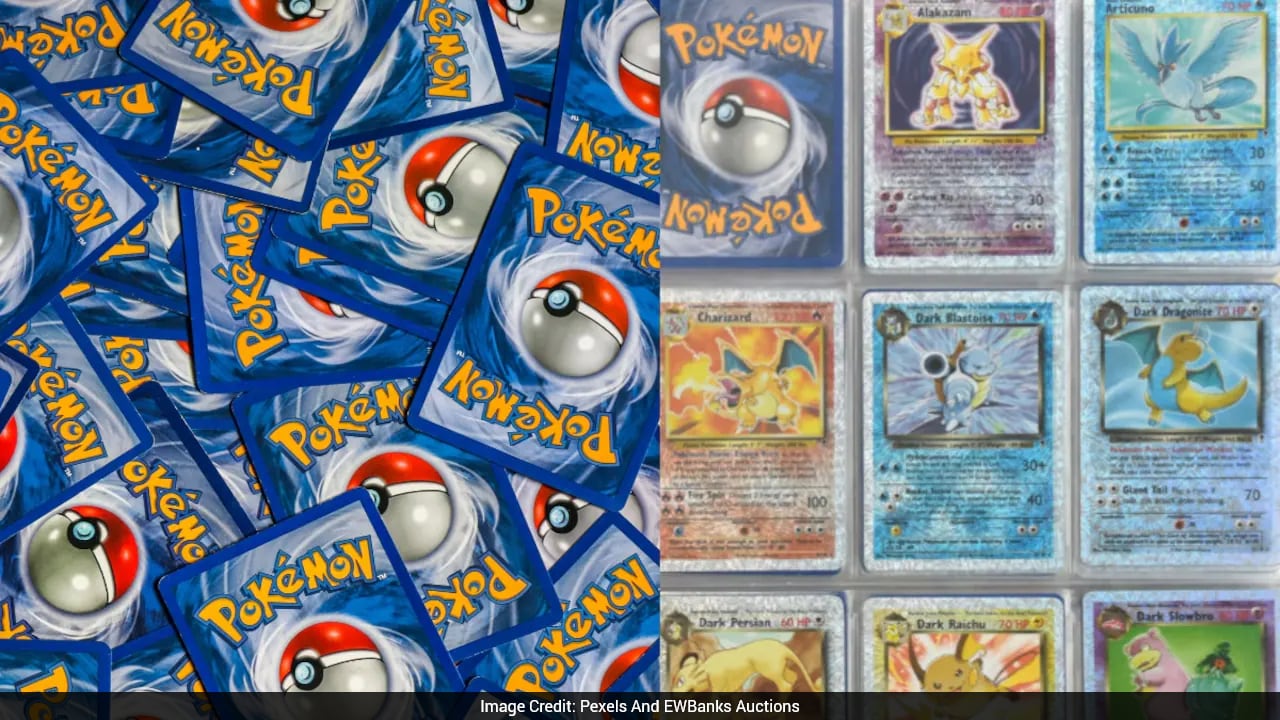
When a longtime British collector recently liquidated a hoard of vintage Pokemon cards for tens of thousands of pounds—translating into multiple crores in Indian currency—the internet reacted with predictable shock. Headlines framed it as a lottery ticket found in a childhood bedroom. They missed the real story entirely. This wasn't blind luck, nor was it an isolated fluke of nostalgia. What happened in that UK auction room represents the culmination of a twenty-five-year supply squeeze, strict third-party authentication monopolies, and the transformation of cardboard children's toys into an alternative asset class rivaling fine art and vintage watches.
To understand how shiny paper from 1999 commands life-changing wealth today, you have to look past the playground hype and examine the cold mechanics of scarcity, condition sensitivity, and modern market liquidity. Read more on a related subject: this related article.
The Myth of the Accidental Millionaire
Mainstream coverage loves a fairy tale. A regular person digs through an attic, dusts off a binder, and walks away rich. The reality of high-value vintage Pokemon cards is far less romantic and infinitely more calculated.
The British collector who made headlines didn't merely hold onto a few crumpled cards from primary school. Achieving multi-crore valuations requires decades of deliberate preservation, strategic acquisition during the franchise's dormant years in the mid-2000s, and an obsessive understanding of print runs. Most childhood collections are worthless today. Kids played with their cards on concrete sidewalks, shoved them into pockets without sleeves, and bent the corners during playground trades. Further reporting by Reuters Business highlights comparable perspectives on this issue.
By the time adult nostalgia collided with pandemic-era stimulus money in 2020, the surviving supply of pristine, untouched 1999 Base Set cards had shrunk to a microscopic fraction of the original print run. The collectors cashing out for crores today are almost exclusively the ones who treated cardboard like bullion long before the rest of the world caught on.
Why Certain Cardboard Commands Crore-Level Valuations
Not all old cards are valuable. A 1999 Charmander in rough shape might fetch a few hundred rupees on a local marketplace. The astronomical prices reserved for high-end collections hinge on three unforgiving variables.
Print Run Anomalies and First Editions
When Wizards of the Coast first printed English Pokemon cards in 1999, nobody anticipated a multi-decade global phenomenon. The initial 1st Edition Base Set print run was tiny compared to the Unlimited print runs that followed months later.
Even within that first wave, printing errors and subtle design shifts created micro-markets. The famous "Shadowless" print run—cards printed after the 1st Edition stamp was removed, but before drop-shadows were added to the artwork frame—sits at the absolute apex of collector demand. Without that specific printing history, a card loses ninety percent of its potential ceiling.
The Tyranny of Condition and Grading
In the high-end collectibles market, condition isn't just important. It is everything.
A card's raw value means almost nothing until it is encapsulated by a recognized third-party grading authority like PSA (Professional Sports Authenticator), BGS (Beckett Grading Services), or CGC. These companies inspect cards under magnification, measuring centering, corner sharpness, edge wear, and surface scratches on a scale from 1 to 10.
The price gap between grades is brutal. Consider a hypothetical example of a 1st Edition Base Set Charizard. In a PSA 8 grade (Near Mint-Mint), that single card might sell for roughly ₹8 to ₹12 lakhs. Bump that grade up by just two points to a PSA 10 (Gem Mint)—indicating microscopic perfection straight out of the factory booster pack—and the valuation explodes past ₹2.5 crores. A tiny speck of whitening on the back edge, invisible to the naked eye, can literally erase crores from a seller's payout.
Sealed Product Scarcity
Often, the biggest payouts don't come from individual cards at all, but from unopened booster boxes. A sealed 1999 Base Set booster box contains 36 packs of 11 cards each. Because thousands of influencers and wealthy collectors spent the last five years livestreaming "box breaks"—ripping open vintage boxes on camera for views—the remaining supply of sealed boxes has plummeted. Every box opened permanently reduces the global supply, pushing the price of the remaining sealed boxes higher. Collectors aren't just buying the cards inside; they are buying the Schrödinger's cat probability that a flawless, crore-worthy holographic card is sitting untouched inside the foil.
Inside the Secondary Market Machinery
Selling a multi-crore collection isn't as simple as listing it on an online classifieds site. High-end collectibles rely on a specialized financial ecosystem designed to build buyer trust and maximize hammer prices.
Auction houses like Goldin, Heritage Auctions, and PWCC operate like traditional fine art brokerages. When a British or European collector decides to liquidate a top-tier vault, these houses handle the logistics, insurance, global marketing, and escrow. They verify provenance to eliminate the rampant threat of counterfeits, which have grown sophisticated enough to fool casual buyers.
This institutional infrastructure has attracted a new breed of buyer. The people bidding crores on rare Pokemon sets are rarely lifelong fans living in their parents' basements. They are tech founders, hedge fund managers, athletes, and alternative asset funds diversifying their portfolios. To these buyers, a low-population PSA 10 vintage card behaves similarly to a rare painting or a vintage Ferrari. It is portable, globally recognized, uncorrelated with traditional stock market swings, and backed by a rabid international fanbase with growing purchasing power.
The Hidden Costs and Brutal Realities of Cashing Out
Media reports obsess over the gross headline number—the final auction price—while ignoring the friction that eats away at a collector's actual profit. Turning cardboard into cash in a bank account is expensive.
First comes the grading tax. Grading companies don't charge a flat fee for high-value items; they charge on a sliding scale based on the card's declared post-grading value. Submitting a single card worth ₹1 crore can cost upwards of ₹4 to ₹8 lakhs just to get it slabbed and insured.
Next come the auction house fees and buyer's premiums. While top-tier consignors often negotiate 100% of the hammer price—meaning the auction house takes its cut via a 20% buyer's premium tacked onto the winning bid—that buyer's premium directly depresses the maximum amount a bidder is willing to offer.
Finally, there is the taxman. Across the UK, the US, and India, tax authorities do not view multi-crore collectible sales as harmless hobbyist swaps. Capital gains taxes on collectibles often sit higher than standard equity tax rates. In the UK, where the recent headline-making collector is based, selling chattels (tangible movable property) above a certain threshold triggers strict Capital Gains Tax liabilities, forcing sellers to prove original purchase costs from decades ago—a nightmare if you bought those packs with pocket money in 1999.
The Risks Nobody Mentions During a Bull Run
If you are looking at your own closet or considering buying vintage sets as an investment, pump the brakes. The collectibles market carries severe structural risks that mainstream hype pieces conveniently gloss over.
Population Report Inflation
The biggest threat to high-end card values is the PSA Population Report—the public ledger showing how many copies of a specific card exist in each grade. While vintage 1999 print runs are finite, thousands of raw, ungraded cards still sit in private collections worldwide. Every time a fresh batch of cards gets graded and hits the market, the population of PSA 9s and 10s ticks upward, diluting scarcity and putting downward pressure on prices.
Illiquidity During Downturns
Stocks sell in milliseconds. Real estate takes months. High-end collectibles can sit unsold for years when macroeconomic conditions tighten. During the 2021 boom, everything went up regardless of quality. By 2023 and 2024, the market underwent a violent correction. Common vintage cards lost 50% to 70% of their peak value, and liquidity dried up for anything below the absolute highest tier of rarity. If you need cash quickly during a downturn, you will take a massive haircut.
Counterfeits and Altered Cards
As valuations climbed into the crores, fraud followed. Beyond outright fake cards printed in overseas factories, the industry has been rocked by scandals involving "card doctors"—specialists who chemically clean surfaces, press out creases, or use precision blades to trim millimeter-thin slivers off rough edges to fool grading companies into awarding higher grades. Buying high-end sets without ironclad provenance carries the constant risk that a card could later be flagged as altered, wiping out its value overnight.
What This Means for Everyday Collectors
The takeaway from the British collector's multi-crore windfall isn't that you should hoard modern booster boxes expecting them to fund your retirement in 2050. Modern Pokemon sets are printed in the billions—an order of magnitude larger than the 1999 runs—and today's buyers immediately put every shiny card into protective sleeves. Because everyone is preserving modern cards, future scarcity simply will not exist on the same scale.
True value in any collectibles market is born from asymmetric information and contrarian patience. The collectors winning today are the ones who bought what nobody else wanted twenty years ago, preserved it obsessively when nobody cared, and sold into a wave of institutional liquidity. If you are holding vintage cards from the late nineties, stop guessing their value from random internet listings, inspect the edges under bright light, check the official PSA auction price databases for exact grade matches, and understand the tax implications before you ever ship a single card to an auction house.