The rain in Islamabad does not wash the heat away; it merely turns the dust into something heavy that clings to your boots. From a small third-floor office overlooking the capital, the hum of the city feels distant, replaced instead by the low, rhythmic clicking of a keyboard. A mid-level logistics officer, let us call him Tariq, rubs his temples. On his desk lies a manifest for incoming hardware arriving at the port of Karachi. It is listed as technical machinery, but the weight metrics tell a different story.
Tariq knows the exact weight of a drone wing. He knows the density of radar shielding. For a decade, his job has been to watch the physical manifestation of an alliance land on Pakistan's shores.
Lately, the crates are arriving faster. The labels are exclusively in Mandarin and English.
Across the globe, defense analysts view this through the cold lens of geopolitics. They write white papers with titles about strategic dependency and regional hegemony. They use data points to show that Pakistan has become the largest buyer of Chinese weapons, accounting for over 60 percent of Beijing's total arms exports. But those charts fail to capture the quiet reality inside the offices where the bills are tallied. They miss the human anxiety of a nation balancing its sovereignty on the edge of a sword it did not manufacture.
The Showroom of the Global South
Beijing needed a stage.
For decades, the global arms market was an exclusive club dominated by Washington and Moscow. Breaking into that circle required more than just building functional tanks; it required a testing ground. A partner willing to field new tech in volatile conditions.
Pakistan, facing a perennial, existential anxiety along its eastern border, needed an alternative to expensive Western hardware that often came with strict political strings attached.
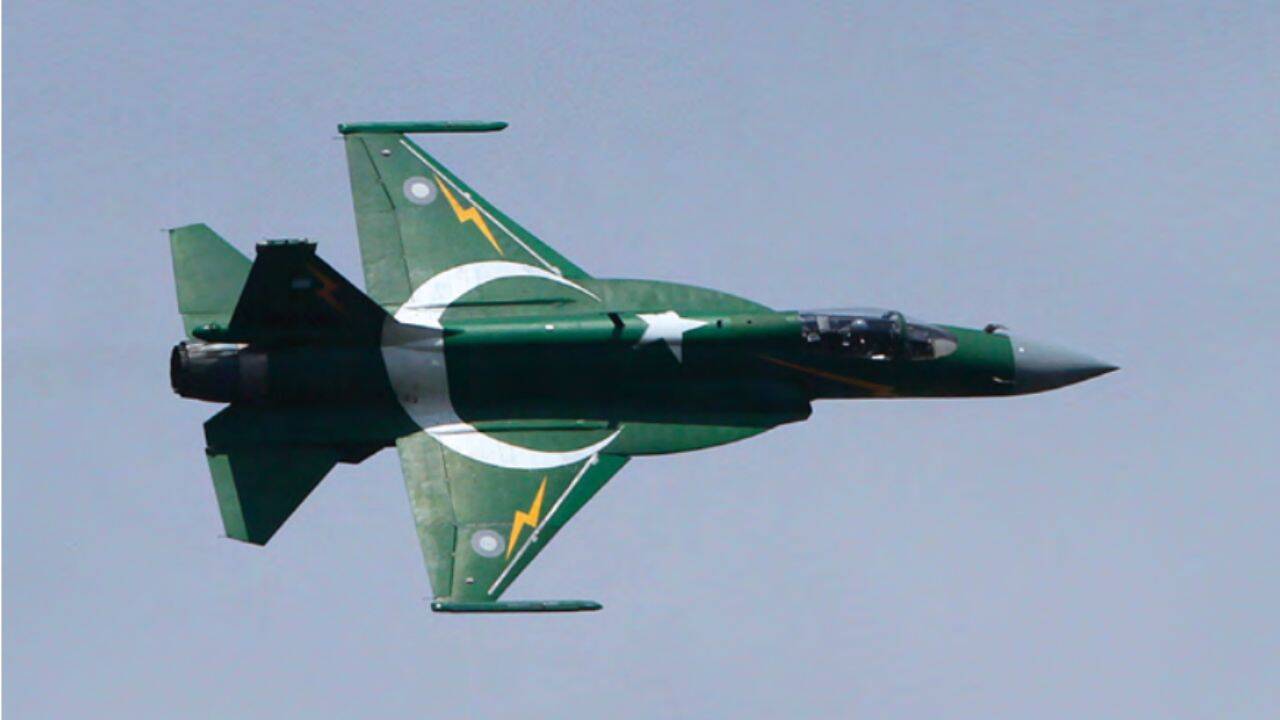
It was a marriage born of pure convenience. China offered affordable, sophisticated systems like the JF-17 Thunder fighter jet and Type 054A/P frigates. Pakistan offered a real-world operational environment.
Think of it as a software beta test, but with live ammunition and supersonic trajectories.
When a Chinese-made missile system is integrated into Pakistan’s defense grid, it does not just defend airspace. It sends telemetry data back to engineers in Chengdu and Shanghai. It proves to the rest of the world—to potential buyers in Africa, Southeast Asia, and South America—that Chinese military tech can perform under pressure. Pakistan became the ultimate showroom. The machinery was shiny, functional, and remarkably cheap upfront.
But cheap hardware has a way of becoming incredibly expensive over time.
The Maintenance Trap
Consider what happens next: a nation buys a fleet of advanced fighter jets. The purchase price is manageable, perhaps even subsidized by favorable loans. The jets arrive, the flags fly, and the press releases praise an "all-weather friendship."
Then, the sand gets into the turbines.
Military hardware is not a one-time transaction. It is an ongoing relationship. Every radar component, every specialized bolt, and every software update must come from the original source. If a nation does not possess the domestic industrial base to manufacture these high-tech components, it becomes completely reliant on the seller just to keep its fleet airborne.
This is where the leverage shifts. It is the razor-and-blade business model applied to international security. The razor is sold at a discount, but you will buy the proprietary blades forever.
For Tariq, looking at the logistics data, this manifests as a growing pile of line items for proprietary maintenance contracts. The terms of these contracts are rarely public, but the economic trajectory is clear. When a country's entire defense infrastructure is hardwired into the ecosystem of a single foreign power, independence becomes a relative term. You cannot easily walk away from your sole supplier when your neighbor is constantly watching your borders.
The Weight of the Ledger
The true cost is not measured solely in Pakistani rupees or Chinese yuan. It is measured in autonomy.
Every major arms deal binds the two nations closer together at a structural level. It requires Chinese technicians to be stationed at Pakistani airbases. It requires Pakistani officers to train extensively in Chinese academies. Over time, the strategic thinking, the doctrines, and the literal language of defense begin to merge.
This deep integration complicates Pakistan's relationships with the rest of the world. Western nations view the influx of Chinese military technology with deep suspicion, creating a chilling effect on other forms of technological and economic cooperation. The country finds itself caught in an architectural trap, where escaping the influence of one superpower requires a leap into the unknown, while staying means accepting a subordinate role in a larger global strategy.
The narrative of a simple puppet and a puppet master is too simplistic. Pakistan is an active participant, driven by its own intense security needs. Yet, the asymmetry of power within the relationship is impossible to ignore. One country is an economic titan rewriting the rules of global trade; the other is struggling with chronic inflation and energy shortages.
The Final Blueprint
Late in the evening, the office in Islamabad grows quiet. Tariq signs off on the cargo manifest. The crates will clear the port. The trucks will move north under the cover of night, carrying the steel bones of a relationship that has become too big to fail, and too heavy to carry comfortably.
Outside, the streetlights reflect off the wet asphalt. The city moves on, unaware of the subtle ways its future is being anchored to a power thousands of miles away. It is a quiet process, devoid of grand declarations or sudden invasions. It happens one shipment, one contract, and one proprietary component at a time, transforming a sovereign nation into the vital, dependent pillar of someone else's empire.