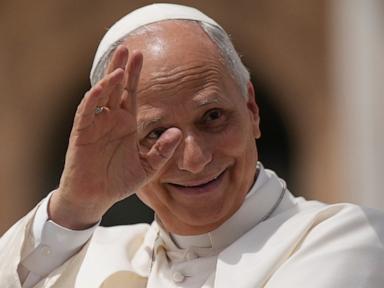
Mainstream media outlets love a good decline narrative. For decades, the international press has rolled out the exact same obituary for Spanish Catholicism: a tired story about a "secularized, polarized nation" where the Church is a relic of the Franco regime, bleeding members and facing political irrelevance. As Pope Leo XIV lands in Madrid for his historic address to Las Cortes, the lazy consensus is that he is entering a spiritual wasteland.
They are reading the data upside down.
The standard analytical framework relies on superficial metrics: binary polling, institutional box-checking, and the assumption that a drop in weekly Mass attendance equals the death of faith. I have watched political analysts spend millions tracking European voter shifts while completely missing the cultural undercurrents right beneath their noses. When you look past the standard political theater, a different reality emerges. Spain is not secularizing; it is counter-secularizing. The old institutional monopoly is dead, but it is being replaced by a highly visible, uninhibited, and disruptive cultural force.
The Flawed Premise of the "Secular Wasteland"
The lazy consensus relies on a single data point from state opinion agencies: the headline that the percentage of Spaniards identifying as Catholic dropped from 90% in the 1970s to roughly 55% today. The punditry screams "secularization."
But let us dismantle the premise of that metric. The 90% figure from the Franco era was an artificial monopoly sustained by state coercion. It did not measure faith; it measured compliance. Treating the collapse of enforced cultural conformity as a collapse of actual spiritual conviction is a fundamental error in sociological analysis.
What remains today is a lean, self-selected 55%. That is more than half the population choosing an identity in a hostile cultural environment. More importantly, look at the trajectory of the youth. The SM Foundation's data reveals an undeniable trend: the number of young Spaniards identifying as Catholic actually jumped from 31.6% in 2020 to 45% recently. Nearly 40% of young Spaniards now state that religion is quite or very important in their lives.
"The young Catholic of today is fundamentally different from the young Catholic of 2011. They are completely uninhibited by the old culture-war polarizations."
This is not a dying ember. It is a highly active minority that has normalized its identity on social media, in universities, and in public plazas.
The Rise of Post-Secular Tribalism
The media frames Spain's intense polarization as a sign that the Church is being squeezed out by ideological warfare between Prime Minister Pedro Sánchez’s Socialist government and conservative factions like Vox. The reality is the exact opposite: the political parties are desperate to claim the moral capital that only the Church still possesses.
Consider the mechanics of the current political crisis. The ruling coalition is fighting off severe corruption scandals and seeking validation by aligning with the Vatican on migration policies. Meanwhile, the right-wing opposition relies on traditionalist identity to mobilize its base. When Pope Leo XIV steps into the Spanish Parliament, he is not a marginalized figure begging for a hearing from a secular elite. He is the only actor in the room with absolute moral autonomy.
This is what sociologists call the post-secular shift. In a hyper-polarized society where public trust in institutions has cratered—with three-quarters of the population trapped in an insular trust mindset—the Church remains the ultimate cultural referee. It is the only entity capable of backing the regularization of half a million undocumented migrants while simultaneously drawing thousands of middle-class youth into movements like Hakuna and Effetá.
Institutional Catholicism vs. Post-Secular Catholicism
┌─────────────────────────────────┬──────────────────────────────────┐
│ Old Model (Pre-2010s)           │ Modern Reality (2020s)           │
├─────────────────────────────────┼──────────────────────────────────┤
│ State-coerced compliance        │ High-conviction minority choice  │
│ Defensive culture-war footing   │ Uninhibited cultural visibility  │
│ Bureaucratic parish structures  │ Decentralized organic movements  │
└─────────────────────────────────┴──────────────────────────────────┘
The Illusion of Irrelevance
The standard critique points to the drop in church marriages—falling from 76% at the turn of the century to under 20% today—as proof of total institutional decay. This argument confuses bureaucratic disengagement with spiritual death.
While traditional parish structures struggle to fill pews on a random Sunday morning, public manifestations of popular piety are breaking records. Holy Week processions in Seville, Málaga, and Zamora are seeing unprecedented participation from demographics that secularists claimed were lost forever. The phenomenon of adult baptisms is rising sharply.
Materialism has run its course and failed to satisfy the fundamental anxieties of a generation raised on screens and economic instability. The assumption that modern Europeans will inevitably progress into a comfortable, godless secularism is an outdated 20th-century myth. The modern Spanish youth does not want a watered-down, compromise-driven secular humanism. They are flocking to either radical secular ideologies or high-demand, high-visibility religious expressions.
The downside of this contrarian reality is obvious: the Church will never regain its position as a monolithic state religion, nor should it want to. The future belongs to highly dense, passionate cultural tribes. Pope Leo XIV’s visit is not a nostalgic farewell tour to a former stronghold; it is a blueprint for how the Church intends to operate as a creative, disruptive minority in the West.
.jpg)