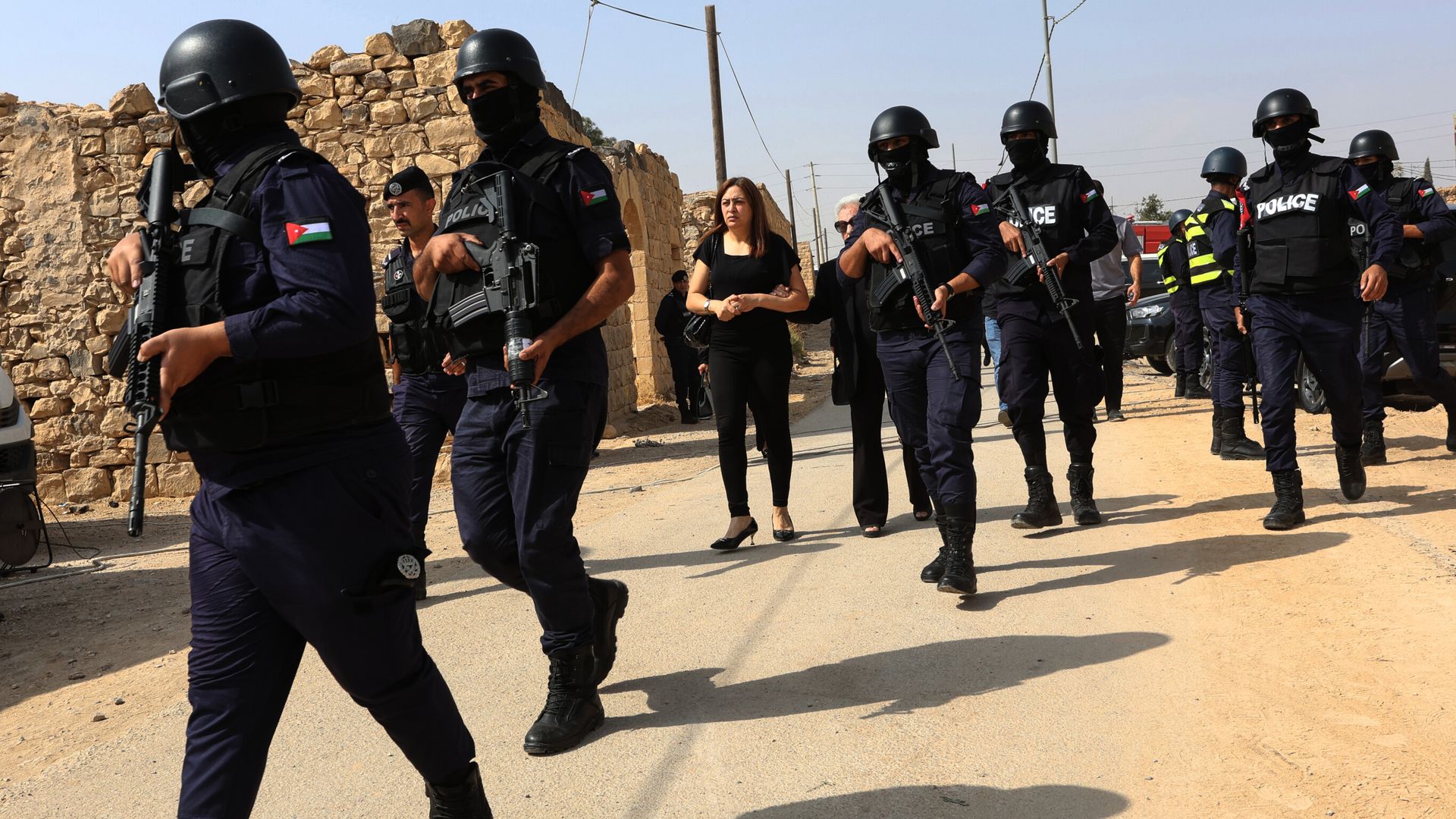
Jordan is often viewed as the quiet anchor in a turbulent neighborhood. For decades, the Hashemite Kingdom has maintained a reputation for stability while neighboring states fractured under the weight of civil wars and sectarian violence. That reputation took a severe hit when gunmen targeted a church in Jordan, resulting in a deadly attack followed by a fierce shootout that ended with three men in custody.
When breaking news like this hits the wires, most coverage stops at the body count and the arrest tally. They miss the bigger picture. Understanding why this attack happened—and how Jordanian security forces responded—requires looking past the immediate headlines and examining the operational reality on the ground.
Breaking Down the Jordan Church Attack and Shootout
The sequence of events unfolded rapidly. Gunmen carried out a deadly assault on a church in Jordan, shattering the routine calm of the local community and immediately triggering a high-level security response.
Within hours, Jordanian security forces tracked the suspects down. They didn't wait for the suspects to slip across a border or blend into an urban crowd. Instead, tactical units cornered the assailants, leading to a heavy exchange of gunfire. When the smoke cleared, three men were arrested in the shootout.
Speed matters in counterterrorism. Every hour a cell remains at large after an attack gives them time to regroup, destroy digital evidence, or execute secondary strikes. By locking down the perimeter and engaging the suspects quickly, Jordanian intelligence and tactical teams prevented a bad situation from spiraling into a prolonged hostage crisis or a multi-day manhunt.
Why Jordan's Security Apparatus Reacts So Fast
If you've ever studied Middle Eastern intelligence networks, you know Jordan's General Intelligence Directorate (GID) punches way above its weight class. While the country lacks the oil wealth of its Gulf neighbors, it compensates with an exceptionally tight human intelligence network and aggressive counterterrorism doctrine.
Here is how their response typically operates in scenarios like the church attack:
- Immediate border and road lockdowns. Jordan's geography is relatively compact, with major population centers concentrated along specific highway corridors. Security forces can choke off transit routes between governorates within minutes.
- Pre-existing surveillance networks. Extremist cells rarely emerge out of thin air. Often, suspects have prior flags in security databases, allowing investigators to narrow down safe houses rapidly once an incident occurs.
- Zero-hesitation tactical engagement. Jordanian special forces don't rely on drawn-out negotiations when dealing with active shooters who have already killed civilians. They move in hard to neutralize the threat and capture operatives alive for interrogation.
Capturing those three men alive is massive. Dead terrorists tell no tales, and they don't reveal who funded their weapons, who radicalized them online, or whether a fourth or fifth operative is waiting in the wings.
What Most People Get Wrong About Sectarian Violence in Jordan
When an attack targets a church in the Middle East, outside observers immediately jump to conclusions about widespread sectarian hatred. Honestly, that's a lazy reading of Jordan's social fabric.
Christians make up a small percentage of Jordan's population—roughly 2% to 4% depending on the demographic estimate—yet they are deeply integrated into the country's political, economic, and social life. They hold reserved seats in parliament, serve in high-ranking government posts, and live alongside Muslim neighbors without the systemic sectarian friction seen in places like Iraq or Lebanon.
So why target a church?
Extremist groups don't attack Christian sites in Jordan because there is a grassroots sectarian war brewing. They do it specifically to manufacture one. By striking a minority religious institution, attackers aim to accomplish three distinct goals:
- Shatter the illusion of safety. Tourism and foreign investment are lifelines for Jordan's economy. An attack on a church generates instant international headlines, scaring away visitors and rattling investors.
- Drive a wedge between communities. Terrorists want Christians to feel abandoned by the state and Muslims to feel defensive, hoping the resulting tension fractures national unity.
- Provoke security overreach. Militants often hope that a panicked government will crack down indiscriminately on conservative neighborhoods, creating fresh grievances they can use for recruitment.
It's a cynical strategy, and historically, it hasn't worked in Jordan. Following past incidents—such as the 2016 Karak Castle attack—Jordanians across religious lines rallied behind the security forces and the targeted communities rather than turning on each other.
The Broader Regional Pressures Testing Amman
You can't look at a violent incident inside Jordan in a vacuum. The country sits at a tough crossroads, bordered by Syria, Iraq, Israel, the West Bank, and Saudi Arabia. Whatever happens in those neighboring territories inevitably creates tremors inside the kingdom.
Over the past few years, Jordanian border guards have fought what amounts to a low-intensity war along the northern frontier with Syria. Smuggling networks—often backed by heavily armed militias—constantly attempt to push Captagon pills, weapons, and explosives across the border.
While the church attack and the arrest of the three suspects represent a specific domestic security breach, they exist within this wider environment of regional instability. Weapons proliferating across porous borders eventually find their way into the hands of local cells, lone wolves, or criminal networks willing to carry out ideological violence.
What Happens Next in the Investigation
With three men in custody following the shootout, the focus shifts entirely from tactical containment to intelligence extraction and judicial prosecution.
In Jordan, terrorism-related offenses fall under the jurisdiction of the State Security Court. Unlike standard criminal proceedings, this court moves with deliberate speed and hands down severe sentences, including life imprisonment with hard labor or capital punishment for attacks resulting in fatalities.
Investigators will be looking closely at three primary angles over the coming weeks:
- Command and control. Were these three men acting independently after being radicalized online, or were they taking direct orders from a regional extremist group?
- Weapons sourcing. Tracing the serial numbers and origins of the firearms used in both the church attack and the subsequent shootout will tell intelligence officials whether there is an active arms pipeline operating inside the country.
- Local facilitation. Did anyone rent them an apartment, lend them a vehicle, or provide financial backing? Jordanian authorities routinely arrest peripheral facilitators to dismantle the entire support ecosystem around a cell.
How to Read Breaking Security News Without Falling for Hype
When attacks like this happen, social media turns into a rumor mill within seconds. Unverified videos from completely different countries get shared as "live footage," and casualty numbers swing wildly before official statements are released.
If you want to stay accurately informed when major security incidents unfold in the Middle East, stick to a few basic verification habits:
- Wait for official Ministry of Interior or Public Security Directorate (PSD) briefings. In Jordan, the PSD is the primary official source for operational updates, arrest confirmations, and casualty figures. Early anonymous tweets rarely get the details right.
- Separate confirmed facts from ideological framing. Notice the difference between reporting that three men were arrested in a shootout and claims that a specific international terror franchise orchestrated the plot before any evidence is presented.
- Watch the local response, not just international commentary. Pay attention to statements from local religious leaders and community figures in Jordan; their reaction is the best barometer for whether an attack is actually shifting social dynamics on the ground.
The deadly attack on the church in Jordan is a stark reminder that even the most vigilant security apparatus cannot stop every threat before it materializes. Yet the rapid tracking, engagement, and arrest of the three suspects proves that while extremists can still strike, operating freely inside the kingdom remains nearly impossible.