The wind in Fort Saskatchewan, Alberta, does not just blow. It bites. On a typical Tuesday morning in the industrial heartland of the Canadian prairies, the air carries a distinct sharpness, a mixture of sub-zero chill and the heavy, metallic breath of heavy industry. For over six decades, one specific melody anchored this valley: the rhythmic, low-frequency hum of the Sherritt refinery.
It was a strange, industrial miracle.
Every single day, columns of steam punched into the pale blue Alberta sky, marking a process that defied geographical logic. Inside those walls, workers transformed a dark, fine concentrate into high-purity nickel and cobalt. But the raw material for this northern refinery did not come from the rich Canadian Shield or local open-pit mines. It came from a place of intense tropical heat, red dirt, and turquoise waters.
It came from Moa, Cuba.
For generations, an invisible umbilical cord stretched thousands of miles from the Caribbean Sea, through continental rail networks, directly into the heart of Alberta. Mud from the global south met the industrial muscle of the global north. It was a partnership that survived the Cold War, survived shifting political regimes, and weathered decades of economic turbulence.
Then, the pipeline of dust simply ran dry.
The Chemistry of an Unlikely Marriage
To understand why a refinery in the Canadian plains suddenly faces silence, you have to look at the dirt. Consider a hypothetical worker named David. For twenty-eight years, David started his shift at the Fort Saskatchewan facility by checking the consistency of the incoming feed. He knew the material by its touch, its weight, its smell. It arrived as a mixed sulfide precipitate—a dense, dark powder that carried the literal essence of the Cuban earth.
The process was elegant in its complexity. In Moa, lateral soils rich in nickel and cobalt were mined from the surface, treated with sulfuric acid under high pressure, and converted into a concentrate. This concentrate was then loaded onto vessels, shipped to Canadian ports, and transferred onto specialized railcars destined for Alberta.
David and his colleagues were the alchemists at the end of the line. They used the historic Sherritt-Gordon ammonia leach process to dissolve the powder, separating the precious metals from impurities, turning raw geological fortune into the literal building blocks of the modern world. The nickel went into stainless steel and aerospace alloys. The cobalt found its way into high-performance batteries.
It was a beautiful, profitable routine. Until the geology, and the geopolitical reality, pushed back.
The announcement from Sherritt International came without the dramatic fanfare of a sudden industrial disaster, but its impact carried the weight of a tectonic shift. The joint venture facility in Cuba was no longer delivering the required feed. Decades of intensive mining had taken their toll. The easily accessible, high-grade ore reserves at the Moa mine were depleting faster than infrastructure could adapt. The physical material required to keep the massive Canadian refinery operating at economic capacity was no longer arriving at the loading docks.
Without that specific Cuban feed, the refinery at Fort Saskatchewan became an engine without fuel. A massive, sophisticated, incredibly expensive engine, suddenly idling in the cold.
The Human Cost of High Corporate Strategy
When an industrial facility closes or curtails its operations, the corporate press releases tend to speak in a language designed to dull the pain. They talk about "asset optimization," "strategic realignments," and "impairment charges." They use numbers to hide faces.
But the real problem lies elsewhere.
Walk into any diner along the highway in Fort Saskatchewan, and the conversation is not about balance sheets. It is about mortgages. It is about hockey registrations for the kids. It is about what happens to a community when its foundational employer faces an existential crisis.
The refinery was not just a collection of pipes and pressure vessels. It was a multi-generational ecosystem. Fathers had passed their boots down to daughters; uncles had secured apprenticeships for nephews. The specialized knowledge required to operate a high-pressure acid leach recovery system is not something learned entirely from a textbook. It is passed down through shared grease, late-night shifts, and the collective memory of a crew that knows exactly how a valve sounds when it is about to fail.
Consider what happens next when the whistle stops blowing.
The economic shockwave rolls outward from the refinery gates. It hits the local trucking companies that hauled the materials. It hits the fabrication shops that welded replacement impellers for the agitators. It hits the grocery stores, the car dealerships, and the municipal tax base that funds the local recreation centers. The closure of a primary industrial refinery creates a vacuum that air rushes to fill, but in this case, the air is cold anxiety.
The company pointed to a combination of factors: declining ore grades at the source, logistical bottlenecks in the Caribbean, and the harsh reality that upgrading the infrastructure to process lower-grade material required capital that was simply too expensive to deploy in the current market. The economics had broken. When the cost of extracting and transporting a pound of nickel from the Cuban hills exceeds the global spot price on the London Metal Exchange, the math becomes a executioner.
The Fragile Illusion of the Global Supply Chain
We live in an era that treats the global supply chain as a given. We assume that because a system exists today, it will exist tomorrow. We buy smartphones, drive electric vehicles, and walk over bridges made of advanced steel, rarely thinking about the vast, fragile web of human effort required to assemble those materials.
The Sherritt shutdown exposes the raw vulnerability of this illusion.
The relationship between Canada and Cuba was always an anomaly. During the height of the United States embargo against the island nation, Sherritt managed to maintain a unique, highly profitable bridge between the two countries. It was a masterclass in diplomatic and corporate balancing acts. Canadian executives navigated the complexities of international law, avoiding the wrath of American sanctions while maintaining deep, respectful ties with Cuban authorities.
For years, it worked because both sides needed each other. Cuba possessed one of the largest lateral nickel deposits in the world but lacked the domestic refining capacity and advanced chemical engineering expertise to turn that raw ore into a product acceptable to Western markets. Canada possessed the technology, the stable infrastructure, and the skilled workforce, but lacked the tropical geology that creates nickel-rich soils.
They were two pieces of a puzzle separated by an ocean.
But a supply chain that spans thousands of miles and crosses geopolitical fault lines is only as strong as its weakest link. It does not take a war or a revolution to break it. Sometimes, it just takes the slow, inevitable exhaustion of a hillside in Holguín province. When the grade of the nickel drops by even a fraction of a percent, the energy required to process it increases exponentially. The margins evaporate. The bridge collapses.
The Weight of the Silent Towers
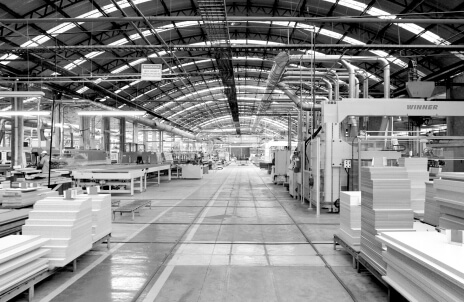
The silence at the refinery is a physical presence. Anyone who has worked in heavy industry knows that a quiet plant feels wrong. It feels unnatural. The normal state of a refinery is a chaotic symphony of hissing steam, roaring turbines, and the constant, reassuring vibration of heavy pumps moving thousands of gallons of corrosive fluid every minute.
When that stops, the silence rings in your ears.
The machinery does not handle idleness well. In the chemical processing world, a shutdown is not as simple as turning off a light switch. Pipes must be flushed with fresh water to prevent corrosive acids from eating through stainless steel walls from the inside out. Vessels must be blanketed with inert nitrogen gas to prevent oxygen from causing catastrophic rust. The entire facility must be put into a state of suspended animation, a clinical coma from which it may never truly wake.
The workers who remain are no longer operators; they are caretakers of a monument. They walk the catwalks with clipboards, checking pressures on systems that are no longer producing anything of value. They look at the empty rail spurs where the Cuban concentrate used to sit, its dark hue contrasting sharply against the white Canadian snow.
There is a profound irony in the timing of this shutdown. The world is currently locked in a frantic, historic scramble for critical minerals. Governments in Ottawa, Washington, and Brussels are spending billions of dollars to secure domestic supplies of nickel and cobalt, viewing them as essential weapons in the transition toward a cleaner energy economy.
Yet, here stands a world-class refining asset, capable of producing the exact high-purity materials the world claims to desperate need, sitting dark.
The crisis is not a lack of demand. The crisis is a lack of connection. It is the sudden, brutal realization that you cannot build a modern industrial strategy on the assumption that distant resources will always flow without interruption.
The Final Shift
The sun sets early over Fort Saskatchewan in the late autumn. The sky turns a deep, bruised purple before plunging into darkness. The lights along the refinery structures flicker on automatically, casting long, skeletal shadows across the gravel yards.
From a distance, the facility still looks alive. The perimeter lights sparkle like a small city rising from the prairie brush. But there is no heat coming from the stacks. There is no convoy of trucks waiting at the gate.
The story of the Sherritt refinery shutdown is not merely a story about a corporate joint venture reaching its natural conclusion. It is a story about the limits of human engineering when confronted with the unyielding realities of the earth. You can write the most sophisticated contracts in the world, you can build the most efficient chemical reactors ever conceived, and you can train a workforce to an elite level of operational excellence.
But if the red dirt stops coming from the mountain, the fire goes out.
Inside the locker room at the end of the shift, the transition is quiet. The men and women hang up their fire-resistant coveralls and pack their lunchboxes. They do not talk much about the macroeconomic trends or the spot price of metals in London. They talk about who is hiring down the road, which plants are still taking on contractors, and how long the severance packages will last if the winter turns out to be as long and bitter as the forecasters predict.
They walk out to their trucks, start the engines, and turn on the heaters, leaving behind a monument of steel and pipe that stands perfectly intact, perfectly capable, and completely empty.