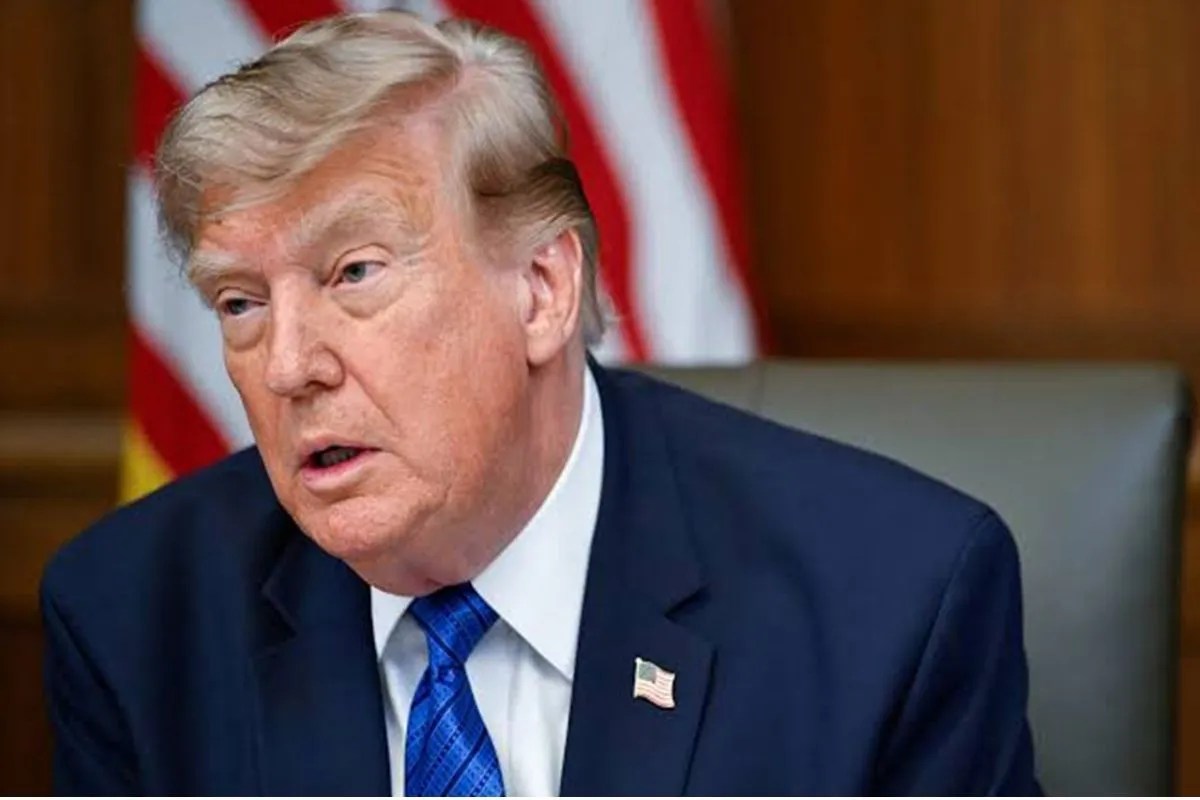
When Donald Trump erupted against the Federal Reserve over its decision to raise benchmark borrowing costs, declaring that the United States boasts the finest creditworthiness on earth and should enjoy interest rates of one percent or less, he exposed a fundamental fracture in modern economic theory. The clash between an executive branch demanding cheap capital to fuel expansion and an independent central bank trying to lock down persistent inflation is more than political theater. It is a high-stakes collision over who truly controls the price of money in a heavily indebted superpower.
For decades, the standard playbook of central banking relied on insulation from elected officials. Rates go up when inflation threatens; rates go down when growth stalls. Yet, the recent tightening move by Fed Chair Kevin Warsh and the central bank board triggered a furious political backlash, with Trump accusing policymakers of deliberate hostility and politically motivated interference. Beneath the heated rhetoric lies a deeper conceptual misunderstanding of how sovereign debt markets operate. A president can demand low rates, but the global bond market ultimately dictates the reality.
To understand why this friction matters, one must examine the core premise of Trump's argument. The assertion that America possesses the ultimate credit standing is technically true in terms of default risk. Treasuries remain the benchmark risk-free asset globally. Foreign investors, central banks, and domestic pension funds pile into United States government bonds because the full faith and credit of the nation stand behind them. Default is statistically unthinkable.
However, translating default safety into a moral right for cheap money confuses solvency with pricing power. A consumer with a pristine credit score still pays market rates dictated by inflation expectations and capital supply. When a government runs multi-trillion-dollar deficits year after year, it floods the financial system with supply. More supply of debt requires higher yields to attract buyers, unless a central bank steps in to artificially suppress those yields through monetary creation. That suppression is precisely what triggers inflation.
The Federal Reserve under Warsh faces a brutal mathematical wall. Inflationary pressures have stubbornly refused to vanish. Surging capital expenditures in artificial intelligence infrastructure, shifting global supply chains, and sticky wage growth have kept price pressures alive. Cutting rates in that environment would pour gasoline on an already warm fire. Central bankers know this. They also know that lowering rates to appease political cycles risks unmooring long-term inflation expectations entirely.
Politicians view the economy through an electoral lens. Their timeline spans months and legislative midterms. Central bankers operate on a multi-year horizon where credibility takes decades to build and minutes to destroy. When Trump claimed that board members acted to undermine his administration's economic record, he reflected a deep-seated frustration with an institution that refuses to bend its mandate to political convenience. But the board's resistance is not necessarily partisan malice; it is institutional self-preservation. If the Fed yields to political pressure, its credibility evaporates, turning the dollar into a managed currency vulnerable to populist whims.
Consider the mechanics of the bond market during a rate-hiking cycle. When the central bank lifts its federal funds rate, borrowing costs ripple outward across every sector of the economy. Mortgage rates climb, corporate debt issuance gets pricier, and auto loans become prohibitive. For an administration pushing for aggressive corporate expansion and housing affordability, these higher rates act as a severe anchor. Business investment slows down because capital is no longer free.
Yet, treating interest rates as a dial that can be turned down at whim ignores the bond vigilantes. If the central bank ignored inflation and slashed rates to one percent while federal borrowing surged, bond yields in the open market would likely surge anyway. Investors demand compensation for inflation risk. If they fear that money printing will erode the purchasing power of their returns, they dump long-term bonds, forcing yields higher regardless of what the central bank desires.
The phrase "best credit in the world" sounds like an absolute shield against economic gravity. In practice, it is a description of obligation. Because the United States borrows in its own currency, it can technically never run out of dollars. It can always print enough to pay the nominal value of its debt. But that technical capability comes with a catastrophic hidden tax called inflation. Printing money to artificially force rates down destroys the real value of the savings held by everyday citizens.
This brings us to the core vulnerability of the current economic debate. Both sides are partially trapped by their own incentives. The executive branch needs low interest rates to service the national debt without crowding out other federal spending or choking off economic momentum. Meanwhile, the central bank must protect the purchasing power of the currency against structural fiscal irresponsibility from both political parties.
The national debt has crossed thresholds that past generations of economists considered unsustainable. Annual interest payments on the national debt now rival major defense expenditures. Every time the central bank raises rates, the cost of servicing that massive pile of debt escalates dramatically. This creates a vicious fiscal feedback loop. Higher rates cause larger federal deficits, which require more borrowing, which pushes yields higher still.
Trump's frustration is understandable from a growth perspective. High borrowing costs penalize homebuilders, manufacturers, and consumers who rely on credit to function. Small businesses feel the squeeze immediately as credit lines reprice upward. Corporations face refinancing walls where old, cheap debt matures and must be replaced at double or triple the previous interest expense. The pain is real, visible, and politically toxic.
At the same time, prescribing cheap money as a cure for structural economic strains treats the symptom while worsening the disease. If interest rates are forced artificially low while fiscal deficits remain unchecked, capital allocation distorts. Speculative assets inflate, housing becomes detached from local incomes, and inflation resurges. History offers numerous cautionary tales of central banks that lost their independence under political duress, resulting in runaway price instability and shattered currencies.
International buyers of American debt add another layer of complexity. Foreign central banks and institutional funds hold trillions in Treasuries. When US monetary policy diverges wildly from domestic economic health in pursuit of political comfort, foreign appetite for long-term paper wanes. If major international holders decide to diversify away from dollar-denominated assets due to fears of inflation or political interference in the Fed, the cost of financing American deficits will spike violently, completely bypassing presidential decrees.
The relationship between the White House and the Federal Reserve has always been tense, dating back long before modern monetary policy formalised central bank independence. Lyndon Johnson famously leaned on Fed Chairman William McChesney Martin Jr. to keep rates down during the Vietnam War build-up, a move that helped ignite the great inflation of the 1970s. Subsequent presidents learned that public jawboning of the Fed rarely achieves permanent policy changes without inflicting long-term damage on market confidence.
Kevin Warsh stepped into the chairmanship knowing the political minefield ahead. His public warnings about inflation intolerance left him little room to back down without looking subordinate to political pressure. Financial markets watched closely to see whether the new leadership would bow to executive demands or hold the line. The decision to hike rates sent an unmistakable signal. The institution chose credibility over compliance.
Whether that choice proves economically sustainable depends entirely on how fiscal policy evolves. If Washington continues to run massive structural deficits, monetary policy alone cannot restore price stability without causing severe economic friction. Central banks cannot permanently offset the inflationary impulses of unconstrained government spending. They can only raise the cost of borrowing until demand cracks.
The political fallout from this monetary standoff will shape electoral battles for years. Voters feel the pinch of high mortgage rates and expensive credit lines every single day. They look for someone to blame, and the central bank makes an inviting target. Populist leaders capitalize on that frustration, framing unelected technocrats as out-of-touch bureaucrats sabotaging national prosperity.
Yet, blaming the thermostat for the heat rarely cools the room. The interest rate is a symptom of underlying fiscal imbalances and persistent inflation risks. Insisting that the United States deserves lower rates simply because of its historical credit reputation ignores the math of supply, demand, and currency depreciation.
The argument that the nation's superior credit standing guarantees immunity from market forces is a dangerous financial myth. Creditworthiness is not a permanent endowment; it is a trust earned through disciplined fiscal and monetary stewardship. When political leaders demand cheap money without addressing the structural drivers of debt and inflation, they erode that very trust.
The road ahead offers no painless compromises. Either the federal government confronts its spending trajectory, or the bond market will eventually force a reckoning that makes current central bank rate hikes look gentle by comparison.


