The lazy consensus on Dalilah’s Law is already calcifying. Depending on which cable news silo you inhabit, this is either a common-sense safety shield or a xenophobic strike against the logistics industry. Both sides are missing the point.
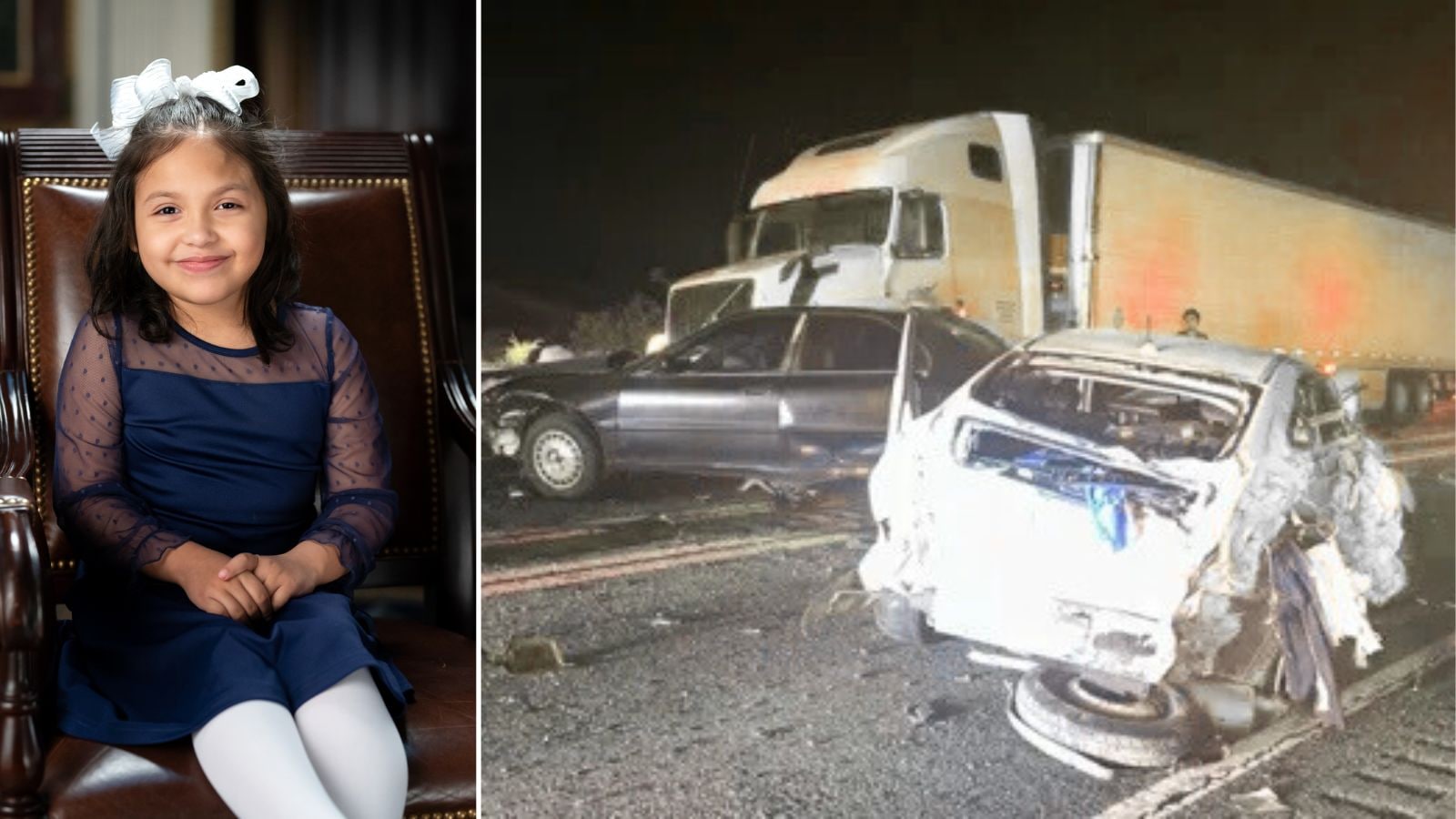
During the 2026 State of the Union, President Trump paraded the tragic story of Dalilah Coleman—a six-year-old left with life-altering brain injuries after an undocumented driver slammed into her family’s car—to demand a federal ban on states issuing Commercial Driver’s Licenses (CDLs) to illegal aliens. The bill, formally introduced by Senator Jim Banks and backed by heavyweights like John Cornyn, isn't just a "trucking rule." It is a fundamental disruption of the labor-safety-sovereignty triangle that has defined the American road for decades.
If you think this is just about "getting illegal drivers off the road," you’re being naive. If you think it’s just about "cruelty," you’re being blind. This is a cold-blooded reassessment of who owns the right to the American supply chain.
The English Proficiency Lie
The loudest argument for Dalilah’s Law is safety through language. The administration claims that "illegal aliens do not speak English and cannot read basic road signs." This sounds logical until you realize that 49 CFR § 391.11—a federal regulation that has been on the books for years—already requires all CDL holders to read and speak English well enough to converse with the public and understand traffic signs.
The "lazy consensus" says we need a new law because the old one doesn't work. The insider truth? The old law isn't being enforced because the logistics industry is addicted to cheap, high-turnover labor. By framing this as an immigration issue, the government is admitting its own regulatory failure. Dalilah’s Law isn't creating a new standard; it’s using immigration status as a proxy for a safety enforcement mechanism that the Department of Transportation has ignored for a generation.
The Economic Gut-Punch
Let’s talk about the battle scars in the logistics world. I’ve seen carriers operate on margins so razor-thin they would make a Silicon Valley startup weep. California alone has issued over 20,000 CDLs to non-citizens. Removing that many drivers overnight doesn't just "fix the border"—it nukes the "last mile" delivery system for every major retailer on the West Coast.
- The Nuance: The law targets "illegal aliens," but the ripple effect will hit non-domiciled CDLs across the board.
- The Cost: Expect a 15% to 20% spike in short-haul freight rates within ninety days of enactment.
- The Reality: We are choosing a safer road at the cost of a more expensive grocery bill. Most politicians won't admit that trade-off exists.
Dismantling the "States' Rights" Defense
Opponents argue that licensing is a state-level prerogative. They claim California or New York should be allowed to decide who drives within their borders. This is a legal fantasy. The Commerce Clause of the Constitution gives the federal government nearly unlimited power over anything that touches interstate commerce. An 80,000-pound rig moving from the Port of Long Beach to a warehouse in Arizona is the definition of interstate commerce.
The counter-intuitive reality is that the "woke states" (as Senator Cornyn calls them) actually created this vacuum. By decoupling legal presence from professional licensing, they invited federal intervention. You cannot run a national highway system with fifty different definitions of "qualified."
The Brutal Truth About Road Safety
Is an undocumented driver inherently more dangerous? Data suggests the answer isn't about their "status," but their training and vetting. The driver who hit Dalilah, Partap Singh, reportedly entered the country in 2022 and was behind the wheel of a semi-truck by 2024.
In the trucking industry, we call these "steering wheel holders"—drivers with minimal experience who are thrown into complex rigs because they are willing to work for sub-market rates. Dalilah’s Law is a blunt instrument designed to stop the exploitation of a legal loophole, but the downside is that it treats every undocumented driver as a ticking time bomb, regardless of their actual driving record.
Beyond the Laken Riley Act
Many are comparing this to the Laken Riley Act, which mandates detention for undocumented immigrants charged with theft. But Dalilah’s Law is more insidious—and more effective—because it targets livelihood. If you can't drive, you can't work. If you can't work, the "economic pull" of the interior evaporates.
The proposed legislation includes a "Truck Safety Tip Line" and mandates that CDL tests be administered in English only. This is a strategic move to standardize the industry by force. It’s not just about Dalilah; it’s about a total federal takeover of the professional driving standards that states have spent a decade trying to loosen.
The Actionable Pivot
If you are an operator in the logistics space, stop waiting for the "debate" to settle. The political momentum behind this bill is massive because it pairs a tragic face (Dalilah) with a systemic grievance (illegal immigration).
- Audit Your Roster: If your fleet relies on non-domiciled CDLs or drivers with questionable documentation, you are sitting on a liability powder keg.
- English-First Training: Even if the law stalls, the FMCSA is already tightening "English proficiency" as an out-of-service violation.
- Prepare for the Rate Hike: If Dalilah’s Law passes, the capacity crunch will be the worst we’ve seen since the 2021 supply chain crisis.
The industry is about to get a lot smaller, a lot more expensive, and—if the proponents are right—a lot safer. But don't let the "safety" rhetoric fool you. This is a turf war over who gets to keep the American economy moving.
Would you like me to analyze the specific language of the Jim Banks proposal to see how it might affect current H-2A or E-2 visa holders in your fleet?


