The camera flash in a gilded room does not just capture light. It mints power.
In the corridors of global diplomacy, a single photograph can function as an unspoken treaty, a badge of legitimacy, or a weapon. Leaders spend careers calculating exactly who they stand next to, how close they lean, and who appears to be chasing whom. When those images are reframed as trophies of submission, the fragile architecture of international respect begins to splinter.
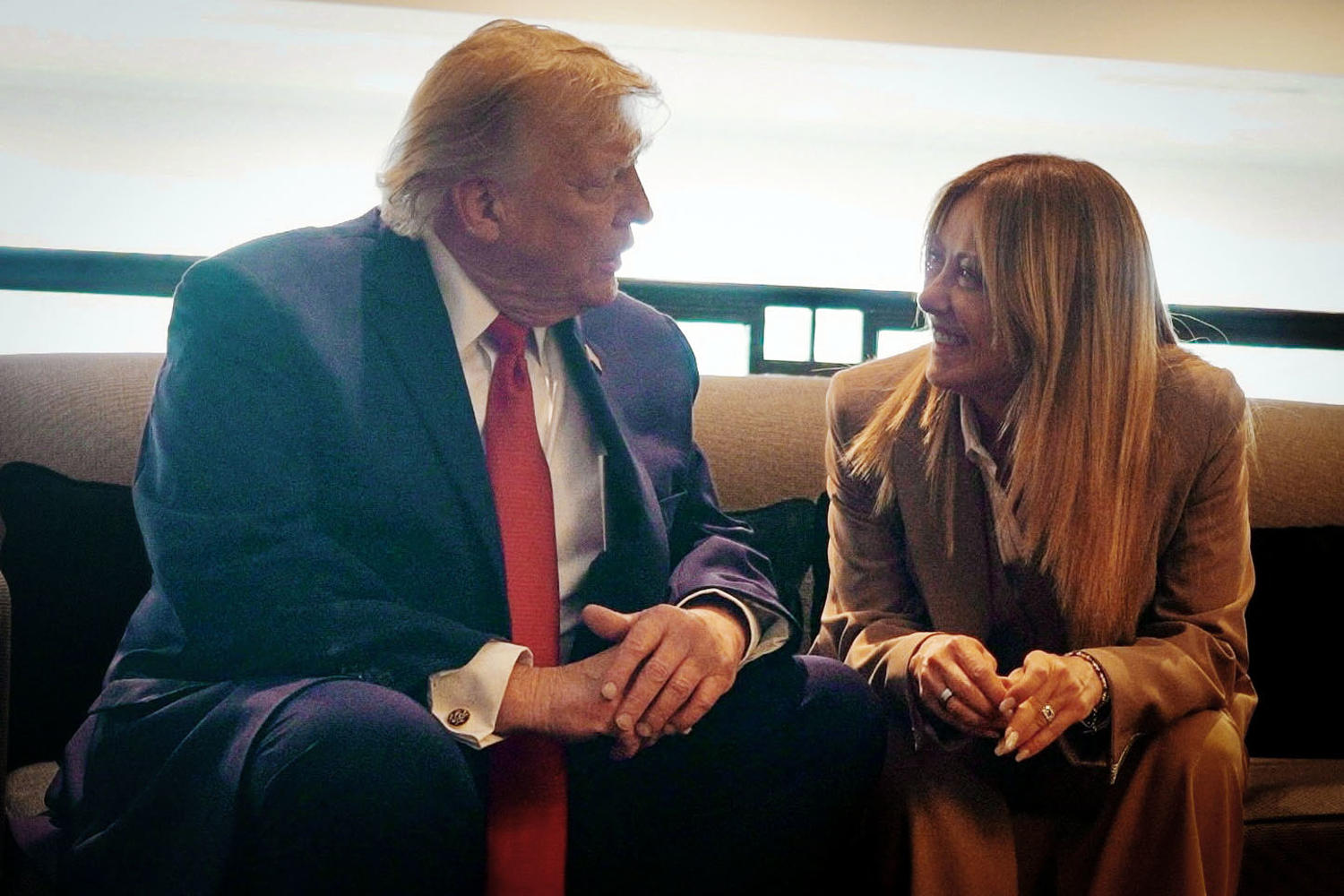
Consider the mechanics of a modern political myth. It starts with a story told on a stage, designed to make one person look towering and another look small. Donald Trump stood before a crowd and spun a vivid tale of international supplication. In his telling, Italian Prime Minister Giorgia Meloni approached him, desperate, practically pleading for a moment of his time, a shred of his spotlight, a photograph to validate her existence on the world stage. It was a classic narrative of the strongman granting an audience to a petitioner.
But the Italian Prime Minister remembers a completely different reality.
She called the claim totally fabricated. Not just mistaken. Not merely exaggerated in the heat of a campaign rally. Fabricated.
To understand why this friction matters, look past the immediate theater of American campaign trails and Rome’s political press rooms. The real clash is over the ownership of truth in an era where perception is traded like currency. When a leader claims another global figure begged for a photo, they are not just bragging. They are attempting to rewrite the hierarchy of international relations, reducing a sovereign nation's leader to a fan seeking an autograph.
The Architecture of the Photo-Op
Every international summit looks like a casual gathering of powerful acquaintances, but the reality is as tightly choreographed as a classic ballet. Behind every handshake are weeks of grueling negotiations conducted by low-profile diplomats. They argue over seating arrangements. They debate the height of flags. They calculate the precise seconds a bilateral meeting should last.
Why? Because in politics, weakness is a scent that lingers.
Imagine an official entering a room where the cameras are waiting. If they move too quickly toward their counterpart, they look eager. If they wait too long, they look isolated. Meloni, navigating the complex waters of European politics and a fractured domestic coalition, has spent years cultivating an image of steely, unyielding pragmatism. She is not a political novice looking for validation from a foreign celebrity. She is the leader of a G7 nation.
When Trump presented his version of their interaction, he bypassed all the established protocols of diplomatic decorum. He substituted a narrative of personal dominance. In his version of the universe, power is not negotiated through treaties or shared economic interests; it is held by the individual who dictates terms in the frame of a photograph.
The human element here is pride, but not the superficial kind. This is the structural pride required to govern. A leader who allows themselves to be painted as a beggar loses leverage, not just with the person who made the claim, but with every other leader watching the exchange from across the globe.
The Anatomy of a Fabrication
Meloni’s response was swift and devoid of diplomatic ambiguity. By using the word "fabricated," she drew a sharp line in the sand.
Consider what happens when a leader decides to directly contradict a former American president who might return to the White House. It is a calculated risk. The easy path would have been silence, letting the rally comment fade into the endless noise of the daily news cycle. Silence, however, can be interpreted as assent. In the hyper-accelerated world of political social media, an uncontradicted story becomes a historical fact within forty-eight hours.
The dispute highlights a fundamental shift in how political communication operates. Historically, disagreements between state leaders occurred over borders, tariffs, or military alliances. Today, some of the most intense battles are fought over the narrative of personal interactions.
The story Trump told was built for a specific audience that craves images of American dominance, a public that views foreign leaders as secondary characters in a domestic drama. By contrast, Meloni's refutation was built for an audience that demands national dignity. It was an assertion that Italy does not wait in line for a snapshot.
The Invisible Stakes of Public Dignity
Beyond the political chess match lies a deeper, more unsettling truth about the nature of modern public life. We live in an ecosystem where the line between reality and performance has been completely erased. A claim made on a stage can trigger a diplomatic incident, force reassessments of foreign policy alignment, and alter public perception across two continents.
Think about the psychological pressure of this environment. Every interaction is scrutinized for signs of vulnerability. If a leader smiles too broadly, they are weak. If they look too serious, they are defensive. The demand for constant, flawless self-presentation leaves zero room for genuine human connection. Everything becomes a transaction.
When a transaction is retroactively altered to change the terms of the deal—turning a standard, polite greeting into an act of desperation—it breaks the baseline trust required for leaders to communicate at all. If a simple hello can be weaponized later as proof of political dependency, the safest option for any leader becomes total isolation or rigid, scripted hostility.
The true casualty in these skirmishes is the shared understanding of objective facts. When two prominent figures offer mutually exclusive versions of a single, simple event, the public is left to choose a side based on tribal loyalty rather than evidence. The truth of what actually happened in that room becomes secondary to which version of the story serves a particular political agenda.
The Frame Remains
The words will eventually stop echoing. The rally crowds will move on to the next grievance, and the press corps will chase the next headline. But the underlying tension exposed by this dispute will remain.
The struggle to control the frame is the defining conflict of our time. It is a world where a manufactured story can travel around the globe before the truth can even find its boots, leaving leaders everywhere scrambling to defend their reputation from the casual assertions of their peers.
The image that lingers is not the photograph that may or may not have been begged for. It is the image of two leaders locked in a quiet, fierce battle over who gets to write the history of a single moment in time. One relies on the power of the microphone and the loyalty of a crowd; the other relies on a sharp, public refusal to be cast as a supporting actor in someone else’s play.
In this theater of illusions, the most powerful stance a leader can take is sometimes the simplest one: standing firm in their own truth, refusing to smile for a camera that seeks to diminish them.