Standard breaking-news reporting treats curfews during severe civil disorder as an automatic reflex: violence spikes, authorities impose nighttime movement limits, and calm is expected to follow. That framing mistakes a visibility filter for a root-cause cure. To understand whether a curfew actually stabilizes a volatile city, analysts must separate immediate street-level suppression from the underlying grievances, enforcement bottlenecks, and legal constraints that govern public order. This analysis maps the standard reporting logic behind curfew announcements, defines the core operational mechanics of curfew enforcement, examines how curfews interact with urban friction points, and outlines why movement bans alone rarely settle prolonged unrest.
Deconstructing Standard Unrest Reporting
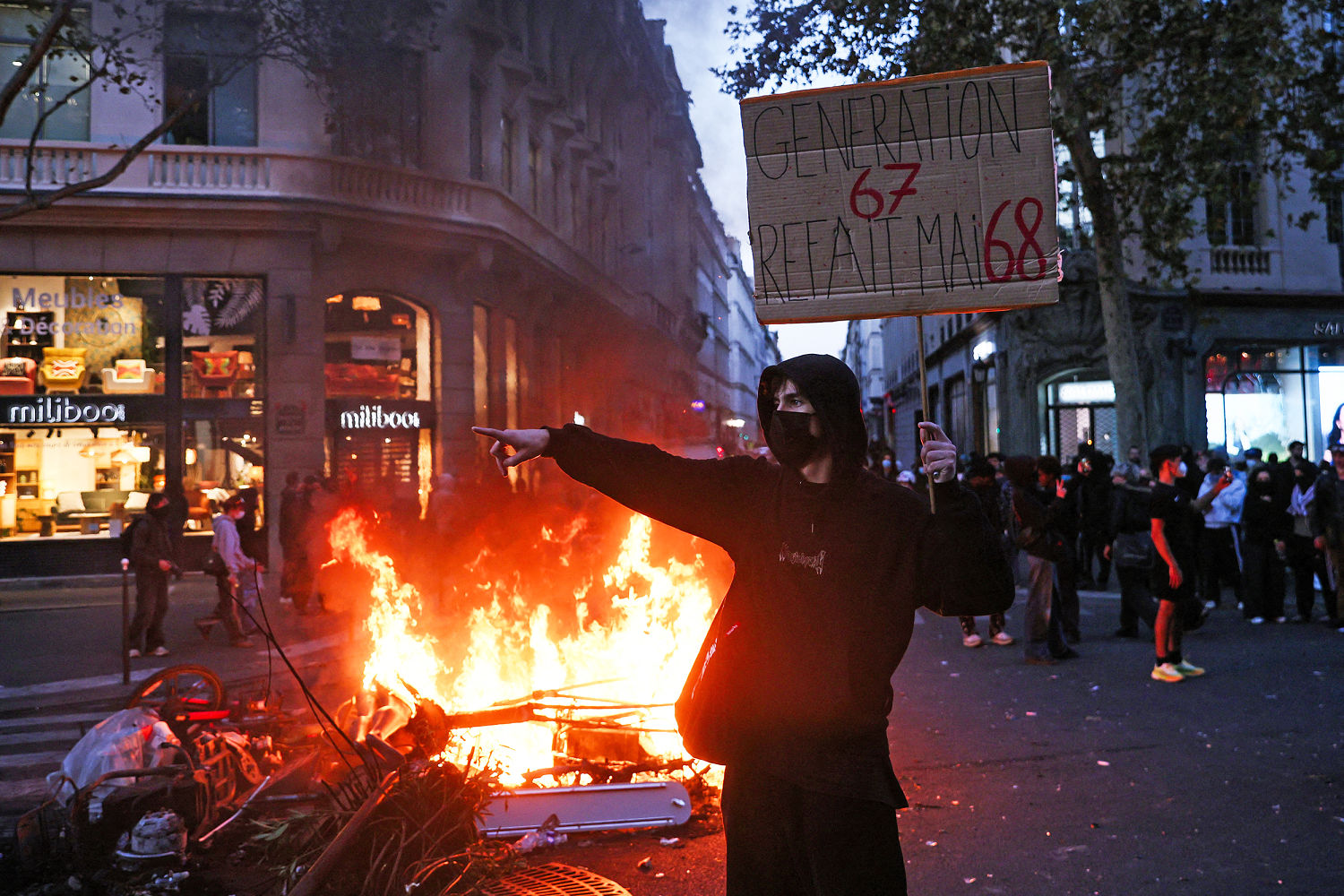
Headlines built around sudden curfews and historic levels of street violence usually follow a predictable narrative arc. First comes the escalation snapshot: property damage, clashes with security forces, or disrupted transit that signals an acute breakdown of routine order. Second comes the executive response: municipal or national officials announce evening or overnight curfews in designated zones to clear public spaces and regain control. Third comes a brief look at political reaction, legal authority, or lingering tension before the story moves on to the next day's tally.
That sequence is useful for tracking chronology, yet it flattens several distinct mechanisms into one cause-and-effect chain. Treating a curfew as the decisive turning point blurs the difference between containment (reducing visible street incidents during specific hours) and resolution (addressing the grievances, organizational networks, or economic pressures driving participation). It also tends to treat state capacity as uniform across neighborhoods, ignoring how policing density, judicial processing speed, and public legitimacy shift from one district to another.
When an article leaves out those structural links, readers get an incomplete picture of risk. A city can record fewer nighttime street incidents under a curfew while experiencing displacement into daylight hours, sharper friction between residents and security forces, or heavier strain on courts and emergency services. Evaluating a curfew seriously requires looking past the announcement itself to the operational machinery behind it.
The Four Pillars of Curfew Mechanics
A curfew is not a single policy switch; it is a compound operational intervention whose effectiveness depends on four distinct pillars. Each pillar operates on a different timeline and carries its own failure modes.
- Legal Mandate and Scope: Every curfew rests on specific statutory powers, geographic boundaries, time windows, and exemption rules. Narrower zones and clear exemptions for essential workers, medical emergencies, and commuting preserve daily routines, whereas sweeping boundaries widen friction with uninvolved residents.
- Enforcement Bandwidth: A rule on paper only changes behavior in proportion to patrol density, arrest-processing capacity, and command clarity. Police forces must balance perimeter control, crowd management, and routine emergency calls simultaneously.
- Deterrence vs. Grievance: Curfews raise the immediate cost of being outdoors after hours, which can deter opportunistic or marginal participants. They do not erase structural triggers such as perceived injustice, economic strain, or distrust of institutions.
- Information and Compliance Loops: Public compliance depends on rapid, unambiguous communication and predictable treatment on the ground. Conflicting instructions or uneven enforcement erode perceived fairness and invite testing of boundaries.
Understanding these four pillars clarifies why two cities—or two neighborhoods inside the same metropolitan area—can experience sharply different outcomes under similar curfew hours. Where enforcement bandwidth is stretched thin or rules are communicated unevenly, the gap between legal text and street reality widens quickly.
Cause-and-Effect Chains Standard Coverage Misses
Conventional coverage often stops at "curfew announced" or "clashes reported," missing second-order effects that reshape the conflict itself. One major mechanism is temporal and spatial displacement. When evening gathering becomes high-risk or impossible, mobilization often shifts toward late afternoon, weekend daytime windows, or decentralized side streets where line-of-sight supervision is harder.
A second mechanism is the bystander conversion loop. Curfews sweep up commuters returning from late shifts, residents stepping out for basic needs, and bystanders caught near flashpoints. If routine interactions with security forces feel arbitrary or hostile, people who had no stake in street violence can become alienated from authorities, expanding the pool of sympathetic observers or active participants.
A third mechanism is institutional bottlenecking. Mass stops, citations, and arrests create downstream load for precinct booking rooms, prosecutors, and courts. When processing slows down, officers spend more time on paperwork and transport and less time on visible preventive presence, creating temporary lulls in coverage that agile groups can exploit.
Finally, standard reporting frequently overlooks economic and logistical spillover. Nighttime restrictions interrupt hospitality, delivery, transit maintenance, and shift work. Even when direct physical damage is localized to a few corridors, broader commercial disruption compounds everyday frustration across households that are already under pressure.
Facts Versus Analytical Hypotheses
Rigorous analysis requires separating verified operational realities from interpretive claims about intent or long-term trajectory. In fast-moving episodes of civil disorder, official figures on arrests, injuries, and property damage may be preliminary or revised later, while the structural trade-offs of curfews are well established in public-order research and administrative practice.
Known mechanisms include the fact that curfews restrict legal public presence during set hours, give police a clearer threshold for dispersing groups or checking compliance in designated areas, and place heavy coordination demands on municipal leadership, transport operators, and security units. It is also well established that movement restrictions alone do not resolve underlying political, social, or economic disputes.
Educated hypotheses come into play when projecting how a specific curfew will alter momentum over the next several days. An analyst may hypothesize that a targeted, time-limited curfew paired with visible de-escalation will cool street flashpoints faster than an open-ended, citywide ban—or that imposing strict curfews without parallel outreach will harden resentment in heavily policed districts. Those hypotheses should be tested continuously against observable indicators such as incident timing, arrest-to-release ratios, and commercial recovery rather than treated as settled outcomes.
Consider a hypothetical mid-sized transit hub facing three nights of severe retail looting and clashes near a central station. Officials impose a 9:00 p.m. to 5:00 a.m. curfew across the downtown core and adjacent residential blocks. By midnight, large crowds near the station disperse, reducing major arson incidents compared with the prior night. Yet three blocks away, smaller groups gather at 6:30 p.m. before the curfew starts, and transit workers face confusion at checkpoints while trying to finish evening routes. Looking only at the midnight incident count would suggest complete containment, whereas tracking earlier-evening gatherings and checkpoint bottlenecks reveals partial displacement and operational drag.
Evaluating Curfew Trade-Offs and Limitations
No curfew is a frictionless instrument. Even when executed with discipline, movement restrictions carry built-in limitations that decision-makers must price in from the start.
- High labor intensity: Sustaining heightened patrols and checkpoints night after night exhausts personnel, raises overtime costs, and degrades decision quality under fatigue.
- Uneven neighborhood impact: High-density housing and areas with fewer private spaces or higher reliance on public transit feel curfews more acutely than low-density or car-dependent districts.
- Legitimacy costs: If curfews linger after acute street violence subsides, public tolerance drops and debate shifts from restoring order to questioning executive overreach.
- Inability to address root drivers: A curfew suppresses movement; it cannot fix labor grievances, housing pressures, policing trust deficits, or acute social flashpoints.
A practical way to judge any curfew rollout is to look at its exit criteria and exemption design upfront. Clear exemptions for essential services and clear triggers for lifting or narrowing restrictions signal that the measure is an emergency stabilizer rather than a substitute for governance.
Strategic Play for Crisis Containment
For leaders managing severe urban unrest, the highest-leverage move is to treat a curfew as a time-boxed tactical bridge rather than a standalone strategy—pairing narrow, clearly communicated nighttime restrictions with rapid judicial throughput, protected essential-worker corridors, and visible daytime civic and community channels aimed at de-escalating grievances before nighttime pressure builds again.