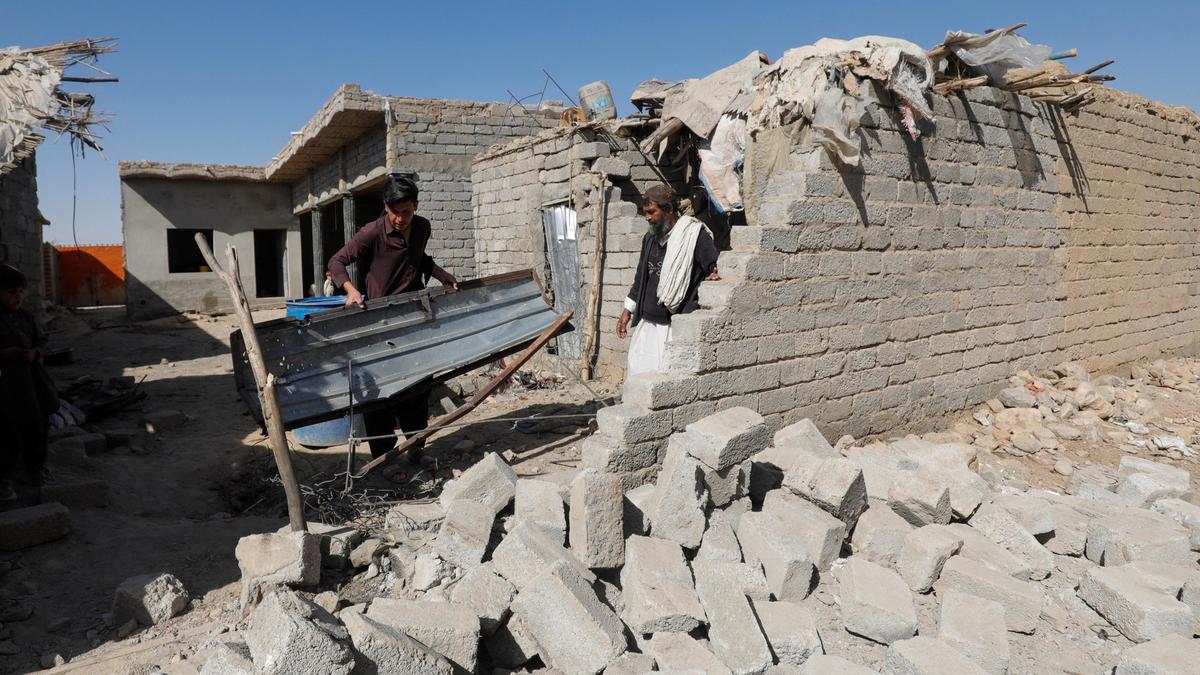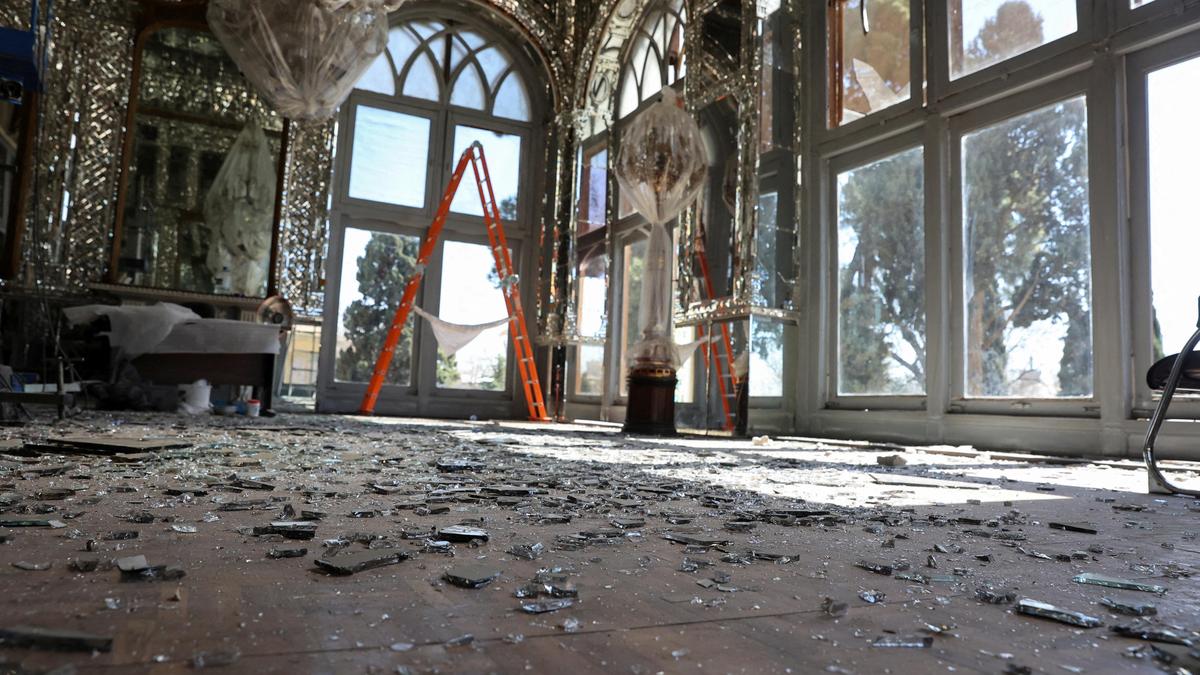
The destruction of cultural heritage in conflict zones is often reported as a series of isolated tragedies, yet from a strategic and economic perspective, it represents the permanent liquidation of non-renewable state assets. When Iran reports damage to museums and historic sites during active hostilities, the impact extends beyond aesthetic loss; it triggers a multi-generational collapse in "Soft Power Equity" and severs the primary physical drivers of the domestic tourism economy. To understand the gravity of these reports, one must move past the headlines and analyze the mechanics of heritage attrition through three specific lenses: Structural Irreplaceability, Economic Displacement, and the Logistics of Site Preservation under Fire.
The Taxonomy of Heritage Vulnerability
Historic sites do not fail uniformly under kinetic stress. The vulnerability of Iranian heritage—ranging from Achaemenid ruins to Safavid architectural masterpieces—is defined by the material properties of the sites and their geographic proximity to high-value strategic targets.
1. Kinetic Impact and Vibrational Degradation
Direct strikes are the most visible form of damage, but they are often not the most pervasive. High-explosive munitions generate pressure waves that cause structural fatigue in ancient masonry that was never engineered for rapid oscillation. For sites featuring intricate tile work or adobe construction (common in Yazd or Kerman), the seismic signature of nearby strikes can cause "micro-delamination," where the decorative surface detaches from the structural core. This renders the site a safety hazard long before it physically collapses.
2. The Proximity Risk Factor
Many of Iran’s historic sites are embedded within modern urban grids. When military or dual-use infrastructure is situated near a UNESCO World Heritage site, the "Collateral Probability" increases exponentially. This is not merely a tactical observation; it is a spatial constraint. If a command center or power plant is located within 500 meters of a 16th-century mosque, the mosque effectively enters the "Damage Radius" of any precision-guided munition, regardless of intent.
3. Environmental Exposure Post-Breach
Once a structure’s envelope—its roof or walls—is breached by ordnance, the site enters a state of accelerated decay. In the arid and semi-arid climates prevalent across the Iranian plateau, the introduction of moisture and wind-driven particulates into previously sealed interior chambers initiates chemical weathering. For murals and frescoes, the loss of climate control is a terminal event.
The Economic Cost Function of Cultural Loss
The devaluation of these sites can be quantified through the loss of Future Discounted Revenue. Cultural tourism is a high-margin industry because the primary "product"—the history—has already been "produced" centuries ago. The maintenance costs are marginal compared to the foreign exchange inflows generated by international visitors.
The Tourism Multiplier Collapse
In regions like Isfahan or Shiraz, the local economy operates on a multiplier effect. A single historic site anchors a network of hotels, artisanal workshops, transport services, and restaurants. When a site is labeled "Damaged" or "At Risk" by international monitoring bodies, the following economic chain reaction occurs:
- Insurance Risk Premium Spikes: International tour operators cannot secure affordable liability coverage for regions with damaged infrastructure, leading to a total cessation of high-value group tours.
- Capital Flight in Hospitality: Investors in the boutique hotel sector—often housed in restored traditional homes—freeze capital expenditures, leading to a decay in the surrounding urban fabric.
- Skill Set Erosion: The specialized labor required for traditional restoration (stonemasons, tile-glazers, calligraphers) loses its market. Without active projects, these guilds dissolve, making future restoration attempts significantly more expensive or technically impossible.
The Logistics of Preservation in Active Conflict
The claim that sites are being damaged implies a failure or an impossibility of "Active Shielding." In a rigorous analysis, we must evaluate the three primary barriers to protecting heritage during war.
The Resource Allocation Conflict
Governments facing kinetic threats inevitably prioritize "Hard Assets" (energy, communications, military readiness) over "Static Assets" (museums, ruins). This creates a vacuum in security. In many historical contexts, the damage reported is not exclusively from munitions but from the subsequent breakdown of civil order. Looting and the illicit antiquities trade thrive when the state’s internal security apparatus is diverted to the front lines.
Technical Limitations of On-Site Protection
Standard "Sandbagging" or scaffolding techniques are largely ineffective against modern thermobaric or penetration munitions. Protecting a site like Persepolis or the Naqsh-e Jahan Square requires "Deep Hardening" which is physically impossible without damaging the very site one intends to save. Consequently, the only viable preservation strategy is "Off-Site Evacuation" of portable artifacts. However, for "In-Situ" architecture, there is no physical defense other than the enforcement of International Humanitarian Law, which remains a diplomatic rather than a physical barrier.
Documentation as a Survival Mechanism
Modern heritage management utilizes High-Resolution LiDAR (Light Detection and Ranging) to create digital twins of sites. If Iran’s reports of damage are to be verified and eventually remediated, the baseline data must exist. The delta between the pre-war LiDAR scan and the post-strike assessment provides the only objective measure of loss. Without this data, "damage" remains a subjective term used for geopolitical leverage rather than a technical foundation for reconstruction.
The Geopolitical Function of Heritage Damage Reports
Information regarding the destruction of historic sites is rarely neutral. In the context of Iranian state communications, reporting damage serves two strategic purposes. First, it functions as "Moral Escalation," framing the adversary as an enemy of human civilization rather than just a state actor. Second, it prepares the ground for "Post-Conflict Reparation" claims. Under the 1954 Hague Convention, the deliberate targeting of cultural property is a war crime. By documenting damage in real-time, a state builds a legal dossier for future international tribunals.
However, the limitation of this strategy is the "Verification Gap." Without independent inspectors from organizations like UNESCO or ICOMOS (International Council on Monuments and Sites), the reports remain unverified. In an environment of restricted access, satellite imagery becomes the primary tool for forensic analysis. Analysts look for "Crater-Site Coincidence" and "Debris Field Morphology" to distinguish between direct hits, near-misses, and internal structural failure due to neglect.
The Irreversibility Threshold
There is a point in the destruction of a historic site where restoration becomes "Replication." This is a critical distinction for the strategy consultant. A restored site retains its historical value; a replicated site is merely a theme park.
- Restoration: Uses original materials and traditional techniques to stabilize existing structures.
- Replication: Rebuilds from scratch using modern materials (concrete, steel) with a historical veneer.
If the damage reported by Iran exceeds the 60% threshold of structural integrity for specific key monuments, those sites are effectively lost to history. The "Authenticity Premium" that drives elite global tourism vanishes. The site may still attract local visitors, but it ceases to be a global asset capable of generating significant hard currency.
Strategic Maneuver: The Digital Sovereignty Play
Given the physical vulnerability of these sites, the only logical move for the Iranian Ministry of Cultural Heritage, Tourism, and Handicrafts—or any state in a similar position—is to pivot toward "Digital Heritage Sovereignty." This involves three immediate actions:
- Massive-Scale Photogrammetry: Rapidly digitizing every centimeter of threatened sites to an accuracy of <2mm. This ensures that even if the physical site is atomized, the intellectual and architectural data survives for future 3D-printing or precision reconstruction.
- Internationalizing the Data Escrow: Storing this digital architectural data in neutral third-party servers (such as the Swiss Fort Knox or decentralized blockchain registries) to prevent the "Information Wipeout" that often follows regime changes or total state collapse.
- Formalizing the "No-Strike" Digital Map: Proactively providing the exact GPS coordinates and 3D boundaries of all protected sites to international bodies and, through them, to the targeting cells of opposing forces. This removes the "Unintentional Collateral" defense in future legal proceedings.
The preservation of history in the 21st century is no longer a matter of fences and guards; it is a matter of data redundancy and the calculated management of physical risk. The current reports of damage in Iran are a lagging indicator of a systemic failure to decouple cultural assets from the geography of conflict.
Would you like me to analyze the specific satellite imagery techniques used to verify the "Crater-Site Coincidence" mentioned above?