The standard commentary on Washington’s Cuba policy is lazy, predictable, and fundamentally misguided.
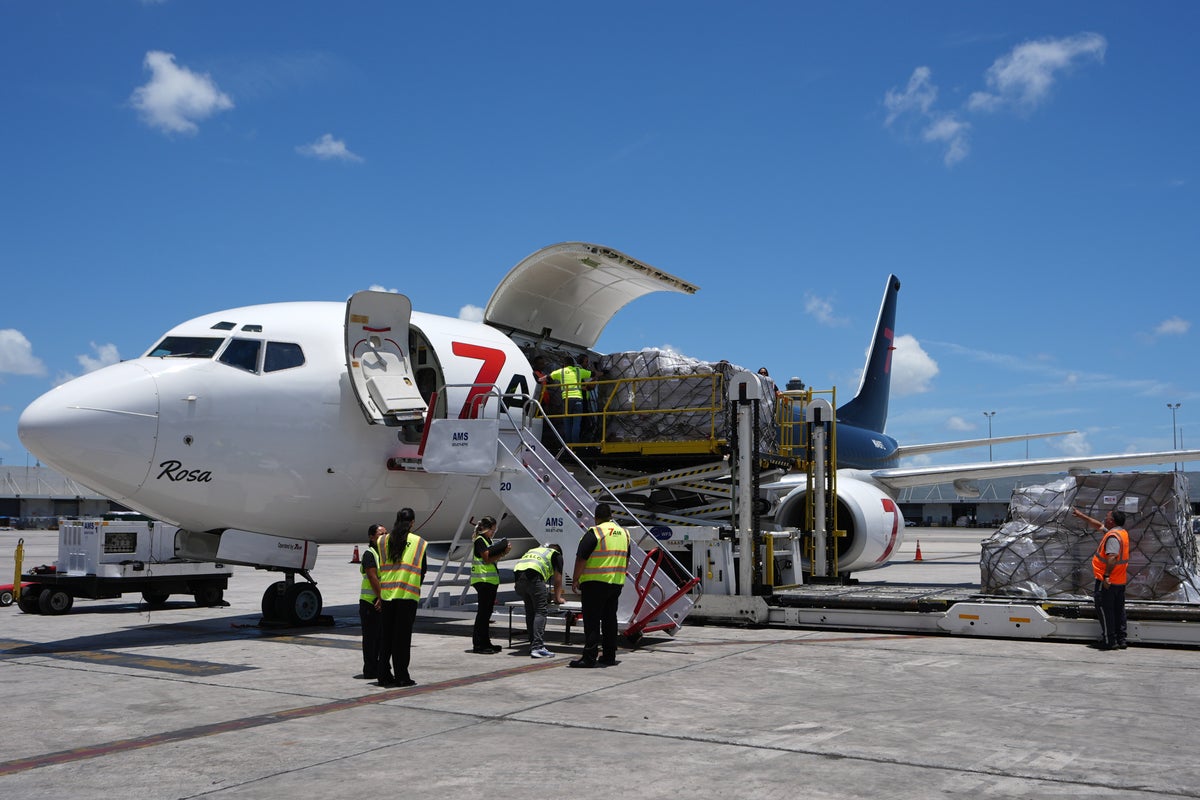
When the United States allows food exports or sends humanitarian shipments to the island while maintaining targeted sanctions, the foreign policy establishment lines up to repeat the same tired script: Washington is hypocritical, the embargo is a cruel relic, and aid is a band-aid on a foreign policy failure. That analysis misses the entire mechanic of totalitarian economics.
The idea that sending humanitarian shipments weakens a hostile regime while helping its citizens is a comforting narrative. It feels moral. It plays well in press releases. It is also completely backwards.
When you analyze how autocratic command economies actually allocate capital, a brutal truth emerges: Humanitarian aid sent into a closed system does not alleviate suffering; it subsidizes the oppressor.
The Dictator’s Balance Sheet: How Aid Transfers Costs
To understand why the mainstream perspective fails, you have to look at the regime's balance sheet, not just the cargo manifests at the port of Havana.
A state-run economy operates under severe capital constraints. The Cuban government must constantly balance its limited foreign currency reserves between two competing priorities:
- Basic survival inputs for the populace (food, fuel, medicine) to prevent outright revolution.
- Regime preservation assets (military equipment, security apparatus, tourist infrastructure, elite patronage networks).
When Western nations or private donors ship millions of dollars in food and medical supplies to Cuba, they create what economists call fungibility.
Every dollar of grain or chicken shipped in as "aid" or permitted under special commercial exemptions is a dollar the Cuban regime does not have to spend from its own treasury to keep the population from rioting. That saved capital does not turn into public services. It gets redirected immediately into the internal security apparatus, the police state, and state-owned tourism monopolies designed to capture hard currency.
By assuming the role of primary caregiver for the Cuban people, Western aid programs effectively underwrite the operating costs of the Cuban Communist Party.
We are paying for the bread so the regime can afford the batons.
The Misunderstood Embargo Mechanics
Commentators love to talk about the US embargo as if it is an absolute blockade. It isn't.
Since the Trade Sanctions Reform and Export Enhancement Act of 2000, the United States has been one of the largest suppliers of agricultural products to Cuba. American agricultural exporters sell hundreds of millions of dollars worth of poultry, soy, and corn to the island every single year.
The catching point? The Cuban government must pay cash in advance.
This reveals the fundamental flaw in the "pressuring while feeding" narrative:
- The regime isn't starving because of American trade restrictions.
- The regime is starving because command economies do not produce wealth.
- The regime relies on Western exports to prevent systemic collapse caused by its own policy decisions.
The Cuban government monopolizes food distribution through state-run entities like ALIMPORT. When food arrives from the US, the state controls who gets it, what price it is sold for, and how it is rationed.
Food becomes a weapon of social control. Play by the state's rules, keep your mouth shut, and you get your ration card filled. Speak out, organize, or dissent, and your family goes without.
By supplying the food without breaking the regime's control over distribution, the international community hands the regime the ultimate tool for coercion.
The Extraction Machine: How Private Remittances Get Captured
The exact same structural flaw applies to personal remittances and humanitarian transfers sent by the Cuban diaspora.
Well-meaning families send money or care packages to relatives in Havana or Santiago. On a micro level, it is an act of love and survival. On a macro level, it feeds a sophisticated regime extraction system.
Here is how the pipeline works:
- A relative in Miami sends USD or Euros to their family in Cuba.
- The Cuban government forces the recipient to convert or spend those funds in state-owned dollar stores (formerly MLC stores).
- The state marks up basic goods in these stores by 200% to 300%.
- The hard currency is drained directly into the regime’s offshore holding companies (such as GAESA, the military-run conglomerate that controls the vast majority of the Cuban economy).
The regime has successfully monetized human suffering. The worse the economic conditions on the island become, the more money the diaspora sends to keep their families alive, and the more hard currency GAESA extracts to maintain its grip on power.
It is a closed-loop extraction model fueled entirely by Western compassion.
The Moral Hazard of Unconditional Relief
I have watched policy analysts and corporate interests advocate for "humanitarian engagement" for decades. The argument is always the same: If we just flood the island with goods, commerce will naturally breed freedom.
It hasn't worked in China, it hasn't worked in Venezuela, and it hasn't worked in Cuba.
Unconditional economic relief creates a massive moral hazard. It removes any structural incentive for the ruling junta to implement actual market reforms, respect property rights, or transition toward political freedom.
Why would the Cuban leadership dismantle state monopolies or allow true private enterprise when Western aid agencies and diaspora remittances cover their basic import bill every quarter?
They wouldn't. And they haven't.
Rethinking Strategic Engagement
If the goal is genuine freedom and prosperity for the Cuban people, the current framework of "sanctions plus aid band-aids" must be dismantled.
We need to stop asking "How much food can we send?" and start asking "Who controls the supply chain?"
True structural disruption requires bypassing the state entirely:
- Direct-to-Consumer Logistics: Channeling support exclusively through verified, independent private enterprises (cuentapropistas) and non-governmental networks that bypass state-owned firms like GAESA or ALIMPORT.
- Uncensored Financial Rail Access: Supporting peer-to-peer, decentralized financial technologies that allow Cubans to transact directly with the outside world without state intervention or predatory exchange rates.
- Conditioned Structural Access: Making any macro-level economic adjustments or relief contingent on the complete dismantling of state distribution monopolies.
As long as the Cuban government maintains a total monopoly on internal distribution, every sack of flour sent to Havana is a political instrument used to keep millions of people dependent on the state.
Stop mistaking logistics for policy. Stop confusing relief with liberation. Until the state's monopoly on human survival is broken, humanitarian aid will remain what it has been for sixty years: the ultimate lifeline for a dying dictatorship.