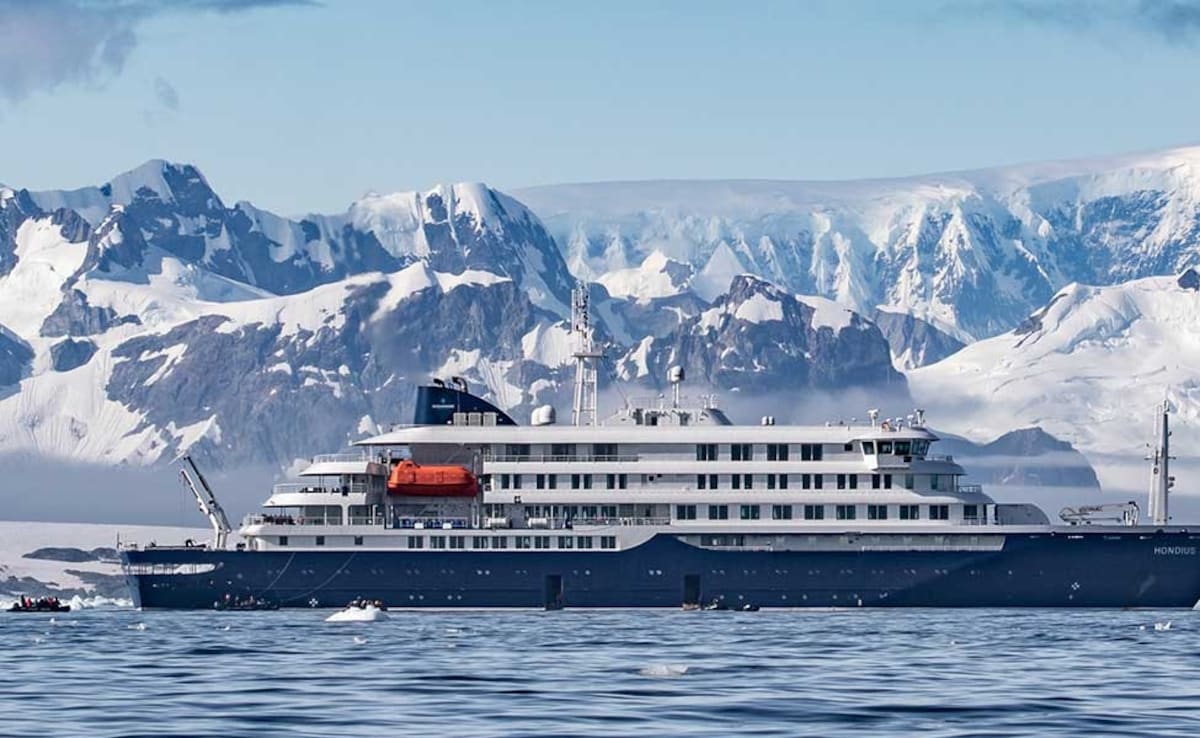
The World Health Organization is back at the podium, performing its favorite ritual: the soothing hum of "don't panic." Following the latest respiratory cluster on a luxury liner, officials are tripping over themselves to reassure the public that this is not "the next COVID." They want you to look at the mortality rates and the localized nature of the spread. They want you to believe the system is working because the ship stayed docked and the buffet was wiped down with extra bleach.
They are lying by omission.
The danger isn't that this specific virus will reset the global economy. The danger is the "floating petri dish" narrative has become a convenient shield for an industry that prioritizes occupancy over epidemiology. We are being told to calm down about the pathogen while the structural failures that invite these outbreaks remain untouched. If you’re worried about the virus, you’re looking at the smoke. I’m looking at the arsonist.
The Myth of the Contained Cabin
The WHO’s "calm down" strategy relies on the idea of containment. They point to the fact that cruise ships are isolated ecosystems. In reality, a cruise ship is a massive, recirculating biological engine.
Most modern vessels operate on HVAC systems that, while meeting maritime standards, were never designed to scrub viral loads from a dense, aging population. When an official says the risk to the general public is low, they are ignoring the 3,000 crew members who will fly home on commercial jets the moment their contract ends. They ignore the port cities that treat these ships like ATM machines while ignoring the biological tax they collect.
I’ve spent years analyzing supply chain risks and maritime logistics. The industry "best practices" for outbreaks are essentially theater. Hand sanitizer stations and "enhanced cleaning" are the TSA of the high seas—they provide the illusion of safety while the real transmission happens through air ducts and shared plumbing.
Why the COVID Comparison is a Logical Trap
The media and health officials love comparing every new outbreak to SARS-CoV-2 because it’s a binary everyone understands. "Is it COVID? No? Great, go back to the blackjack table."
This is a dangerous oversimplification. By framing the conversation around whether a virus is a global pandemic-level threat, we ignore the devastating impact of high-morbidity "minor" outbreaks. Norovirus, Legionnaires' disease, and virulent flu strains don't need to shut down the world to ruin lives, bankrupt regional health systems, or cause permanent lung damage in the elderly.
The "Not the Next COVID" headline is a PR gift to cruise lines. It sets the bar for "dangerous" so high that anything short of a global lockdown is considered acceptable. It’s the equivalent of saying a house fire isn't a problem because it’s not a forest fire. Your house is still gone.
The Economic Incentive of Viral Spread
Let’s talk about the math that the WHO won't touch. Cruise lines operate on razor-thin margins per passenger, subsidized by onboard spending—drinks, casinos, and excursions. A ship that doesn’t sail is a floating liability.
When an outbreak starts, the incentive is to minimize, not mitigate.
- Report late: Early reporting triggers expensive protocols and scares off the next week’s bookings.
- Isolate selectively: Crew members are often hesitant to report symptoms because "no work" means "no pay" in many maritime contracts.
- Disinfect for optics: Wiping down a handrail does nothing for a virus that is hanging in the air of a windowless interior cabin.
The regulatory bodies—primarily the CDC in the US and various international maritime agencies—lack the teeth to actually shut these engines down. The "No Sail Orders" of 2020 were an anomaly. The status quo is "Monitor and Advise." In industry terms, that means "Wait for it to blow over and hope the PR team can spin the body count."
The Wrong Question: "Is it Deadly?"
People ask if the virus is deadly. That’s the wrong question. You should be asking: "Is the infrastructure designed to protect me or the quarterly earnings report?"
If a hotel on land had the same infection rates as a standard cruise ship during a flu spike, it would be condemned. But because these ships fly flags of convenience—registering in countries like Panama or the Bahamas to evade taxes and labor laws—they also evade rigorous health oversight.
The WHO’s move to "calm fears" is actually a move to protect the economic flow of international tourism. They aren't managing your health; they are managing the market's pulse.
Actionable Advice for the Skeptical Traveler
If you insist on boarding a ship while the "experts" tell you there’s nothing to worry about, stop listening to the brochures and start acting like a biohazard specialist.
- Audit the Air: If you aren't in a balcony room with independent ventilation, you are breathing the exhaled breath of every person in your hallway. Interior cabins are the bargain-basement way to catch a respiratory infection.
- Ignore the Buffet: It’s not just about the food. It’s about the density. The buffet is the highest-contact area on the ship. If you can’t eat in a seated, spaced environment, you are opting into a viral exchange.
- Verify the Flag: Check where the ship is registered. If it’s a flag of convenience, realize that your legal and health recourse is virtually zero once you hit international waters.
The Fatal Flaw in "Trust the Experts"
The most contrarian truth here is that the experts are often the last to admit a failure because they are part of the system that allowed it. The WHO is a political body as much as a medical one. Their job is to prevent mass hysteria that disrupts the global order. If a few thousand people get sick on a boat, that is an acceptable loss in the grand scheme of maintaining "global stability."
We have entered an era of "Normalised Malpractice." We see an outbreak, we see the authorities downplay it, and we accept the risk because we want the $799 all-inclusive deal. We are trading our biological safety for a week of mediocre shrimp cocktails and a seat by the pool.
Stop waiting for the WHO to tell you when to be afraid. By the time they tell you there is a problem, the ship has already sailed, and you're on it. The next "big one" won't look like a global shutdown. It will look exactly like this: a series of "minor" outbreaks that we are told to ignore until the cumulative damage is irreversible.
The cruise industry doesn't need to find a cure for the latest virus. It needs to be forced to rebuild its fundamental architecture. Until then, every "calm" official statement is just more wind in the sails of a broken, dangerous system.
Stop looking for the next COVID. Start looking at the ship you’re standing on. It was never safe; you were just lucky.