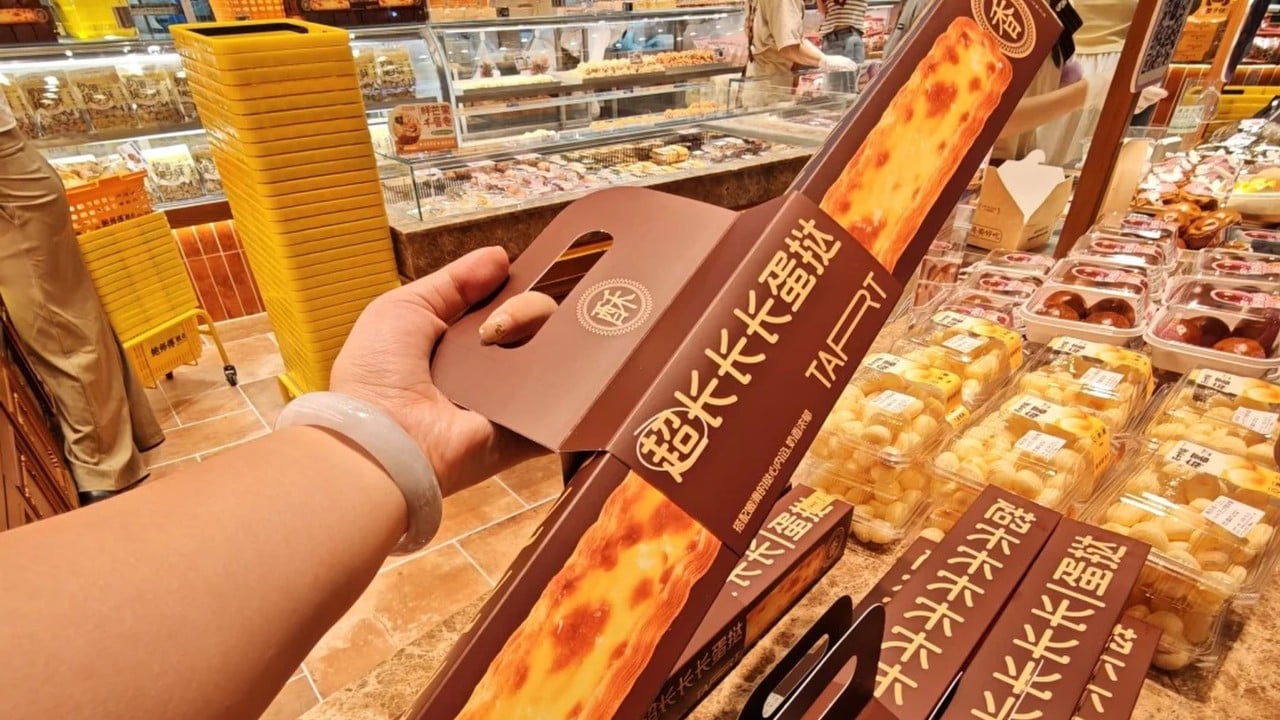
Consumer migration patterns between Hong Kong and Shenzhen during holiday periods reflect a structural shift in regional purchasing power and retail economics. When hundreds of thousands of residents cross the border for routine consumption, groceries, and hyper-faddish novelties like the sixty-centimeter egg tart, the behavior is often misinterpreted as casual leisure. In practice, it represents a calculated response to persistent cost-of-living differentials, supply chain agility, and the psychological mechanics of social media-driven retail. Deconstructing this phenomenon requires examining the fundamental cost functions, the friction of cross-border infrastructure, and the underlying economics of viral product design.
The primary driver of this cross-border flow is an asymmetric cost structure. Hong Kong's retail property market commands some of the highest commercial rents globally, forcing businesses to pass exorbitant fixed overhead costs onto consumers. Conversely, Shenzhen's retail operators benefit from lower structural real estate costs, deeply integrated digital supply chains, and high-density labor availability. This enables merchants to offer services, such as specialized wellness treatments and bulk grocery items, at price points that yield substantial savings for Hong Kong consumers even after factoring in transportation overhead and temporal costs. Expanding on this topic, you can find more in: The Economics of Airline Seat Allocation and the Structural Collapse of Ancillary Family Fees.
Beyond basic price arbitrage, the velocity of retail innovation in mainland commercial hubs highlights a stark divergence in marketing strategies. The viral emergence—and rapid evolution—of extreme-format items, such as oversized pastries, illustrates the mechanics of attention-economy retail. Traditional bakeries compete on product consistency and brand heritage. Shenzhen's hyper-competitive food and beverage sector operates on a different operational model: rapid prototyping of novelty products designed specifically for digital amplification on platforms like Xiaohongshu and Douyin.
These viral products function as physical customer acquisition tools. A sixty-centimeter egg tart is economically inefficient to produce, difficult to transport, and logistically unviable for long-term menu retention. However, its physical absurdity lowers the barrier to social sharing. Consumers willingly queue for hours not merely for the culinary experience, but to participate in a transient digital ritual. Once the novelty value saturates, the product is phased out or replaced by the next iteration, demonstrating a retail lifecycle measured in weeks rather than years. Observers at CNBC have also weighed in on this situation.
The infrastructure facilitating this movement acts as both an enabler and a bottleneck. High-speed rail links and streamlined customs checkpoints have compressed transit times to mere minutes, transforming what was once an international journey into a domestic-style commute. Yet, this high-throughput capacity creates systemic friction points. Peak holiday periods generate severe queue congestion at border crossings, imposing a hidden time cost on the traveler. Rational consumers weigh this temporal penalty against the financial savings of the trip; when wait times exceed a specific threshold, the net utility of the cross-border excursion diminishes rapidly.
Analyzing this trend reveals the vulnerability of high-cost domestic retail markets when confronted with frictionless regional competition. When physical borders cease to act as economic moats, local merchants can no longer rely on geographic captivity.
To maintain margins, businesses facing cross-border leakage must pivot away from competing on undifferentiated commodity goods. The strategic response requires shifting toward hyper-localized services that cannot be easily exported, enhancing customer experience metrics that justify local premiums, or embedding digital engagement loops directly into the physical storefront. Operators who fail to recognize the structural nature of this consumer shift risk permanent erosion of their addressable market base.


