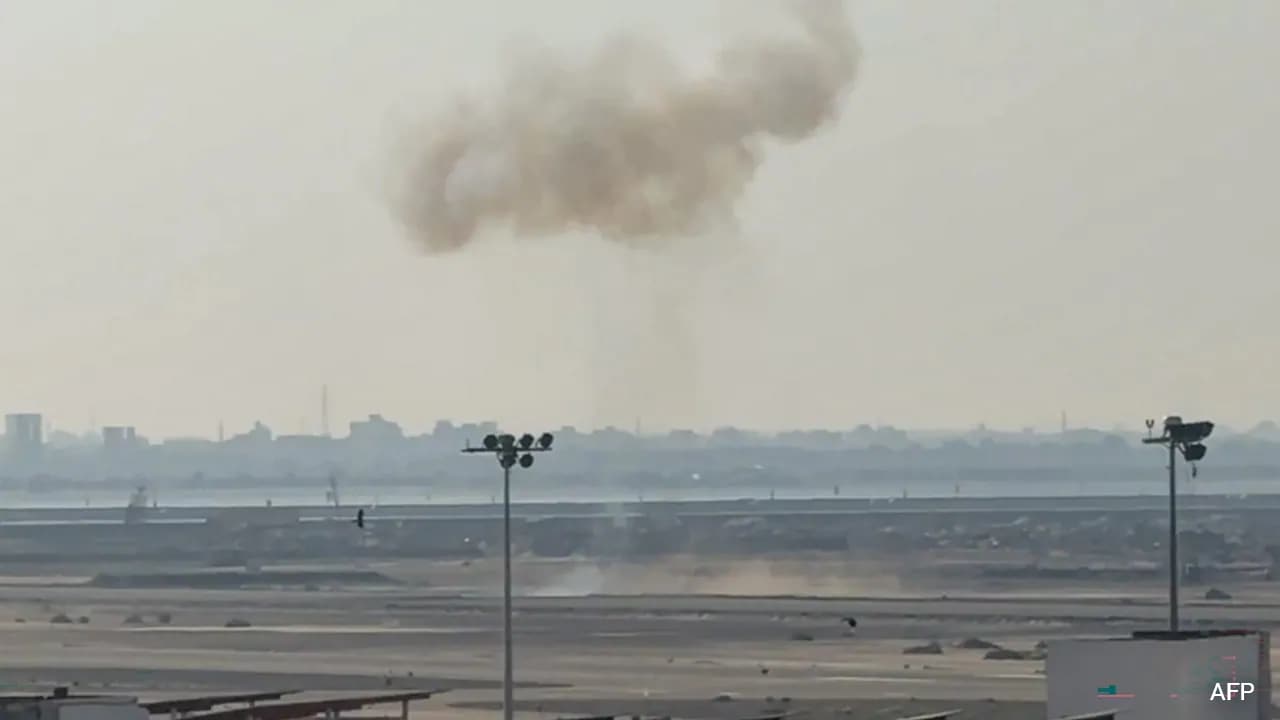
Twelve people dead. That's the headline coming out of Yemen via Houthi-run media, accusing Saudi forces of lethal strikes. And if you've followed the conflict in the Arabian Peninsula for any stretch of time, you already know how fast these wire reports spread—and how rarely anyone stops to unpack what's actually happening on the ground.
Most breaking news blurbs take the claim at face value, slap a "Houthis say" qualifier on the headline, and move on to the next news cycle. That lazy approach leaves readers completely in the dark. You don't get the context of the fragile truce dynamics, the long history of information warfare in Sanaa and Riyadh, or why a single casualty report can derail months of quiet backchannel diplomacy.
Let's break down what claims like "12 killed in Saudi strikes in Yemen" actually represent, how independent monitors verify them, and why the timing of these announcements matters way more than the raw numbers.
Why Houthi Casualty Reports Require Immediate Scrutiny
When the Houthi movement—formally known as Ansar Allah—announces casualties from Saudi airstrikes or cross-border artillery, the information almost always originates from Al-Masirah TV or the Houthi-controlled SABA news agency.
Here's the problem. Independent foreign journalists have virtually zero unrestricted access to northern Yemen. You can't just hop on a flight to Sanaa, drive out to Saada or Hajjah governorates, and count craters. Because of that access vacuum, wire services like Reuters, AP, and AFP are forced to rely on Houthi statements while adding standard caveats that they cannot independently verify the figures.
Does that mean the strikes didn't happen? Not at all. Over the course of the Yemen war, Saudi-led coalition airstrikes have caused thousands of documented civilian deaths, tracked meticulously by groups like the Yemen Data Project and the Armed Conflict Location & Event Data Project (ACLED).
At the same time, wartime propaganda is a real thing. Both sides have a documented history of massaging numbers. Houthi authorities frequently classify combatants killed on the front lines as "civilians" to maximize international outrage, while Saudi officials routinely deny strikes occurred or claim they only hit legitimate military targets. If you read a headline saying 12 people were killed in Saudi strikes in Yemen without checking who reported it first, you're only getting half the picture.
The Fragile Truce and the Border Reality
To understand why any report of Saudi strikes in Yemen triggers immediate alarm bells in Washington, Riyadh, and the UN, you have to look at the broader security architecture.
Following the UN-brokered truce in 2022—which technically expired later that year but held together informally—large-scale Saudi aerial bombardments inside Yemen largely ground to a halt. Riyadh has been desperate to extract itself from a costly, decade-long quagmire and pivot toward its domestic Vision 2030 economic transformation. Direct Saudi airstrikes became rare, replaced by tense standoffs and quiet bilateral talks between Saudi diplomats and Houthi representatives.
Yet the northern border—specifically around Saada province—never fully cooled down.
Even during periods of relative calm, localized shelling, drone intercepts, and border clashes involving Yemeni migrants and local villagers have persisted. Human Rights Watch has previously documented hundreds of deaths along the Saudi-Yemeni border, showing that violence didn't magically vanish when the big air raids stopped. So when Houthi media suddenly reports a spike of 12 fatalities from Saudi strikes, observers immediately ask two questions:
- Was this a localized border incident involving artillery or drone strikes rather than a full-scale fighter jet campaign?
- Is Riyadh signaling a return to active aerial intervention, or is Sanaa manufacturing a pretext to escalate?
How Independent Analysts Verify Strikes in Yemen
If you want to know whether a reported strike in Yemen actually happened as described, stop refreshing mainstream social media feeds. Look at how open-source intelligence (OSINT) researchers and humanitarian monitors verify these events.
Real verification relies on a specific chain of evidence:
- Geolocation of footage: When Houthi outlets release video of destroyed buildings or hospital wards, OSINT analysts match mountain ridges, building layouts, and road networks against satellite imagery from Maxar or Planet Labs.
- Munitions identification: Fragments of fins, guidance kits, or serial numbers photographed at the blast site tell experts whether a weapon came from a US-supplied Saudi jet, an artillery piece, or an accidental Houthi air-defense misfire.
- Hospital and NGO triangulation: Organizations like Doctors Without Borders (MSF) and the International Committee of the Red Cross (ICRC) operate clinics across Yemen. While they rarely assign blame for who fired a weapon, their patient intake logs confirm whether a mass-casualty event actually occurred on a specific date.
- ACLED and Yemen Data Project updates: These databases don't publish within ten minutes of a tweet. They cross-reference local stringers, tribal leaders, and medical records over days or weeks before logging an incident.
Honestly, waiting 48 to 72 hours for ACLED or UN OCHA situation reports is the smartest move you can make if you care about accuracy over clickbait.
The Red Sea Factor Nobody Connects
You can't separate news about Saudi strikes in Yemen from what's happening in the Red Sea and the broader Middle East. Everything in this region is wired together.
Since the Houthis began attacking commercial shipping in the Red Sea and firing ballistic missiles toward Israel, the geopolitical math shifted overnight. The United States and the United Kingdom launched repeated strikes against Houthi radar sites, missile launchers, and underground storage facilities. Meanwhile, Saudi Arabia walked a tightrope—refusing to join the US-led maritime coalition publicly so it wouldn't blow up its bilateral peace roadmap with the Houthis.
Think about the pressure that creates.
Whenever friction spikes between Riyadh and Sanaa—whether over banking restrictions, airport access in Sanaa, or border security—Houthi leaders threaten to resume drone and missile attacks on Saudi oil infrastructure and cities. Conversely, if Houthi forces push too hard along the southern Saudi border in Jizan or Najran, Saudi border forces respond with heavy fire. A report of 12 killed in Saudi strikes lands right in the middle of this high-stakes game of chicken.
Common Misconceptions About the Saudi-Houthi Conflict
Watching people argue about Yemen online reveals the same three mistakes over and over again. Clearing them up makes every breaking news headline easier to decode.
Mistake 1: Assuming every airstrike in Yemen is Saudi
For years, "airstrike in Yemen" automatically meant the Saudi-led coalition. That's no longer true. Between US Central Command (CENTCOM) strikes, UK Royal Air Force operations, and Israeli retaliatory raids on Hodeidah and Sanaa, multiple militaries have bombed Houthi targets. Houthi media sometimes blurs the lines—or listeners assume "coalition" means Riyadh—when the ordnance actually came from a completely different air force.
Mistake 2: Treating the Houthis as a mere proxy with zero local agency
Yes, Iran supplies the Houthis with ballistic missile components, drones, and intelligence. Calling them an Iranian-backed group is factually accurate. Thinking Tehran micromanages every tactical border skirmish is completely wrong. The Houthis are a fiercely independent Zaydi Shia movement with deep roots in northern Yemen, their own domestic revenue streams, and local grievances against Riyadh that predate the current regional crisis by decades.
Mistake 3: Believing a ceasefire means zero casualties
Western audiences hear "truce" and picture total peace. In Yemen, a truce simply means major cities aren't being carpet-bombed and cross-border ballistic missile barrages are paused. Low-intensity artillery exchanges, sniper fire, and landmine blasts still kill and maim people every single week without making the front page of the New York Times.
How to Follow Yemen News Without Getting Played
When a stark headline like "12 Killed In Saudi Strikes In Yemen, Claim Houthis" hits your feed, treat it as an opening data point rather than the final verdict.
First, check the exact phrasing. Notice the word "claim"—responsible editors include it because the source is a belligerent party in an active war zone. Second, look at the location. A strike reported in Saada along the Saudi border carries a totally different strategic weight than a strike hitting downtown Sanaa or the port of Hodeidah. Third, watch the Saudi response. If Riyadh stays completely silent, it usually points to a routine border engagement they don't want to escalate publicly; if the Saudi Ministry of Defense issues a formal denial or statement, diplomatic talks are likely hitting serious turbulence.
Bookmark primary trackers like ACLED's Yemen hub and the UN Office for the Coordination of Humanitarian Affairs (OCHA) so you can verify casualty claims against grounded humanitarian data instead of relying on wartime press releases.