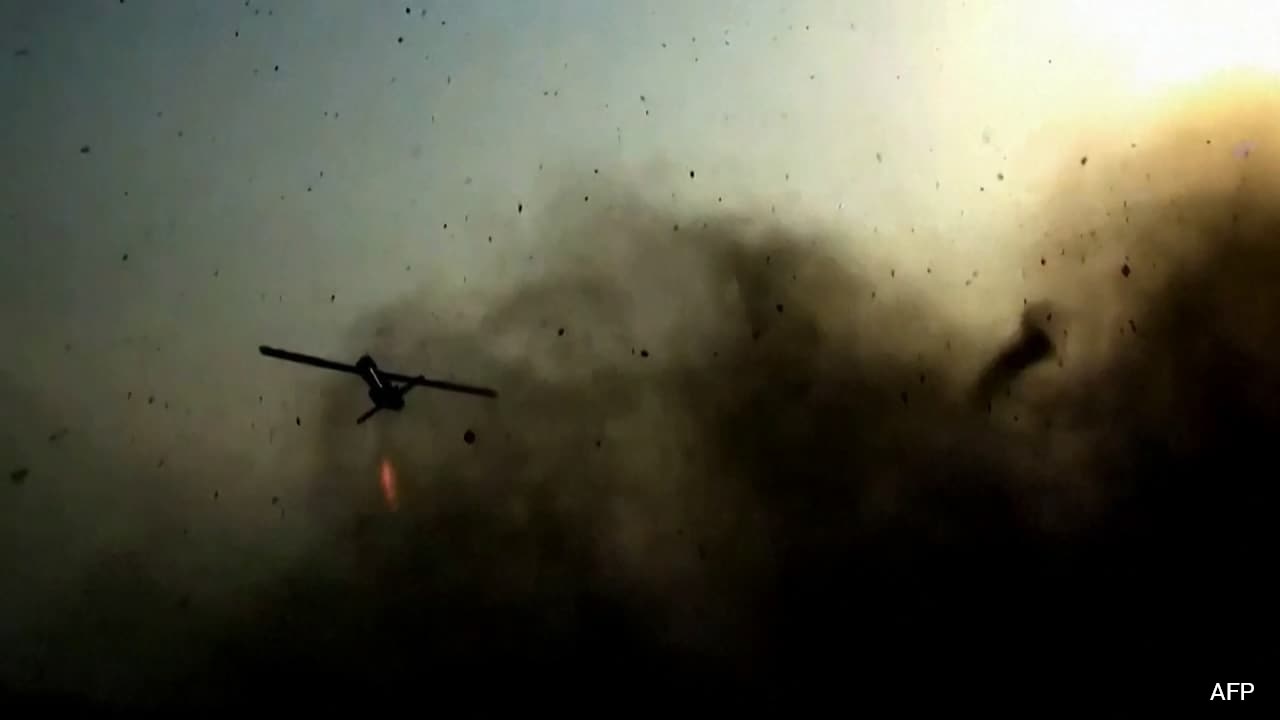
The defense analyst community has a collective obsession with bomb craters.
Every time a regional flashpoint erupts, the same tired routine plays out. State-run media outlets in Tehran declare they have vaporized dozens of American-made fighter jets. Within hours, Western commercial satellite imagery firms post high-resolution photos of runways on social media. Desktop sleuths zoom in, point to pristine concrete, and declare victory. "No craters, no twisted metal, no damage. Iranian propaganda debunked."
It is a comforting narrative. It is also dangerously naive.
By focusing entirely on whether a $100 million stealth fighter was physically turned into a pile of ash, analysts are missing the actual mechanics of modern warfare. They are looking for twentieth-century metrics of destruction in a era dominated by asymmetric attrition.
The reality is far more sobering. You do not need to punch a hole through an F-35 cockpit to remove it from the theater of operations. In the modern security environment, the physical destruction of an aircraft is merely a bonus. The real damage is systemic, economic, and operational.
The Illusion of the Pristine Hangar
The legacy military mind thinks in terms of physical attrition. We want to see the tail fin of an F-22 sticking out of a burning hangar to believe an attack succeeded. This mindset ignores the concept of a mission kill.
A mission kill occurs when an asset is rendered incapable of performing its designated task, regardless of whether it has sustained a single scratch. Modern military aviation is not a collection of rugged, self-contained flying machines. It is an incredibly fragile ecosystem of high-sensitivity electronics, specialized maintenance personnel, and highly vulnerable logistics chains.
Consider the environment. An airfield under threat of persistent drone and missile barrages is an airfield that cannot function normally.
When an early warning radar detects incoming threats, the base goes into lockdown.
- High-value maintenance crews—the technicians who keep complex radar systems and stealth coatings functional—must dive into bunkers.
- Delicate calibration equipment cannot be used.
- Refueling and rearming operations stop.
If a flight of F-35s is forced to divert to a secondary airstrip because their primary runway is under threat, or if their fuel storage facilities are compromised, those jets are functionally non-existent for the duration of the combat window.
During the Gulf War, the coalition spent immense resources hunting Scud missiles not because the Scuds were highly accurate, but because the mere threat of their arrival disrupted the entire operational tempo. When Tehran launches saturation strikes, they are not necessarily aiming for a bullseye on an F-16 nosecone. They are injecting friction, delay, and chaos into an operational machine that relies on perfect synchronization.
The Logistics Tax: How Stealth Destroys Itself
Western airpower is built on the foundation of qualitative superiority. We fly the most advanced, radar-evading platforms on the planet. But that superiority comes with a catastrophic logistical bill.
Stealth is not a metal alloy; it is a high-maintenance skin treatment. The Radar Absorbent Material (RAM) coatings applied to fifth-generation fighters like the F-35 and F-22 are notoriously sensitive. They degrade rapidly when exposed to high heat, dust, humidity, and fuel spills.
[Flight Hours] ──> [RAM Coating Degradation] ──> [Massive Maintenance Hours Required]
                                                               │
                                  [Scramble Frequency Increases] ◄──────────────┘
When a base is forced to operate under constant alert status, the operational cycle is broken:
1. The Maintenance-to-Flight Hour Crisis
An F-22 requires dozens of hours of maintenance for every single hour it spends in the air. A significant portion of this time is dedicated to restoring the aircraft’s low-observable skin. In a high-threat environment where jets are kept on high-alert scrambles or flown on constant defensive patrols, maintenance backlogs skyrocket.
2. Environmental Attrition
Operating out of temporary, forward-deployed locations in arid regions accelerates wear and tear. Fine desert dust acts as an abrasive, eating away at specialized coatings and cloggin advanced turbine cooling channels.
3. The Spare Parts Bottleneck
If a single highly specialized component—such as an active electronically scanned array (AESA) radar module—is damaged by dust or minor shrapnel, the aircraft is grounded. The global supply chain for high-end military electronics is already strained to the breaking point. A jet sitting in a hangar waiting for a microchip from a factory in Taiwan is just as useless as one that was blown up on the tarmac.
When adversary strikes force these jets to fly more hours under worse conditions, they are actively eating away at the finite fatigue life of the airframes. The competitor is not destroying the jet with a warhead; they are forcing the US military to wear the jet out themselves.
The Economic Asymmetry of Air Defense
To understand why the "no physical damage" argument is a cope, look at the balance sheets.
To protect forward-deployed airfields, Western militaries rely on advanced integrated air and missile defense (IAMD) systems. These systems are marvels of engineering. They also represent an unsustainable economic liability when facing mass-produced, low-cost threats.
Consider a typical defense scenario of a US or allied airfield in the Middle East:
| Threat Vector | Estimated Unit Cost | Defense Vector | Estimated Unit Cost |
|---|---|---|---|
| One-Way Attack Drone (e.g., Shahed-136) | $20,000 - $40,000 | Patriot PAC-3 Interceptor | $3,000,000 - $4,000,000 |
| Short-Range Ballistic Missile | $100,000 - $300,000 | SM-6 / THAAD Interceptor | $2,000,000 - $5,000,000 |
| Land-Attack Cruise Missile | $150,000 - $500,000 | Fighter-launched AIM-120 | $1,000,000 |
This is not a sustainable ratio.
Every time an adversary launches a $30,000 drone, they are testing whether the defender is willing to burn a $4 million missile to stop it. If the defender fires, they win the tactical engagement but move one step closer to strategic bankruptcy. If they do not fire, they risk losing a $100 million aircraft.
This dynamic is what military strategists call cost imposition. By forcing the United States and its allies to expend their limited inventories of sophisticated interceptors, adversaries are depleting a resource that takes years to manufacture. The defense industrial base cannot produce Patriot missiles fast enough to match the production rate of simple, commercial-grade drone components.
When a barrage "fails" to hit a single jet because air defenses intercepted 90% of the incoming threats, the media celebrates. Inside the Pentagon, planners are sweating over the dwindling stockpile of interceptors. The serious damage is not to the runway; it is to the munition storage lockers.
The Tyranny of Distance and Forced Displacement
The ultimate goal of modern anti-access/area-denial (A2/AD) strategies is not to engage in a cinematic dogfight. It is to push the enemy back.
If an adversary demonstrates the capability to reliably target and penetrate the defenses of forward operating airfields, those airfields become liabilities. To protect their multi-billion-dollar fleets, commanders are forced to make a bitter choice: keep the jets close and risk a catastrophic loss, or pull them back out of range.
This forced displacement triggers a cascade of operational failures.
Pulling fighter wings back by even a few hundred miles changes the entire geometry of an air campaign. A carrier strike group that must operate 600 miles off an enemy coast instead of 200 miles can no longer launch short-range strike fighters (like the F/A-18 or F-35C) without an immense aerial refueling footprint.
[Forced Base Retreat] ──> [Increased Distance to Target] ──> [Massive Tanker Fleet Dependence]
                                                                      │
                                   [Fewer Bombs on Target] ◄──────────┘
The bottlenecks are severe:
- The Tanker Tax: To keep a package of strike fighters in the air over long distances, you need a fleet of lumbering aerial refueling tankers (like the KC-46 or KC-135). These tankers are slow, soft targets that cannot survive in contested airspace.
- Reduced Sortie Generation: A fighter jet that has to fly three hours to reach its target area can only fly one mission per day, compared to three missions if it were based nearby. Your effective fleet size is instantly cut by two-thirds.
- Pilot Fatigue: Long-duration missions place an extreme physical and mental toll on pilots, rapidly degrading their combat effectiveness over a sustained campaign.
When an adversary claims they have neutralized Western airpower, they do not mean they shot down every plane. They mean they have successfully priced the Western military out of the close-in fight. They have forced the giant to fight at arm's length, where its punches carry far less weight.
Dismantling the Status Quo
To survive the next decade of conflict, military analysts and planners must discard the comfortable illusions of the past.
First, we must stop using physical destruction as the sole metric of combat effectiveness. If a base is rendered unusable for 48 hours during a critical opening phase of a conflict, the adversary has achieved their objective. It does not matter if every plane on that base remains in showroom condition.
Second, the defense establishment must address the glaring vulnerability of its logistics chain. Having the most advanced aircraft in the world means nothing if the fuel, the spare parts, and the maintenance crews required to fly them are vulnerable to cheap, mass-produced precision weapons.
The next time you see a headline debating whether a foreign strike caused "serious damage" to Western jets, do not look at the satellite photos of the runways. Look at the logistics manifests. Look at the interceptor stockpiles. Look at the flight hours being burned on defensive patrols.
That is where the real damage is being done—and right now, we are letting it happen.