Celebratory headlines love a tidy headcount. A tally of 172 breeding females sounds like proof that the work is done. It isn't.
When conservation updates trumpet a single-year jump in marbled duck numbers across Spain, they usually lean on a predictable script. Restored wetlands equal recovered species. More water equals more birds. Happy press release.
That is lazy consensus. It mistakes a temporary water level for biological stability.
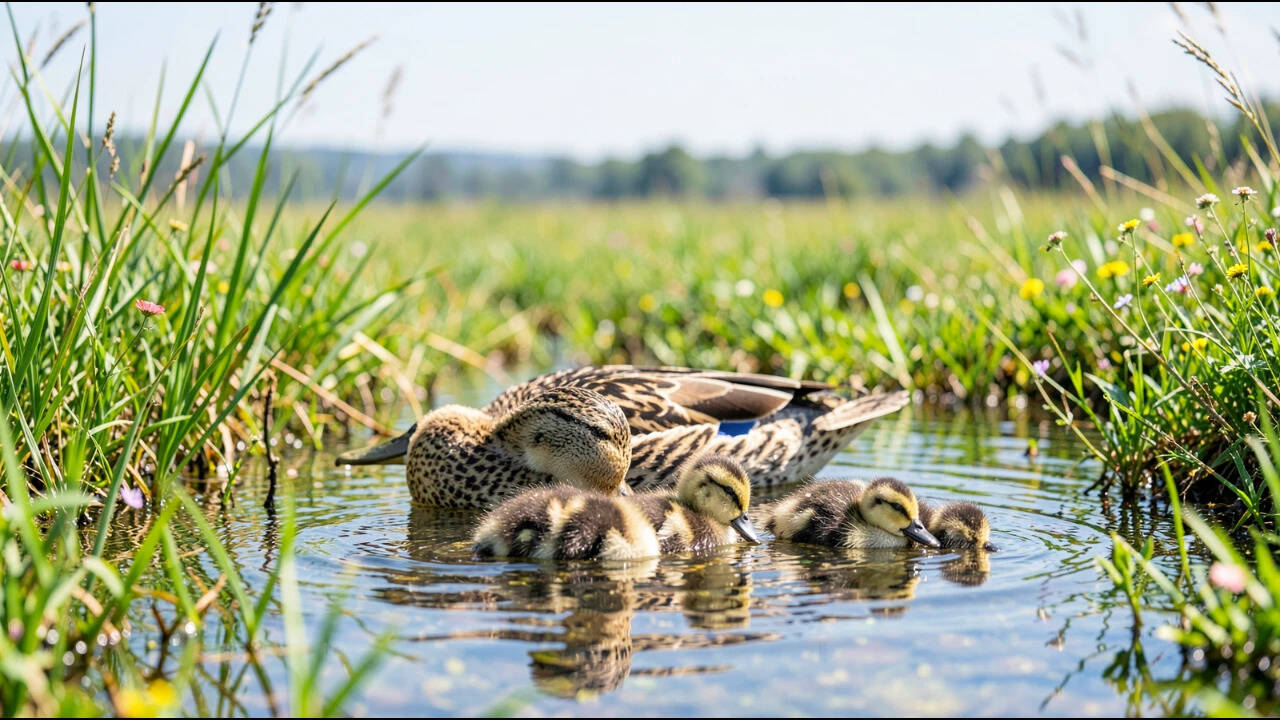
A population of 172 breeding females is a fragile micro-sample on an unstable ledger. Marbled teal (Marmaronetta angustirostris) are dabbling ducks with erratic reproductive swings, high brood mortality, and a tight dependence on ephemeral Mediterranean wetlands. One dry spring, one botulism outbreak, one spike in predator density or lead shot exposure can wipe out years of apparent progress before the next survey even starts.
Counting females in a single season tells you where birds gathered when conditions happened to cooperate. It does not tell you whether the underlying system can survive stress without human life support.
The Trap of Headcount Triumphalism
Headcount journalism treats conservation like a scoreboard. Number goes up, strategy succeeds. Number goes down, we need more funding.
In wetland ecology, that binary is a trap. Mediterranean marshes—especially in southern Spain around Doñana and the Valencia basin—operate on boom-and-bust hydrology. Rainfall fluctuates wildly. Groundwater extraction still battles ecological quotas. Agricultural runoff still tests water quality even when sluice gates open and basins fill.
When a restored marsh holds water at the right depth in late spring, marbled ducks show up. They feed on aquatic invertebrates and emergent plants, nest in dense vegetation, and raise ducklings. A survey team logs higher breeding numbers and files good news.
What gets glossed over is how easily those gains evaporate. A marsh that looks lush in April can shrink into isolated, stagnant puddles by July. Warm, shallow, nutrient-rich water is a textbook recipe for avian botulism (Clostridium botulinum). A single outbreak can kill thousands of waterbirds across a basin, turning a celebrated recovery year into a grim clean-up operation.
Then there is the bottleneck of genetic and demographic scale. Even when a local tally climbs to 172 breeding females, an effective population size that small remains vulnerable to inbreeding depression, skewed sex ratios, and stochastic weather events. A headline number does not insulate a small gene pool from bad luck.
The Question Everyone Keeps Asking Wrong
Most coverage centers on a simple question: did wetland restoration boost marbled duck numbers in Spain?
Ask that, and you get a surface-level answer. Yes, rewetting and habitat management attract breeding pairs when conditions align.
Ask the real question instead: are Spain's wetlands functioning as self-sustaining ecosystems, or are they high-maintenance staging grounds that collapse the moment hydrology or human management slips?
Wetland restoration is not a light switch you flip once and walk away from. It is an ongoing hydraulic, chemical, and ecological balancing act. If a restored marsh requires constant pumping, strict water-rights battles, and emergency rescues every summer, calling it "restored" stretches the definition past its breaking point.
What People Also Ask About Marbled Ducks and Wetlands
Do restored wetlands guarantee a permanent comeback for marbled ducks?
No. Habitat availability is necessary, not sufficient. Marbled ducks still face threats outside the boundaries of any single restored marsh: illegal hunting or accidental lead poisoning, invasive predators, poor water quality, agricultural chemicals, and shifting climate patterns across their Mediterranean and North African range.
A good breeding year in Spain is encouraging. A permanent comeback requires multi-year recruitment—meaning enough ducklings actually survive to adulthood and breed themselves—across multiple interconnected sites, not a single favorable window.
Why do bird counts swing so much from year to year?
Waterbirds respond rapidly to shifting water availability. Unlike territorial forest birds that hold fixed plots year after year, ducks move to where shallow water and food appear.
If a drought hits one basin, birds may concentrate elsewhere or skip breeding altogether. If rain returns and managers flood a restored area at the right time, counts jump. Treating a single year's spike as a straight upward trend confuses mobility and short-term response with long-term population health.
Is habitat restoration better than captive breeding and releases?
Framing this as an either-or choice misses how conservation actually works in practice. Captive breeding and reintroduction programs have helped bolster depleted populations in Spain, including work involving organizations like SEO/BirdLife and regional authorities, while habitat restoration aims to give released and wild birds somewhere viable to live.
Yet releasing birds into a broken landscape is like pouring water into a leaky bucket. Without clean water, safe cover, and connected wetlands, captive-bred birds face steep survival hurdles. Habitat comes first in principle, but both tools only succeed when tied to landscape-scale water management and threat reduction.
Battle Scars From Chasing Easy Wins
I have watched conservation and environmental projects pour millions into visible, photogenic interventions while ignoring the unglamorous plumbing underneath.
I have seen money flow into ribbon-cutting habitat projects where water rights were never permanently secured, leaving newly shaped basins dry within two seasons. I have seen teams celebrate early species sightings while ignoring agricultural runoff draining straight into the same watershed. When the water drops or toxins concentrate, the press releases vanish and the field crews scramble.
That pattern repeats across environmental policy because visible outputs are easier to sell than structural reform. Digging channels, planting reeds, and counting birds gives stakeholders a clean story. Confronting over-extraction of aquifers, enforcing pollution rules, and negotiating long-term water allocations is slow, contentious, and rarely produces neat annual charts.
In conservation science, researchers like Andy Green—who has spent decades studying Mediterranean waterbirds, wetland ecology, and seed dispersal—have consistently highlighted how complex wetland food webs and hydrological dynamics really are. When you reduce an entire marsh ecosystem to a single bird count, you ignore the invertebrates, plants, water chemistry, and connectivity that keep the system alive.
Where My Contrarian View Can Go Wrong
Pushing back against celebratory headlines carries its own blind spot: cynicism can become its own form of laziness.
If I dismiss a count of 172 breeding females purely because single-year numbers fluctuate, I risk undervaluing hard-won ground-level effort. Field biologists, land managers, and local partners who keep water moving, clear invasive species, and monitor nests do grueling work in tough conditions. A rise in breeding females is still a better signal than a collapse or silence in the reeds.
There is also a strategic risk in demanding perfection before recognizing progress. Conservation rarely gets everything fixed at once. Sometimes a restored wetland starts as a modest stepping stone—a seasonal refuge that buys time while broader water policy catches up. Pretending a partial win means nothing can alienate people whose support is needed to build on it.
Nuance means holding both truths at once: celebrate the effort and the data point, without mistaking a fragile uptick for permanent recovery.
A Quick Thought Experiment on Fragile Gains
Imagine a scenario where a restored Mediterranean wetland supports 172 breeding marbled duck females during a wet spring. Funding agencies hail the project as a triumph and shift attention elsewhere. The following winter brings low rainfall, while upstream farms draw heavily from the same basin. By late spring, water levels sit inches lower than needed for safe nesting cover, and summer heat concentrates salts and nutrients in shrinking pools.
The marsh did not suddenly lose its name on a map. Its physical footprint barely changed. Yet its biological capacity dropped sharply in a matter of months.
That scenario shows why static metrics mislead. A wetland is a process, not a picture postcard. Its value lies in how it behaves across dry years, heatwaves, and human pressure—not just when the rain cooperates.
How to Actually Judge Wetland Success
If you want to know whether wetland restoration is genuinely working for marbled ducks, stop looking at one headline number in isolation and start tracking tougher indicators.
- Measure multi-year survival, not just breeding counts. Look at how many young birds survive past fledging and return to breed over several years, not just how many females show up in a single spring.
- Audit water security across dry cycles. Check where the water comes from, who holds legal claim to it, and whether the wetland holds viable habitat during below-average rainfall.
- Track water quality and disease risk. Monitor salinity, pesticide and nutrient runoff, dissolved oxygen, and botulism risk during warm months when shallow water heats up.
- Evaluate network connectivity. A single isolated marsh is vulnerable. Check whether stepping-stone wetlands exist nearby so birds can move safely when local conditions shift.
- Watch what happens after the grant ends. Real durability shows up when maintenance, monitoring, and enforcement continue without emergency funding spikes.
Stop Mistaking a Ripple for the Tide
A restored marsh with 172 breeding females is a sign of life, not a finished mission.
Until the water is secure in bad years as well as good ones, the numbers will keep swinging. Count the birds if you must—just don't confuse a good season with a permanent cure.