The ink on a balance sheet is never truly dry. It stains. It lingers. When the budget office published its ledger, the numbers arrived stripped of smoke, stripped of the roar of afterburners, stripped of the quiet terror felt by a sailor on watch in the dead of a moonless night. Thirty-eight billion dollars. Five months.
Monsters do not always arrive with gnashing teeth. Sometimes they arrive as a line item.
To understand a figure like thirty-eight billion, the human mind rebels. We are built to comprehend the weight of a stone, the length of a furrow plowed in spring, the price of bread at the corner market. We are not built to hold galaxies of currency in our palms. Yet we must try. Because behind that number lies a machinery so vast, so relentless, that it hums just beneath the surface of our daily lives, unnoticed until the bill comes due.
Break it down. Strip away the abstraction.
Over five months, thirty-eight billion dollars translates to roughly seven point six billion dollars every thirty days. Two hundred fifty-three million dollars every single day. Ten point five million dollars every hour. While you sleep, while you pour your morning coffee, while children argue over crayons in a sunlit classroom, millions vanish into the ether of logistics, fuel, and fire.
Imagine sitting in a windowless room beneath the asphalt of the capital. The air smells of ozone and old paper. Fluorescent tubes hum a low, monotonous D-minor chord. An analyst named Marcus, his eyes red-rimmed from forty-eight hours of continuous review, stares at a spreadsheet that stretches across three monitors. He is not thinking about geopolitics. He is tracking the replacement cost of interceptor missiles fired at objects that cost less than a used sedan. He calculates the depreciation of airframes pushed past their maintenance intervals. He enters a comma. He adds another zero. The machine eats it all.
This is the invisible architecture of deterrence. It is an architecture built entirely of money traded for time, and time traded for silence.
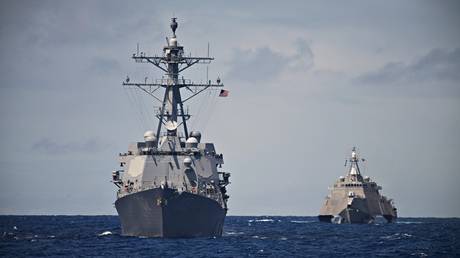
The conflict with Iran—or rather, the perpetual, tense choreography of shadow and steel that defines the region—does not begin with a declaration. It begins with logistics. Thousands of miles away from the quiet suburban streets where citizens mow their lawns on Saturday mornings, gray hulls cut through the heavy, salt-choked air of the Persian Gulf. Destroyers sit heavy in the water, their vertical launch systems packed with millions of dollars of high-explosive insurance policies.
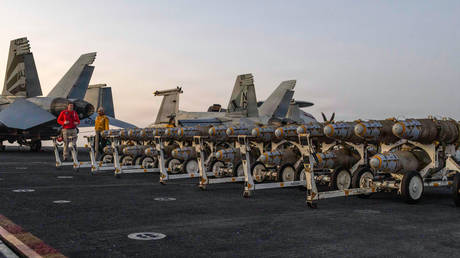
Every time a radar screen blips with an unauthorized signature, a chain reaction of expenditure begins. A pilot is scrambled. Millions in fuel burned before the wheels even leave the deck. A missile is readied. Communication arrays flare across continents, routing data through fiber-optic veins buried deep in ocean trenches.
We are told this keeps us safe. We are told that peace is expensive, but war is catastrophic, and therefore the ledger must be fed. But what happens when the feeding itself becomes a form of slow erosion?
Money is not abstract green paper or digital blips on a screen. Money is stored human energy. It is the sweat of a machinist in Ohio, the late-night study sessions of a nurse, the decades of collective labor that a society invests in its future. When thirty-eight billion dollars vanishes into the maw of a five-month standoff in the Middle East, that energy does not simply disappear. It is converted. It is turned into smoke that dissolves over salt flats. It is turned into shrapnel sinking into the sand. It is schools unbuilt, bridges left to rust, medical research postponed, and futures mortgaged before they can even be written.
Consider what happens next.
When the budget office tallies the bill, the political machinery shifts into defense. Excuses are polished. Rhetoric is sharpened. The public is treated to solemn speeches about obligations and threats, as if the budget were a weather event—something that simply happened to us, an act of God rather than a series of deliberate, calculated choices made by men in rooms with closed doors.
We have normalized the astronomical. We speak of billions the way past generations spoke of thousands. We nod along when television pundits discuss the cost of readiness as if it were a subscription fee for living in a dangerous world. But the danger is fed by the very machinery designed to contain it. An action invites a reaction; a deployment forces a counter-deployment; a missile built demands a missile fired, or else it rots in a silo, its enormous price tag mocking the logic that created it.
There is a profound loneliness in watching these ledgers grow. The average person feels entirely divorced from the mechanics of empire, yet bears the ultimate weight of its maintenance. You feel it in the creeping cost of living, in the infrastructure straining under deferred maintenance, in the quiet realization that the safety net protecting your family is wearing threadbare at the seams.
The budget office report is not just a document about the Pentagon. It is a mirror.
It reflects a nation caught in a loop of its own making, spending vast fortunes to maintain a posture of dominance in a region that grows more volatile with every dollar dropped into its sands. The numbers are precise, but the tragedy is messy. It smells of scorched JP-8 fuel, of stale coffee in underground bunkers, of the silent anxiety of families waiting for deployments that never seem to truly end.
The ledger will be updated next month. Another column of figures will be added. Another slice of the future will be converted into smoke and steel.
The machinery continues its hum. The fluorescent lights flicker in the basement. And somewhere out on the dark water, a radar screen sweeps the horizon, waiting for the next thing that must be bought, and fired, and forgotten.