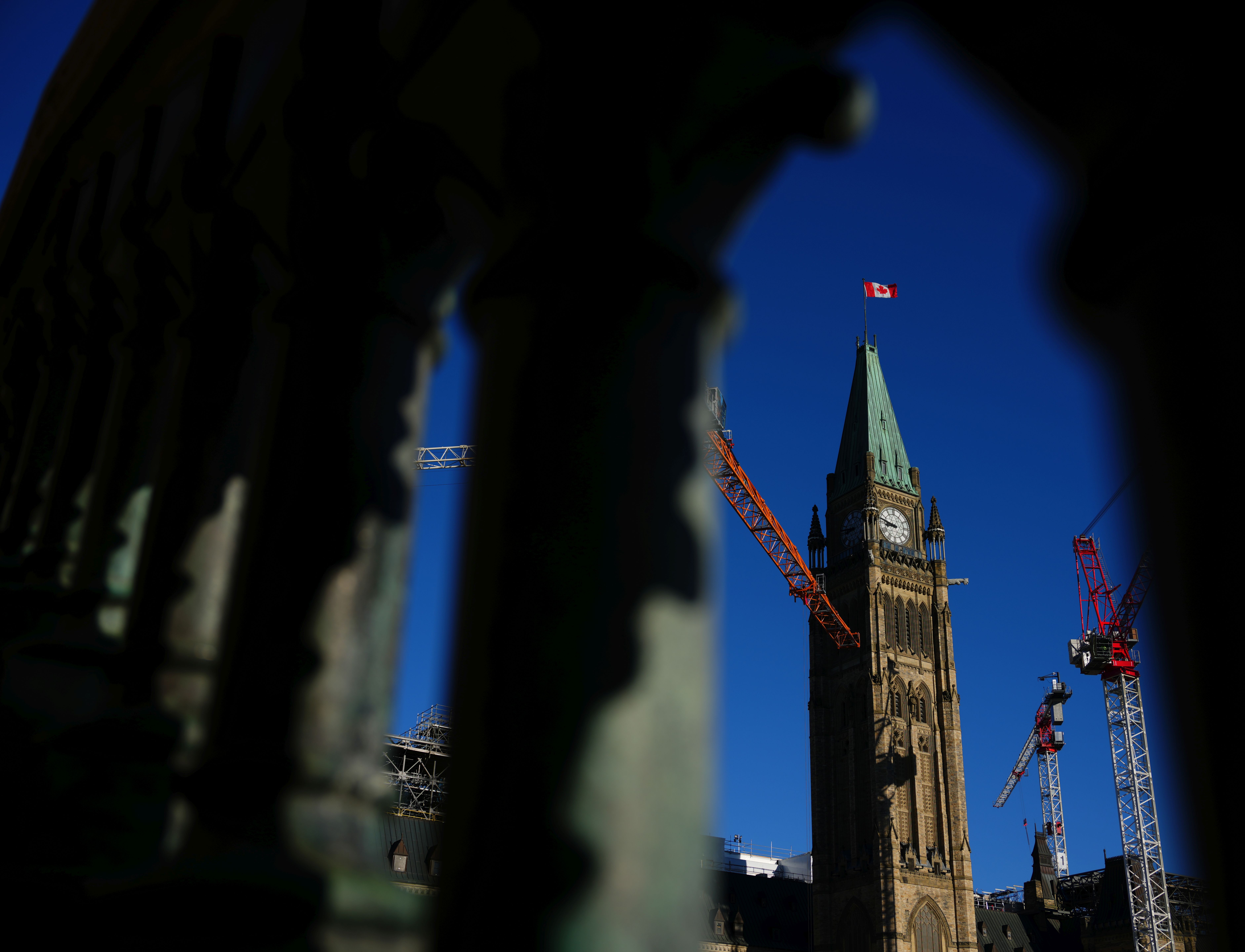
The familiar emerald silhouette of the Peace Tower is about to vanish. For the first time in a generation, the centerpiece of Ottawa’s skyline will lose its signature oxidized patina, replaced by the raw, penny-bright glare of fresh copper. This change is not a cosmetic choice but a structural necessity—a multi-year surgical extraction of crumbling masonry and rusted metal that represents one of the most complex heritage restoration projects in North America.
While the visual shift might startle tourists and residents, the transition from green to brown and eventually back to black and green is a lesson in chemical reality. The copper roof of the Peace Tower has reached the end of its functional life. Holes, thinning sections, and failing seams have allowed moisture to infiltrate the underlying structure for years. If left alone, the water would eventually liquefy the mortar holding the iconic Neogothic tower together. By the time the scaffolding comes down, the "new" roof will look like a shiny new cent, but it marks a far more expensive and grueling reality hidden beneath the metal sheets.
The Chemistry of Architectural Aging
Copper does not stay bright for long. The moment the new sheets are exposed to the Ottawa atmosphere, a predictable sequence of chemical reactions begins. This process, known as patination, is the metal’s way of creating a protective skin against the elements. It is a slow-motion transformation that usually takes twenty to thirty years to reach the final, stable green stage.
- Stage One (The Brown Phase): Within weeks, oxygen and moisture react with the copper to form copper oxide. This turns the bright orange metal into a deep, dull chocolate brown.
- Stage Two (The Black Phase): As the years pass, sulfur compounds from the air and precipitation further darken the surface, often resulting in a near-black appearance.
- Stage Three (The Green Phase): Finally, copper carbonates and sulfates form. This is the "verdigris" or green patina that people associate with the Canadian Parliament. This layer is actually a form of controlled corrosion that prevents the metal underneath from further decay.
The reason the Peace Tower looks different from, say, a modern copper-clad office building is the specific atmospheric cocktail of the Ottawa Valley. High humidity and varying seasonal pollutants dictate the exact shade of green. There is no way to skip the brown phase without using artificial chemical washes, which the federal government has historically avoided in favor of natural, long-lasting weathering.
A Massive Infrastructure Debt Comes Due
This roof replacement is merely the visible tip of a much larger, more expensive iceberg. The Centre Block of Parliament Hill, which includes the Peace Tower, has been closed since 2019 for a massive overhaul. The budget for this project is measured in the billions, reflecting decades of deferred maintenance.
The Peace Tower itself is a victim of its own design. Built after the 1916 fire that destroyed the original Centre Block, it was intended to be a symbol of resilience following the First World War. However, the 1920s construction techniques did not fully account for the brutal freeze-thaw cycles of the Canadian capital. Water seeps into the porous sandstone, freezes, expands, and shatters the rock from the inside out. By replacing the copper roof now, engineers are attempting to seal the "top of the bottle" to prevent further internal damage.
The project isn't just about hammering down some new metal. It involves the meticulous labeling, removal, and cleaning of thousands of stones. Each piece of the tower is being cataloged with 3D laser scanning. This allows workers to identify which stones can be saved and which must be replaced with fresh stone from the same quarry in Ohio that provided the original material over a century ago.
The Business of Heritage Craft
Finding the labor to execute this work is a secondary crisis within the project. There is a shrinking pool of master coppersmiths and heritage masons capable of working on a structure of this scale. This isn't a standard construction job where you can hire any commercial roofing crew. The intricate folds around the gargoyles and the narrow peaks of the tower require hand-tool precision that few modern tradespeople possess.
The costs are driven up by the specialized nature of the materials. We are talking about high-gauge, architectural-grade copper, which is subject to the volatility of global metal markets. Every delay in the construction schedule risks higher material costs. For the taxpayer, the "green" of the Peace Tower refers as much to the cost of the project as it does the color of the roof.
Why We Cant Just Paint It Green
A common question from the public is why the government doesn't simply apply a green coating to maintain the iconic look. To an industry analyst, the answer is clear: durability.
Any paint or artificial patina is a surface-level treatment. It will eventually peel, chip, or flake under the stress of Ottawa’s -30°C winters and +35°C summers. When you are working at the height of the Peace Tower, the cost of the scaffolding alone is so astronomical that you only want to do the job once every 80 to 100 years. Natural copper is "self-healing." If it gets scratched, the exposed metal will simply oxidize and blend back into the rest of the roof over time. An artificial coating would require constant, expensive touch-ups that are logistically impossible at that altitude.
Furthermore, heritage conservation standards in Canada generally dictate that materials should be allowed to age naturally. This "honesty in materials" is a core tenet of the Standards and Guidelines for the Conservation of Historic Places in Canada. If you use copper, you let it behave like copper.
The Impact on Tourism and Identity
There is an undeniable psychological impact to this change. The Peace Tower is the most photographed building in the country. For the next decade, it will look like a construction site. The bright copper will be a jarring departure from the somber, historic aesthetic the public expects.
However, this transition serves as a visible reminder of the mortality of our infrastructure. We often take for granted that these stone giants will stand forever, but they are constantly fighting a losing battle against gravity and chemistry. Seeing the bright copper is an invitation to look closer at the sheer effort required to keep a national symbol standing.
The Risks of the Reconstruction
No project of this magnitude is without peril. When you strip a roof off a century-old building, you are guaranteed to find "surprises." In the case of the Centre Block, these surprises often involve hazardous materials like asbestos and lead, or structural failures that were hidden behind walls for ninety years.
- Seismic Upgrading: The tower is being fitted with modern reinforcements to survive an earthquake, a threat that was not understood in the 1920s.
- Environmental Controls: Modern HVAC systems are being threaded through the stone needle of the tower to prevent the very humidity that causes the stone to degrade.
- Safety Standards: The original construction had almost no safety features for maintenance workers. The new roof will include integrated fall-protection systems that are invisible from the ground but vital for future repairs.
The timeline for the copper to return to its green state will likely outlast several federal election cycles. By the time the roof is green again, the world will be a very different place.
The Long Game of Architecture
We tend to measure time in fiscal years or election cycles, but the Peace Tower operates on a different clock. The men and women currently hammering those copper sheets onto the roof are doing work that their grandchildren will eventually have to redo.
The temporary loss of the green color is a small price to pay for another century of structural integrity. It is a reminder that heritage is not a static object but a continuous process of decay and renewal. The bright brown tower we see today is simply the metal preparing itself for the long haul.
If you want the tower to stay green, you have to let it turn brown first. There are no shortcuts in the world of high-stakes heritage restoration. You either pay for the best materials and wait for nature to do its work, or you watch the building crumble into the Ottawa River. The government has chosen the former, and despite the staggering bill, it is the only logical path for a nation that values its history.
Stop looking for the green. Watch the brown. It is the color of a building being saved.