A plastic crate sits on a rainy dock in Ningbo. Inside, ten thousand miniature electric motors wait for a ship that might not come, or might be too expensive to board by the time it arrives. Three thousand miles away, in a cramped office in Ohio, a supply chain manager named Sarah—a composite of the thousands of middle-market specialists currently losing sleep—stares at a spreadsheet that refuses to balance.
For twenty years, the line between Ningbo and Ohio was a straight one. It was a frictionless slide of capital and components. Now, that line is being pulled taut, frayed by the friction of two giants trying to let go of each other’s hands without falling over.
We call it decoupling. It sounds clinical. It sounds like unhooking a train car. In reality, it is more like trying to perform surgery on Siamese twins who share a single, pulsing heart.
The Mirage of the Clean Break
The headlines often paint the US-China trade relationship as a binary choice: either we are friends, or we are enemies. But the data tells a story of messy, desperate interdependence. Even as politicians talk about "derisking" and "reshoring," the sheer volume of trade remains a staggering weight on the global scale.
Consider the "tactical truce." This isn't a peace treaty. It isn't a return to the golden age of globalism. It is a shared realization that a total collapse is too expensive for both sides to afford right now. China’s internal economy is cooling; its property sector is a bruised lung struggling for air. The United States is fighting an uphill battle against the ghost of inflation.
They are two exhausted boxers leaning against each other in the twelfth round. They aren't hugging because they like each other. They are hugging because if one lets go, they both might hit the canvas.
The tactical truce is a temporary floor. It slows the decoupling, turning a frantic tear into a controlled peel. It gives Sarah in Ohio another six months to find a supplier in Vietnam or Mexico, and it gives the factory owner in Ningbo time to pivot toward markets in Southeast Asia or the Global South. But the direction of travel remains the same. The goodbye is still happening. It's just getting quieter.
The Silicon Sieve
If you want to see where the truce fails, look at the chips.
Silicon is the new oil, but unlike oil, you cannot simply pump it from a different well. The high-end semiconductor industry is a cathedral of human ingenuity, built over decades with blueprints that cross every border. When the US restricts AI chips, it isn't just blocking a product; it is attempting to wall off the future.
China’s response hasn't been a white flag. It has been an explosion of domestic investment. They are pouring billions into "legacy" chips—the ones that run your dishwasher, your car’s power windows, and the medical monitors in your local hospital.
This creates a strange, bifurcated world. We are heading toward a reality where the "brain" of a device might be American-designed, but the "nervous system" is entirely Chinese. Can these two systems talk to each other forever? Probably not.
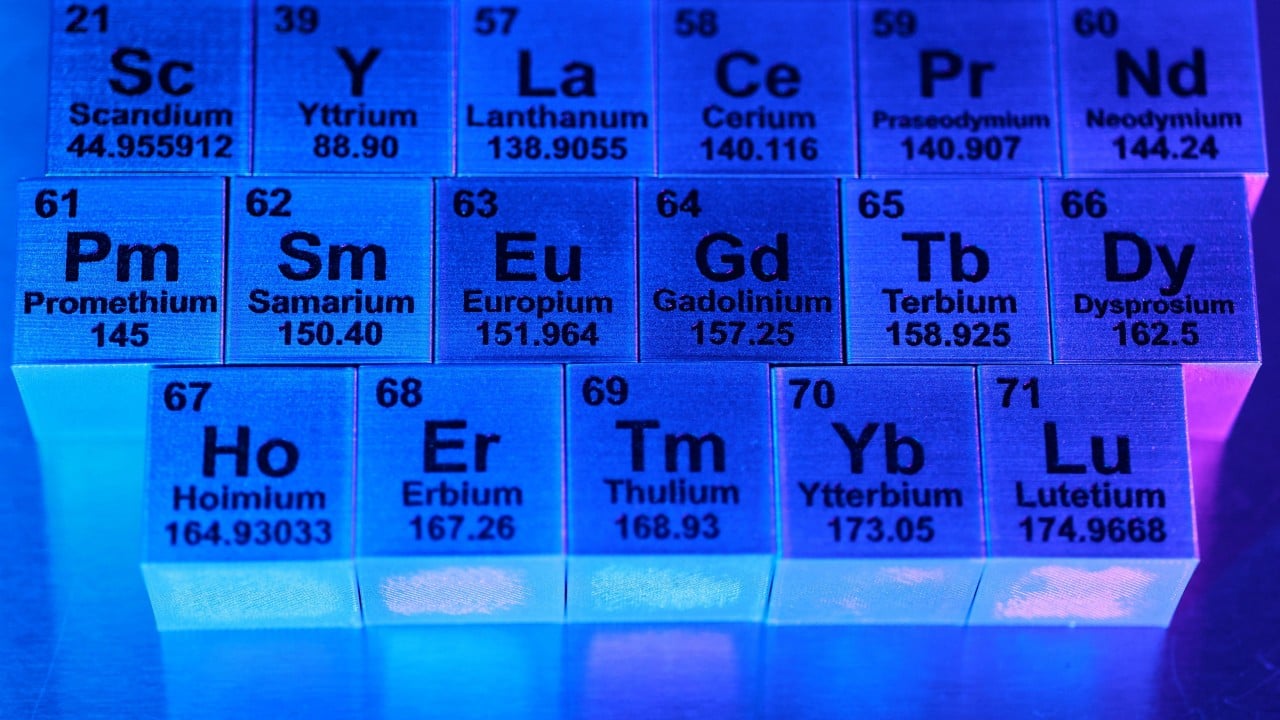
The friction shows up in the smallest places. A specialized coating for a lens. A specific grade of purified neon. A rare earth magnet. These aren't just line items. They are the invisible threads holding your smartphone together. When those threads snap, the price doesn't just go up. The product simply ceases to exist for a while.
The Human Toll of the Spreadsheet
We talk about "economic sectors" as if they are blocks of wood. They aren't. They are people.
When a "tactical truce" is announced, a CEO in Silicon Valley might breathe a sigh of relief because their quarterly guidance is safe. But for the worker in a solar panel factory in Southeast Asia—working for a Chinese-owned company to circumvent US tariffs—the truce is a period of profound instability. They are living in the "gray zone" of international law.
Then there is the psychological decoupling. Trust is a currency that doesn't show up on a balance sheet, but once it's devalued, you can't just print more. For decades, American and Chinese scientists co-authored papers at a record pace. They solved problems together. They sat in the same university cafeterias and dreamed up ways to sequence genomes and stabilize power grids.
That pipeline is drying up.
Young researchers are choosing sides. Fear is replacing curiosity. If a truce slows the economic split, it does almost nothing to stop the intellectual one. We are becoming smarter in isolation, which is just another way of saying we are becoming more dangerous to one another.
The New Map of the World
The slowing of decoupling doesn't mean the old world is coming back. It means a new, more fragmented map is being drawn.
Look at Mexico. Look at Vietnam. Look at India. These nations are the beneficiaries of the "China Plus One" strategy. But even this is a bit of a shell game. Much of the "Mexican" manufacturing boom is fueled by Chinese components being shipped to Tijuana, assembled, and rolled across the border.
It is a game of musical chairs where the music has slowed down, but hasn't stopped.
The truce allows for a "managed decline" in certain dependencies. It prevents a catastrophic shock to the system—the kind that would leave grocery store shelves empty and car lots ghost towns. But it also creates a false sense of security. It suggests we can have our cheap consumer goods and our geopolitical rivalry at the same time.
We are trying to buy time. The question is, what are we going to do with it?
If the time is used to build more resilient, diversified systems that don't rely on a single geopolitical flashpoint, the truce is a masterpiece of diplomacy. If it is used merely to delay the inevitable without preparing for it, then we are just paying interest on a debt that will eventually come due.
The Ghost in the Machine
Economics is often treated like physics—a series of predictable reactions to pressure and heat. But it’s actually more like biology. It’s adaptive. It’s messy. It wants to survive.
The global economy is currently trying to grow a new skin. The old skin—the one defined by the 2001 entry of China into the WTO—is being shed. It’s itchy. It’s painful. It leaves the body exposed.
The truce is the bandage.
Underneath that bandage, the wounds are still there. The fundamental disagreements over intellectual property, maritime borders, and the very definition of a "fair" market haven't gone away. They’ve just been lowered in volume so the neighbors don't complain.
The real story isn't the trade deficit or the GDP growth rate. It’s the slow, agonizing realization that the era of the "global village" was a temporary anomaly, not a permanent destination. We are returning to a world of spheres of influence, of gated communities, and of guarded secrets.
Back at the dock in Ningbo, the rain stops. The crate is finally lifted by a crane and swung toward the hold of a massive freighter. It’s moving. For now, the system works. Sarah in Ohio sees the "shipped" notification on her screen and finally closes her laptop. She can sleep tonight.
But she knows, just as the factory owner knows, and just as the policymakers in D.C. and Beijing know, that the ship is sailing on a shrinking ocean. The horizon is moving closer every day.
The truce is a gift of time, wrapped in a shroud of uncertainty. We are standing on a bridge that is being dismantled behind us, even as we try to strengthen the planks beneath our feet.
The crate arrives. The motor turns. The lights stay on.
For now.