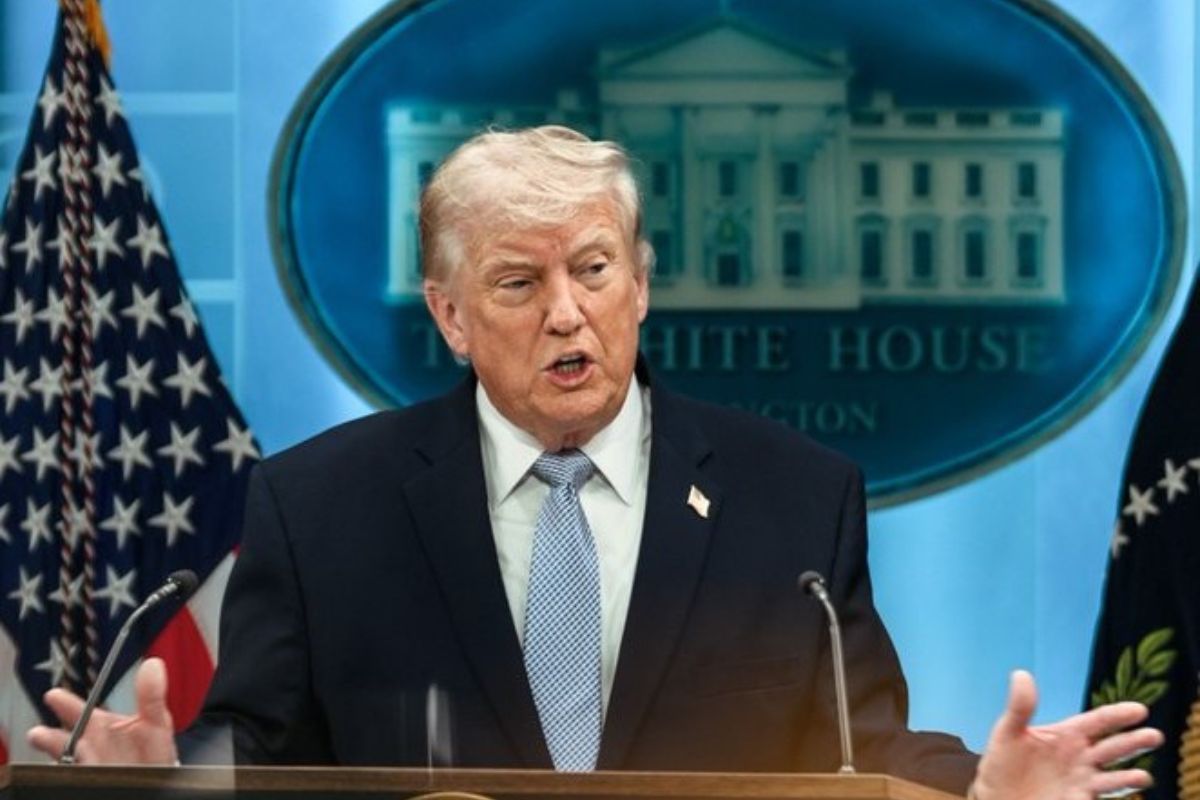
A federal judge in Boston dismantled the White House’s most aggressive assault on high-skilled legal immigration on Monday. By striking down the administration's controversial $100,000 fee on new H-1B visas, U.S. District Judge Leo Sorokin killed an executive measure that had effectively paralyzed international talent acquisition for American corporations, hospitals, and universities since last autumn.
The ruling represents a massive defeat for the administration's nationalist economic agenda.
In a scathing 42-page decision, Sorokin ruled that the six-figure fee was not a regulatory penalty, but an unauthorized tax levied directly by the executive branch. Under the U.S. Constitution, the power to tax belongs exclusively to Congress. By bypassing Capitol Hill, the administration overstepped its legal boundaries and violated the Administrative Procedure Act, rendering the policy completely unlawful.
While the White House promised that the policy would protect domestic workers, the economic reality on the ground told a drastically different story. It was an artificial market cap disguised as a security fee.
The Hidden Circuit Breaker on American Innovation
When President Trump signed the executive proclamation in September 2025, the administration argued that if an American enterprise truly required elite global talent, it could afford a premium price tag. The logic was simple. Force companies to internalize an exorbitant cost, and they will naturally hire Americans instead.
Instead of rebalancing the labor pool, the financial shock stopped the hiring pipeline cold.
Before the proclamation, U.S. employers paid between $2,000 and $5,000 in government filing fees to sponsor a specialty worker. Skyrocketing that figure to $100,000 overnight did not convert foreign roles into American jobs. It simply meant the positions went unfilled.
Government data revealed the policy's true chilling effect. In a March court filing, U.S. Citizenship and Immigration Services admitted that between September and mid-February, the agency received exactly 85 payments for the $100,000 fee nationwide. For a program that traditionally caps out at 85,000 total visas per year—consistently exhausted via a high-demand lottery system—the application rate collapsed to statistical zero.
The immediate casualties were not just Silicon Valley software giants, but institutions with strict budgetary limits. Public school systems, rural hospital networks, and state university research labs found themselves completely priced out of the market. They could not afford to gamble $100,000 on a lottery system for a specialized pediatrician or a chemistry professor.
The Legal Fiction of Regulatory Penalties
To defend the policy in court, government lawyers relied on the Immigration and Nationality Act. They argued that the president possesses broad statutory authority to restrict the entry of foreign nationals if their arrival deters domestic economic interests. Under this view, the $100,000 fee was framed as a regulatory penalty designed to discourage the exploitation of cheap foreign labor.
Judge Sorokin saw through the semantic shield.
"The substance and application of the $100,000 payment reveal that it is a tax, regardless of what the payment is called," Sorokin wrote. He noted that a regulatory penalty is meant to punish non-compliance or bad behavior. A blanket fee assessed on legitimate applications, structured purely to raise financial barriers and alter economic behavior across an entire sector, behaves exactly like a tariff or a tax.
The ruling leaned heavily on legal precedent set earlier this year. The U.S. Supreme Court recently struck down the administration’s sweeping global emergency tariffs, establishing a clear boundary: the executive branch cannot use national security or immigration mechanisms to independently levy massive economic assessments without congressional approval. Sorokin applied that exact same logic to the immigration system.
The administration also failed to execute basic administrative duties. Under federal law, agencies must provide a reasoned explanation for major policy shifts and consider the real-world impact on affected parties. The court found that the Department of Homeland Security completely ignored the devastating staffing shortages the fee would inflict on public healthcare and educational systems.
A Fragmented Legal Arena
While immigration advocates and corporate leaders are celebrating Monday’s decision, the structural battle over the H-1B program is far from over. This ruling sets up a chaotic, multi-jurisdictional legal conflict.
In December, a federal judge in Washington, D.C., sided with the administration in a separate lawsuit brought by the U.S. Chamber of Commerce. That court ruled the president did have the inherent authority to set the fee under immigration law. That case is currently sitting in an appeals court. Meanwhile, a third challenge brought by labor unions and religious organizations is winding its way through federal court in San Francisco.
The Boston ruling effectively blocks the fee nationwide for now, but the underlying split between federal judges means the entire corporate immigration apparatus remains highly unstable.
The White House has already confirmed it will appeal Sorokin’s decision to the U.S. Court of Appeals for the First Circuit, seeking an immediate emergency stay to reinstate the fee while the appeal is processed. White House spokeswoman Taylor Rogers stated the administration remains confident the order will be reversed, insisting the president has clear authority to protect American workers from foreign competition.
The Long-Term Capital Flight
For corporate executives, the constant swinging of the regulatory pendulum is worse than a high fee. Business planning requires predictability. When visa policies change by executive decree every six months, long-term capital allocation shifts away from the United States entirely.
The tech industry has already begun adapting. Rather than fighting an expensive, unpredictable immigration system, major enterprise companies are expanding their footprint in engineering hubs abroad. Vancouver, Dublin, and Bengaluru are growing rapidly because their immigration frameworks are stable.
The $100,000 fee may be dead for the moment, but the corporate confidence required to invest heavily in U.S.-based global talent has already sustained severe damage. Companies are no longer waiting to see if the appeals court rescues the administration's immigration tax. They are opening offices outside the borders of the United States.