Two weeks in Antalya, Türkiye, proved one thing beyond doubt. You can launch all the voluntary tech pledges you want, yet if countries won't even print the words "fossil fuels" in a final text, global climate diplomacy has a massive structural problem.
When COP31 entered its decisive second week in mid-November 2026, negotiators were already staring down a familiar wall. On one side sat flashy new initiatives around artificial intelligence and heavy industry decarbonization. On the other sat bitter political gridlock over climate finance, adaptation metrics, science timelines, and whether the world would actually commit to phasing out oil, gas, and coal. By the time the gavel finally fell on November 22—two days into overtime—the summit had delivered concrete Action Agenda side deals while completely failing to pass a Presidency-led cover decision.
If you've followed UN climate summits over the past decade, you've seen this split-screen dynamic before. Never has the gap between real-world tech deployment and formal diplomatic consensus felt quite this wide.
Why COP31 Split Into Two Different Summits
Most people think of a UN climate conference as one giant negotiation room where 190-plus countries hash out a single binding treaty. That's not how it works in practice.
In Antalya, COP31 split cleanly along two tracks, a division UN Climate Change Executive Secretary Simon Stiell explicitly pointed out during his closing remarks. Track one is the formal, consensus-bound negotiation process co-led by COP31 President Murat Kurum of Türkiye and President of Negotiations Chris Bowen of Australia. Track two is the Action Agenda, where governments, tech firms, and industry coalitions roll out voluntary initiatives outside the veto power of individual petrostates.
Here's why that distinction matters so much right now. Under UN Framework Convention on Climate Change (UNFCCC) rules, a single country can hold up a formal cover decision. When negotiators entered week two in Antalya, ministers huddled in a "Divan"—an Ottoman term for an imperial assembly—trying to salvage a compromise text. Instead of a punchy political signal, delegates were handed a bloated 144-paragraph "reflections" document on November 16 that still dodged direct language on transitioning away from fossil fuels.
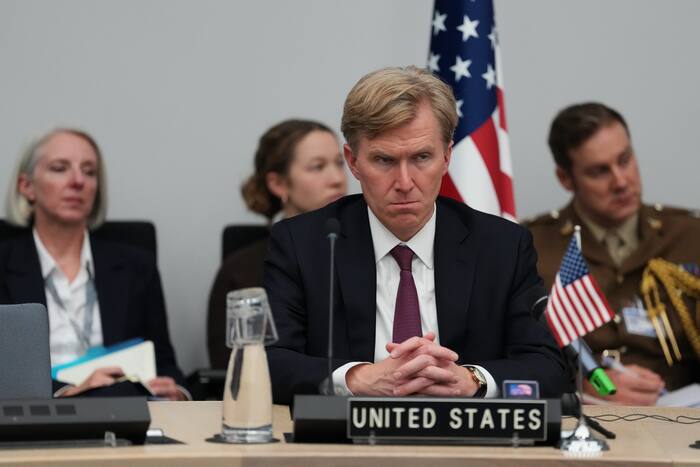
By the weekend of November 22, the European Union and vulnerable nations refused to sign off on a watered-down deal that failed to mention fossil fuels or keep the 1.5°C warming limit front and center. Former US Vice President Al Gore called the collapse an outrage. Meanwhile, countries like Peru, speaking for the AILAC negotiating bloc, demanded clear voting rules and an end to procedural delays being weaponized as a negotiating tactic.
The Antalya AI Pledge and the Data Center Energy Trap
While diplomats argued over commas in the plenary halls, tech policymakers were moving fast in the pavilions.
During the summit's decisive second week, Türkiye and the UN International Telecommunication Union (ITU) unveiled the Antalya Artificial Intelligence Pledge. By the Monday morning launch, the voluntary framework had already collected 80 endorsements and 271 specific commitments. Its goal sounds straightforward enough: harness AI for extreme weather forecasting, grid optimization, and climate resilience while curbing the technology's own ballooning environmental footprint.
Honestly, this was long overdue. For years, Silicon Valley and multilateral agencies pitched AI as a silver bullet for climate modeling without talking much about the power plants required to run those models.
At the Antalya ministerial launch, ITU Deputy Secretary-General Tomas Lamanauskas laid out the math. Electricity consumption from AI-focused data centers is projected to double by 2030, and several major tech firms have already watched their operational emissions jump by 50 percent over the past few years. You can't solve a warming crisis by building gigawatt-scale server farms hooked up to coal and gas grids.
What the AI Pledge Actually Requires
Because the Antalya Pledge is voluntary, skepticism is healthy. Plenty of climate pledges die quietly in press releases six months after a COP ends. To avoid that fate, the ITU and signatories structured the framework around four operational pillars:
- Low-emission power sourcing: Committing data center operators to procure clean electricity rather than leaning on fossil-heavy local grids.
- Hardware and model efficiency: Cutting compute waste and water usage per query or training run.
- Standardized emissions reporting: Requiring participants to track and disclose the environmental footprint of their AI infrastructure.
- Equitable access: Transferring climate-focused AI tools and training to developing nations, reinforced by the parallel launch of the Artificial Intelligence Climate Institute (AICI) alongside UNESCO and Brazil.
Lamanauskas admitted that signing a paper means nothing without enforcement, pledging that the ITU will actively monitor signatories and hold them accountable through 2030. Whether major African nations and emerging economies sign on before COP32 remains an open question, as many developing delegations felt sidelined during the broader summit.
The Hidden Risk of AI Climate Misinformation
There's another catch with relying on AI during climate talks that rarely gets enough airtime. Large language models aren't always reliable stewards of climate science.
During COP31, delegates pointed to research from UNESCO and University College London showing that popular AI chatbots frequently abandon established climate facts when users push back against them, with accuracy dropping sharply in non-English languages. If local planners in vulnerable regions rely on hallucinated or watered-down AI outputs to design flood defenses or crop transitions, bad data becomes a physical hazard. As one UN official put it in Antalya, a tool is only useful when the people using it understand what sits behind the curtain.
Heavy Industry Moves Faster Than Diplomats
If AI grabbed the headlines in week two, heavy industry quietly delivered the most consequential economic signal of the conference.
Steel, cement, and chemicals account for roughly a third of global industrial emissions, and they're notoriously hard to electrify. Yet at COP31, Michael Apicelli, head of the 53-country Climate Club Secretariat, pushed back hard against the excuse that green manufacturing is still decades away. His point was blunt: the clean production technologies for steel and cement already exist right now. What's missing isn't scientific invention—it's capital allocation.
Think about the timeline of an industrial asset. When a company builds a traditional blast furnace or cement kiln today, that facility locks in carbon emissions for 30 to 40 years. Every investment decision made between 2026 and 2030 either cements a low-carbon supply chain or guarantees we blow past our temperature budgets well into the 2060s.
China also stepped into the spotlight during the summit with fresh commitments around low-carbon electrification and technical assistance for developing nations. Combined with Stiell's push on electrification as a "lightbulb moment" for the global energy transition, the industrial track showed that market momentum is moving even when treaty text stalls.
Four Political Fault Lines That Broke the Cover Text
So why couldn't ministers translate that technological momentum into a unified political agreement in Antalya? Four core disputes paralyzed the negotiations from day one through overtime.
- The fossil fuel omission. After COP28 in Dubai famously agreed to "transition away from fossil fuels," oil-producing nations spent COP31 working to scrub that language from the Antalya cover decision. When the final presidency draft appeared without a single mention of fossil fuels, the EU and dozens of climate-vulnerable countries pulled the plug rather than accept a step backward.
- The climate finance trust deficit. Developing nations arrived in Türkiye demanding clear guarantees on adaptation funding, especially after the African Group's request for a formal agenda item on tripling adaptation finance was rejected on opening day. Trust eroded further when analysts noted climate-finance pledges had dropped sharply, and the Solomon Islands—a tiny, climate-vulnerable Pacific nation—ended up being the first country to announce a fresh contribution to the Green Climate Fund while wealthy nations dragged their feet.
- A fight over scientific deadlines. Even basic climate science became a political football. Vulnerable nations pushed for the Intergovernmental Panel on Climate Change (IPCC) to publish its next major climate assessment by 2028 so the findings could inform the next global stocktake. Several major emitters resisted that timeline, warning that delaying the IPCC report weakens the scientific urgency needed to keep the 1.5°C limit alive amid growing warnings about temperature "overshoot".
- Just transition mechanics. Ministers managed to salvage formal negotiating decisions on a Just Transition mechanism to protect workers and communities as economies decarbonize, alongside narrower agreements on adaptation indicators. Still, without a overarching cover decision, critical side initiatives on oceans, methane, and mountain ecosystems were left stranded outside the formal outcome.
How to Read Climate Summits Without Getting Fooled
If you work in energy, policy, sustainability, or tech—or you're simply trying to figure out whether global climate action is actually working—COP31 is a case study in why you shouldn't judge progress solely by the final plenary headline.
When tracking future summits heading toward COP32, separate diplomatic theater from capital flows using three practical filters:
- Watch capital lock-in, not cover texts. Formal UNFCCC cover decisions require unanimity, which practically guarantees lowest-common-denominator phrasing. Instead, track procurement rules, green steel buyers' clubs, and grid interconnection investments where 30-year infrastructure choices are actually made.
- Demand verified power matching for AI. If a tech vendor or municipality touts its participation in the Antalya AI Pledge, check whether its data centers run on 24/7 carbon-free energy matching rather than cheap, unbundled renewable energy credits.
- Follow the money on adaptation. Don't take headline finance pledges at face value. Look at direct disbursements into funds like the Green Climate Fund and verify whether wealthy nations are delivering grants rather than high-interest loans that deepen developing-world debt.
Simon Stiell has already signaled an external review to reform how UN climate talks operate so consensus rules stop rewarding obstruction. Until that structural fix happens, expect every November to look a lot like Antalya—fierce political gridlock in the main hall, while the real energy and tech transition gets built in the corridors outside.