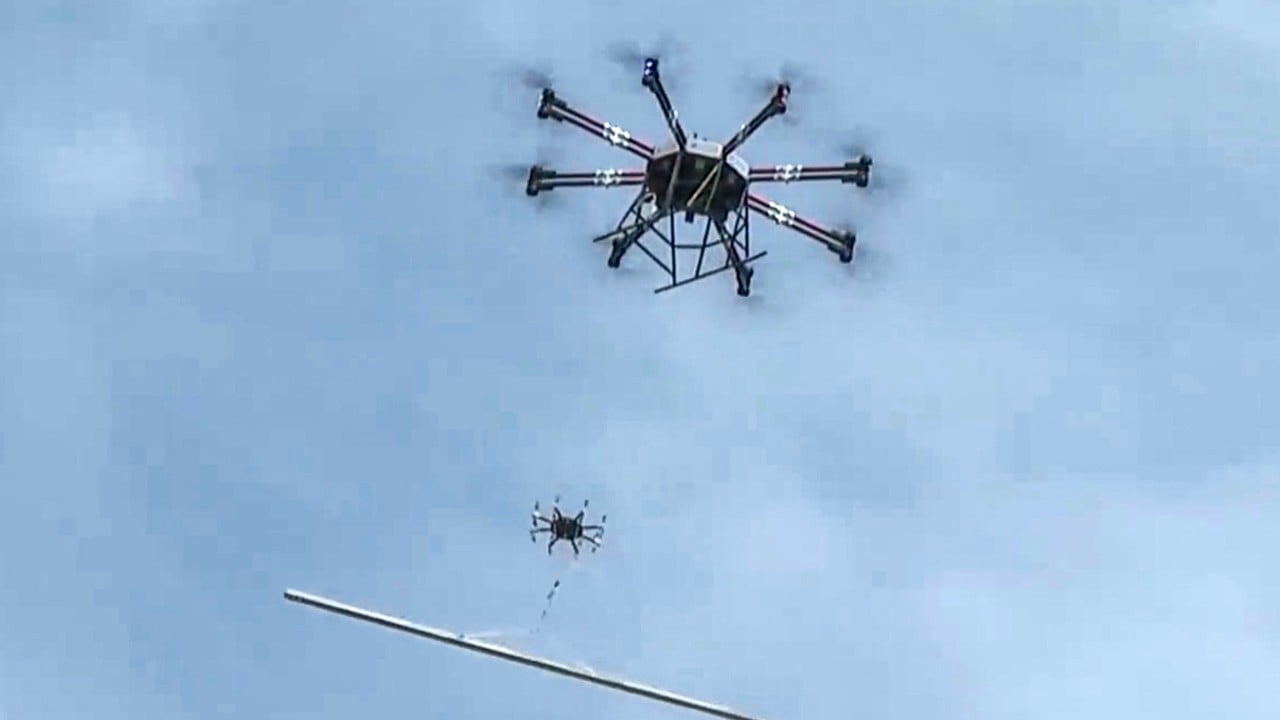
You've probably seen small quadcopters buzzing around construction sites taking photos or scanning slopes. They're great for aerial maps, but they don't do the heavy lifting. That's changing fast. Governments and logistics firms are pushing unmanned aerial vehicles into a completely different weight class.
The question isn't whether a drone can map a site anymore. The question is can a 150-kilogram drone transport heavy building materials like cement, bricks, and steel directly to where a crew needs them?
Hong Kong is actively testing this scenario. Through its low-altitude economy regulatory sandbox initiatives, the city is shifting from small data-gathering craft to heavy-payload workhorses. It's an aggressive move to fix a massive problem, labor shortages, difficult terrain, and soaring logistics costs. If you think this is just a futuristic gimmick, you're missing the massive economic shift happening right under our noses.
The Real Reason Cities Need Heavy Lift Drones
Construction logistics in a dense or mountainous city is a nightmare. Moving material from a supply truck at the bottom of a hill to a building platform halfway up a ridge takes hours of manual labor. Crews rely on physical strength, old-fashioned pulley systems, or expensive temporary tracking. It's slow, dangerous, and burns through a budget.
Heavy-lift drones change the math entirely. Take a machine like the KF-150, which utilizes a coaxial twin-rotor design. This mechanical setup gives the aircraft the raw lift needed to carry commercial cement bags and bricks across difficult environments without flinching.
[Traditional Transport: Truck -> Manual Hauling up Slopes -> High Labor Cost / Slow]
                                  VS.
[Heavy-Lift Drone: Truck Base -> Direct Vertical Flight -> Low Labor Cost / Minutes]
When you look at the raw numbers, the efficiency gain is obvious. Logistics trials in the region show that bypassing ground-level terrain obstacles using cross-sea or vertical flight corridors cuts transport times by over 60 percent. A delivery that used to take an entire afternoon of back-breaking hauling now takes an 18-minute automated flight.
Breaking Down the Regulatory Sandbox Approach
You can't just buy a commercial-grade cargo drone and fly it over a crowded urban area. The airspace is tight, and the safety risks are real. That's why the regulatory framework matters just as much as the rotor technology.
The Hong Kong government updated its legal framework by amending its Small Unmanned Aircraft Order. They created a new Category C tier specifically for unmanned aircraft weighing between 25 kilograms and 150 kilograms. They also adjusted the Air Navigation Order to allow controlled testing of massive systems exceeding that 150-kilogram threshold.
This sandbox approach lets companies run real-world trials under strict operational limits. They aren't just testing if the drone can lift the bricks. They are collecting data on several critical operational elements.
- Beyond Visual Line of Sight Operations: Pilots don't look at the drone. The aircraft follows pre-planned GPS coordinates automatically, managed from a remote dashboard.
- Coaxial Motor Redundancy: If a single motor fails mid-flight, a twin-rotor system distributes the load immediately so the machine doesn't drop a hundred pounds of concrete onto the earth.
- Signal Continuity: Testing how drone telemetry holds up when flying between high-density urban areas, steep valleys, and coastal zones.
The Infrastructure Problem Nobody Wants to Face
Everyone loves talking about the aircraft, but the drone is only half the puzzle. If a construction company wants to use heavy drones daily, they need a serious infrastructure upgrade on the ground.
You can't have a highly paid drone pilot sitting around changing batteries every twenty minutes. It defeats the entire purpose of automation. Industrial operators are introducing automated docking stations. These systems can swap out a massive commercial battery pack in about sixty seconds without human intervention.
Another massive hurdle is managing shared airspace. In a single development zone, you might have one drone inspecting a tunnel for the transit authority, two drones moving cement for a housing project, and a third delivering emergency medical supplies to a nearby island.
If these machines come from different manufacturers, they don't naturally talk to each other. Building a unified low-altitude traffic management system is proving to be much harder than building the actual flying hardware. Without strict digital flight corridors, the risk of mid-air collisions will keep these heavy machines grounded permanently.
What This Means for Your Next Project
If you manage logistics, infrastructure, or construction operations, you need to stop viewing heavy drones as experimental tech. The transition from small 6-kilogram data collectors to 150-kilogram material haulers is happening right now.
To prepare your operations for this shift, you should take action on three specific fronts. First, audit your current last-mile transport costs on difficult or vertical terrains to see exactly where manual material hauling is draining your profits. Second, evaluate local aviation rules regarding heavy payload classifications, as frameworks like Category C licensing are expanding globally. Finally, when planning new project sites, look for clear vertical takeoff zones that could eventually serve as dedicated drone landing pads. The technology is ready, and the regulations are catching up fast.