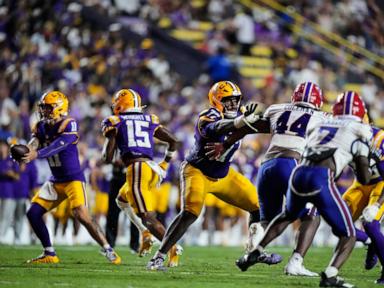
Every few months, Washington holds another dramatic hearing on the future of intercollegiate athletics, and sports media dutifully reports that lawmakers are finally taking steps to overhaul the system.
That narrative completely misses the structural reality of the industry. If you enjoyed this piece, you might want to read: this related article.
Congressional bills aimed at regulating Name, Image, and Likeness (NIL) rights, granting antitrust exemptions, or codifying "student-athlete" status are not structural reforms. They are legislative life support for an outdated cartel model that collapsed the moment the Supreme Court decided NCAA v. Alston in 2021.
The Myth of Legislative Salvation
When observers hear that a Senate committee is advancing legislation to "save" college sports, the conventional assumption is that federal uniformity will restore order to transfer portal chaos and booster-funded collectives. For another perspective on this story, see the recent coverage from The Athletic.
In practice, federal legislation cannot put the economic genie back in the bottle. You cannot pass a statute that forces billion-dollar media properties to operate like extracurricular clubs.
Here is why the standard framing of federal intervention falls apart under scrutiny:
- Antitrust immunity is a non-starter in a divided Congress. The NCAA has spent millions lobbying for an antitrust exemption so it can legally cap athlete compensation and restrict transfers without getting sued. Lawmakers across the aisle have repeatedly balked at granting sweeping immunity to a private organization that generated over a billion dollars in annual revenue while fighting to deny athletes basic healthcare and market-rate pay.
- The "student-athlete" label is a legal fiction. Invented by former NCAA executive director Walter Byers in the 1950s specifically to avoid paying workers' compensation claims to injured players, the term has zero basis in modern labor economics. Passing a federal law declaring that a starting quarterback in the Southeastern Conference is not an employee does not change the reality of 50-hour workweeks, mandatory travel, and multi-billion-dollar television contracts.
- Uniformity ignores the fundamental divide between revenue and non-revenue sports. A federal rulebook treats a Division I fencing program and an SEC football powerhouse as parts of the same ecosystem. They are not. One is an educational amenity subsidized by tuition and student fees; the other is a professional minor league media product tethered to a university brand.
What the Antitrust and Labor Battles Actually Show
To understand where college sports is heading, stop listening to Senate press conferences and start reading federal court dockets and National Labor Relations Board (NLRB) rulings.
The real overhaul of college athletics is not happening in committee rooms on Capitol Hill. It is happening through litigation and collective bargaining:
- The House v. NCAA Settlement: The multi-billion-dollar antitrust settlement between the NCAA, the power conferences, and former athletes fundamentally shattered the amateurism model by establishing a direct revenue-sharing framework. Schools are moving toward directly paying athletes tens of millions of dollars annually—a reality that makes prior debates over third-party NIL collectives look quaint.
- Employee Status and Unionization: From the NLRB regional director's ruling regarding Dartmouth men's basketball players to ongoing joint-employer complaints involving the NCAA, Pac-12, and USC, the legal trajectory points toward recognizing revenue-generating athletes as employees.
- Conference Realignment as Media Consolidation: When universities on the West Coast join conferences headquartered on the East Coast, academic mission has left the building. Realignment is driven exclusively by media rights valuations from networks like ESPN, Fox, CBS, and NBC.
The Flawed Questions Fans and Lawmakers Keep Asking
When debating Senate bills, pundits routinely obsess over symptoms rather than causes.
"How do we stop players from transferring every year?"
You stop rampant transfers the exact same way every other professional sports league in North America does: multi-year employment contracts and collective bargaining agreements. Players transfer freely right now because schools refuse to classify them as employees, which prevents universities from binding them to enforceable, multi-year service contracts. You cannot demand professional-level loyalty while offering amateur-level legal commitments.
"Won't paying players destroy Olympic and non-revenue sports?"
This is the favorite talking point of athletic directors defending bloated administrative budgets. Non-revenue sports have always been subsidized—not just by football and men's basketball, but heavily by general university funds and mandatory student athletic fees. If an athletic department has to choose between funding a women's rowing team and paying a football coach $10 million a year plus a $50 million buyout, the threat to Olympic sports is a budget allocation choice, not an inevitability of athlete pay.
"Doesn't college sports need a single national standard so state NIL laws don't create unfair advantages?"
State-by-state NIL laws only mattered when schools were prohibited from paying athletes directly and had to rely on booster collectives operating in legal gray areas. Once direct revenue sharing and collective bargaining take hold, state NIL statutes become secondary endorsement rules—no different from how an NFL player in Texas pays no state income tax while a player in California does. Nobody asks the Senate to pass a law equalizing state tax codes for the NFL.
The Uncomfortable Reality of the Only Real Solution
If federal intervention is a dead end, what actually fixes the dysfunction?
The only durable mechanism under American law that allows a sports league to cap compensation, restrict player movement, enforce eligibility rules, and maintain competitive balance without violating the Sherman Antitrust Act is the non-statutory labor exemption.
That requires two things the current establishment desperately wants to avoid:
- Formal separation of revenue-generating sports (primarily FBS football and Division I men's basketball) from the traditional university athletic department structure.
- Collective bargaining with an athlete union.
There is an obvious downside to this path, and anyone claiming otherwise is selling a fantasy. Full professionalization and collective bargaining will almost certainly fracture Division I. Hundreds of mid-major and smaller schools will not be able to afford the payroll, benefits, and workers' compensation liabilities required to compete at the top tier. Traditions that span a century—regional rivalries, Cinderella tournament runs, and broad-based athletic departments—will shrink or disappear into a tiered minor-league system.
That disruption is painful, messy, and unpopular with alumni.
Yet pretending that a Senate bill can preserve 1980s amateurism inside a 2026 media ecosystem is pure delusion. The old model did not fail because Congress failed to regulate it; it failed because universities tried to run a multi-billion-dollar entertainment monopoly without paying their labor force. No statute passed on Capitol Hill can legislate away basic economics.