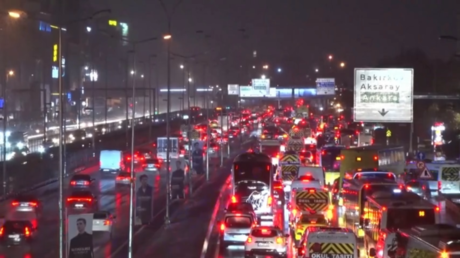
The rain over the Bosphorus did not arrive as a sudden summer squall. It came with the heavy, persistent malice of a meteorological front that had absorbed too much thermal energy from a heating Mediterranean basin. When the clouds finally ruptured, dumping months of average precipitation in a matter of hours across districts like Sarıyer and Başakşehir, the resulting catastrophe was widely mischaracterized as a purely natural act of God. It was nothing of the sort.
Rainfall is a natural meteorological event. Catastrophic urban drowning is a matter of municipal engineering, regulatory failure, and a multi-decade war waged against historical topography.
To understand why districts like Ayazağa turned into raging, brown-water canals trapping passengers inside public buses, one must look past the rain gauges and examine the zoning maps. Istanbul is a megacity of sixteen million residents built upon ancient, highly complex drainage networks. For millennia, water carved precise paths to the sea through natural valleys, creeks, and low-lying floodplains. Those valleys do not negotiate. They do not care about real estate values, municipal bond issuances, or the political capital tied up in endless high-rise construction. When a hundred-year precipitation threshold is breached, water seeks its historic channels with mathematical indifference. If you pave over those channels, bottle them into narrow underground culverts, and erect commercial plazas directly in the path of natural watercourses, you are not subduing nature. You are simply building a hydraulic trap.
The numbers tell a brutal story. In districts like Beykoz and Sarıyer, precipitation spiked to extraordinary levels, over two hundred millimeters per square meter in short operational windows. But a heavy downpour alone does not explain why billions of Turkish liras in property damage accrued, nor why citizens found themselves scrambling onto office desks or clinging to street signs as filthy torrents surged past meters high. The vulnerability was baked into the urban layout long before the first drops fell. Decades of unbridled development have systematically replaced permeable green spaces, earth, and natural forests with impenetrable sheets of asphalt and concrete. Water that should have soaked quietly into the soil instead hit hard surfaces, instantly turning streets into high-velocity conveyance flumes.
The Economics of Avoidable Disaster
Urban planners have long warned that Turkey’s financial capital operates under a severe structural deficit when it comes to disaster preparedness. Earthquakes occupy the primary seat of public anxiety, and rightfully so given the active fault lines slicing through the region's geopolitical consciousness. Yet this fixation has created a dangerous blind spot regarding pluvial and fluvial flood risks.
Insurance data following the disaster exposed a glaring protection gap. While compulsory earthquake insurance frameworks capture significant public attention, voluntary property and commercial insurance penetration rates for floods hover at a fraction of what is necessary to absorb a shock of this magnitude. Thousands of small business owners—such as mechanics, shopkeepers, and local artisans whose inventories were obliterated by mud-choked waters—faced immediate insolvency. For them, the disaster did not end when the rain stopped. It transitioned into a quiet, grinding bureaucratic struggle over uninsured inventory, commercial debt, and structural remediation costs that local municipalities are ill-equipped to fully shoulder.
The economic model driving Istanbul's growth has historically prioritized short-term construction velocity over long-term ecological resilience. Zoning amendments have repeatedly converted natural water retention basins into high-density residential and industrial zones. Developers construct luxury towers and asphalt parking lots right up to the edges of diminished stream beds, shaving away the natural safety margins that absorb overflow. When a meteorological anomaly hits—events that climatologists warn are becoming the baseline "new normal" across the Mediterranean due to global temperature shifts—the systemic fragility of these choices stands exposed for all to see.
Engineering the Future or Repeating the Past
Fixing Istanbul's chronic flood vulnerability requires an expensive, politically fraught pivot away from reactive emergency response toward radical ecological restoration. Simply widening a few concrete culverts or cleaning out choked drainage grates after a flood has already claimed lives is akin to applying a bandage to a severed artery.
Engineers and hydrologists agree that true adaptation demands an integrated urban flood risk management framework. This means doing what is politically difficult: halting all further construction within historical floodplains, establishing mandatory buffer zones around natural creeks, and actively unearthing buried or constricted stream beds wherever urban density permits. It means treating rainwater not as an unwanted nuisance to be piped underground as quickly as possible, but as a management variable that requires porous urban surfaces, rain gardens, and upstream retention ponds.
The climate trajectory for the wider region points toward increasingly volatile atmospheric behavior. The atmosphere holds more moisture as global temperatures climb, turning routine seasonal storms into high-intensity deluges. Megacities that fail to realign their urban DNA with these physical realities will find themselves lurching from one crisis to the next, measuring their failures in property loss, economic dislocation, and human tragedy. The topography of Istanbul has not changed; it remains a basin designed by geology to handle water on its own terms. Until the city's planners learn to respect those boundaries, every heavy cloud gathering over the Black Sea will remain a silent warning.


