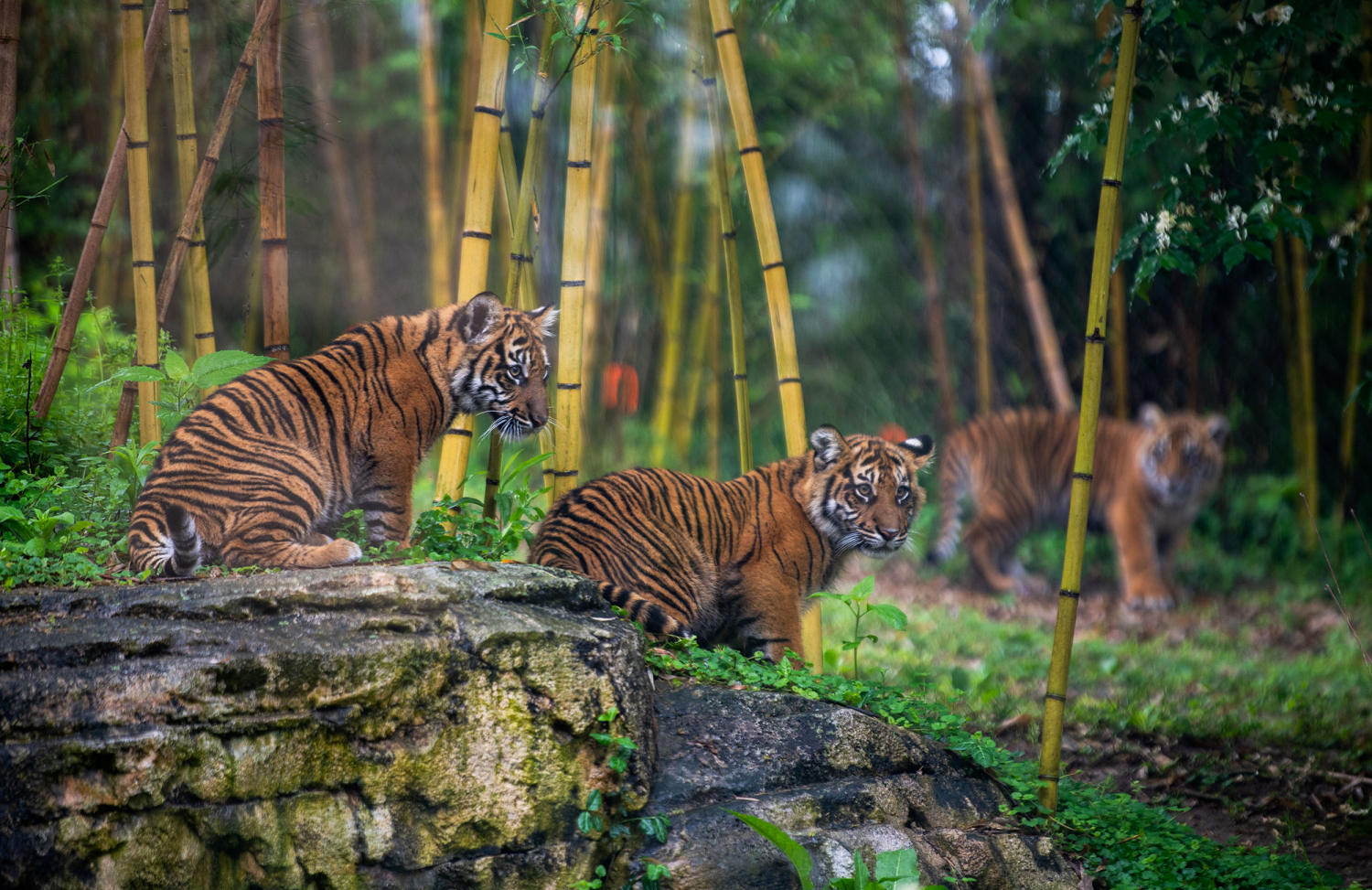
The heavy morning humidity of Tennessee hangs thick over Grassmere, a historic patch of green where the Nashville Zoo shields a fragile world. If you stand near the veterinary hospital at dawn, the sounds are distinct, ancient, and deliberate. You hear the low, vibrating chuff of a Sumatran tiger. You hear the rustle of giant anteaters moving through the brush.
Then, the modern world cuts through.
A mile away, the dull roar of Interstate 24 builds its daily wall of sound. But it is not the highway that has the zoo’s caretakers holding their breath. It is a silent, massive neighbor threatening to move in right next door. A data center.
To most of us, the cloud is invisible. It is a sterile concept. We think of it as a weightless, floating repository for our family photos, streaming videos, and work spreadsheets. But the cloud is not made of air. It is made of concrete, diesel generators, massive cooling towers, and an insatiable appetite for electricity. When the cloud lands on earth, it lands hard. And right now, it is looking to land on a 44-acre plot of land directly adjacent to the northern border of the Nashville Zoo.
The conflict brewing in Nashville is not a simple case of NIMBYism, nor is it a Luddite crusade against technological progress. It is a stark, physical collision between two entirely different types of ecosystems—one biological, one digital—and the invisible stakes are incredibly high.
The Sound You Cannot Hear
Consider a hypothetical clouded leopard named Maya. In her enclosure, she relies on sensory inputs that human ears completely miss. Animals do not experience the world through the flat, visual lens that we do. They live in a rich tapestry of vibrations, infrasound, and acute acoustic frequencies.
The proposed data center by aggressive developers would bring a relentless, 24-hour hum from industrial HVAC units and cooling fans. To a human walking by, it might sound like a distant, annoying air conditioner. To Maya, it could be a psychological assault.
Low-frequency noise travels through the ground and through structures. For a pregnant animal or a highly sensitive species like the red panda, this perpetual vibration is a trigger. It signals a constant, unseen threat. The zoo’s leadership has pointed out that this isn't just about loud bangs or construction spikes; it is about the chronic stress of an unceasing, low-grade mechanical drone. Stress in captive exotic animals does not just mean they get irritable. It means failed breeding programs, weakened immune systems, and behavioral pacing that erodes their quality of life.
The zoo has spent decades building a sanctuary that mimics the wild, investing millions in veterinary medicine and behavioral health. A massive wall of server farms right against the property line threatens to pierce that illusion entirely.
Power, Water, and the Burning of Resources
We must look at what happens when these digital fortresses turn on their engines. Data centers are utility monsters.
A standard facility can consume as much power as tens of thousands of homes. To ensure that your digital life never experiences a second of downtime, these centers require massive backup systems. This means banks of industrial diesel generators sitting on the perimeter, ready to kick in the moment the main grid flickers.
The Nashville Zoo’s avian conservation center sits terrifyingly close to the proposed site. Birds possess highly efficient, yet incredibly delicate respiratory systems. A single testing cycle of those massive diesel engines—which happens regularly to ensure readiness—sends a plume of particulate matter into the air currents. If the wind blows south, that exhaust drifts directly over enclosures housing some of the rarest feathered creatures on earth.
Then comes the thirst. Data centers generate an immense amount of heat. To keep the servers from melting down, millions of gallons of water are cycled through cooling systems every single day. The runoff and the sheer alteration of the local water table can shift the microclimate of the immediate area. A few degrees of temperature change in a local stream or a shift in humidity levels can alter the local flora and fauna that the zoo relies on to maintain its natural buffers.
The zoo isn't asking for the world to stop using data. The people running the sanctuary use smartphones, cloud storage, and digital tracking tools every day. The argument is about geography. It is about understanding that certain industrial footprints are fundamentally incompatible with biological preserves.
The Human Faces in the Middle
Step back from the animals for a moment and look at the people caught in this regulatory tug-of-work. On one side, you have city planners and economic development teams. They see a booming Nashville that needs infrastructure to support its massive corporate migration. Data centers bring property tax revenue without placing a burden on local school systems or creating massive traffic jams. On paper, they look like the perfect corporate citizen. Clean, quiet to the casual observer, and highly lucrative.
On the other side are the zookeepers and veterinarians. These are people who spend their lives studying the subtle shifts in an animal's posture. They know the exact moment a gorilla is feeling anxious by the way it holds its hands. They are the ones who will have to manage the fallout if the animals begin to suffer from chronic environmental stress.
The Nashville Zoo has asked Metro officials to defer the rezoning requests that would allow this project to move forward. They are fighting for a buffer zone, a protective moat of space that keeps the industrial digital machine at arm's length from the living, breathing creatures in their care.
The irony is thick. We build data centers to preserve our digital memories, our histories, and our collective human knowledge. Yet, if we place them carelessly, we risk damaging the very real, physical remnants of the natural world we claim to value.
The decision facing Nashville leaders isn't just a zoning vote. It is a choice about what kind of growth we value, and whether the weightless convenience of the cloud is worth the heavy, grounded cost to the living world beneath it.
The tigers keep pacing their enclosures, unaware of the corporate boardrooms and city council chambers where their peace is being bartered. They only know the quiet of the morning, a quiet that is growing louder by the day.
.jpg)